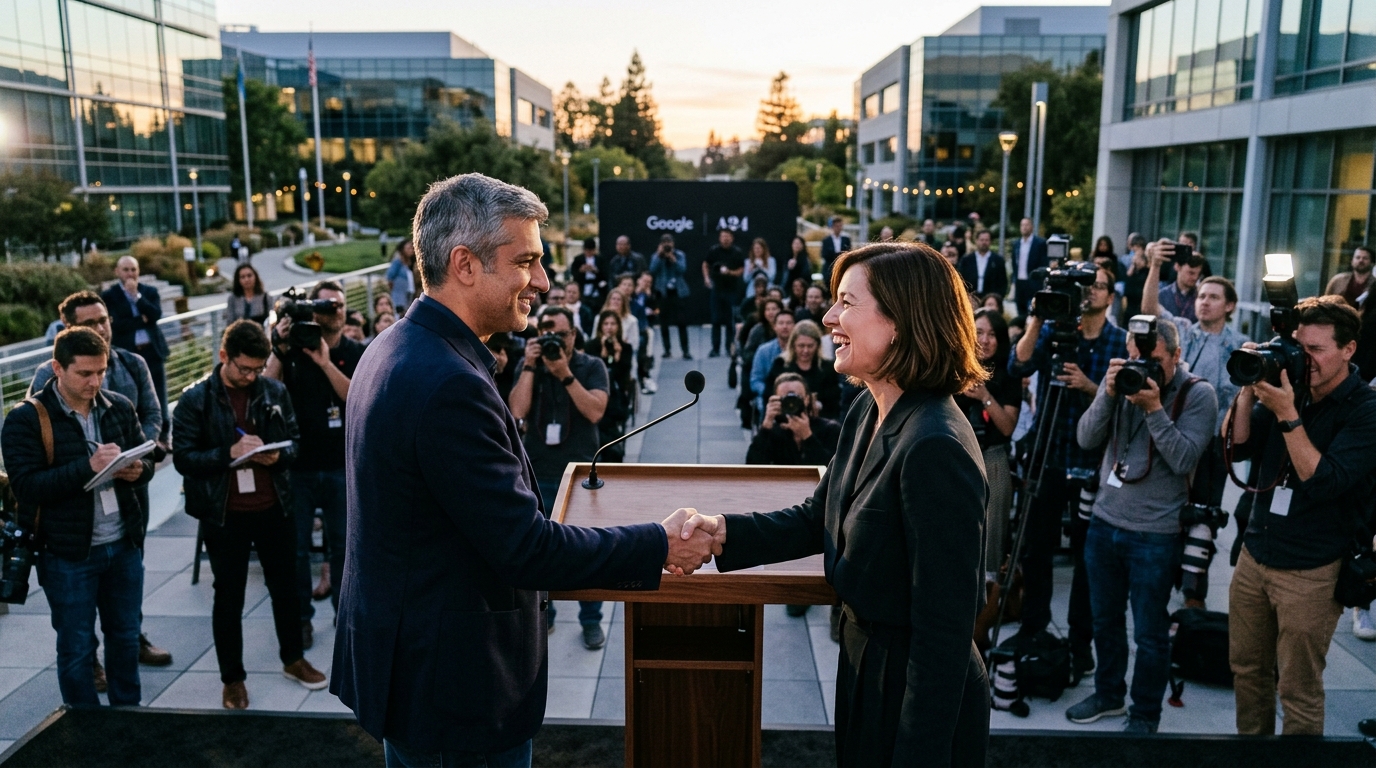
In a move poised to shake the foundations of the global film industry, Google and the independent powerhouse studio A24 have announced a strategic partnership worth $75 million. This deal is not merely a financial injection; it represents a deep technological integration of Artificial Intelligence (AI) into the very heart of the creative process. A24, renowned for its aesthetic excellence and Oscar-winning productions like 'Everything Everywhere All At Once,' is effectively becoming Google's primary laboratory for implementing sophisticated Generative AI models on the silver screen.
The Strategy Behind the Millions
The $75 million investment is aimed at developing and integrating tools that span the entire production spectrum: from screenwriting and storyboarding to visual effects (VFX) and final editing. Google, through its Google Cloud division and DeepMind research labs, seeks to prove that AI is not just an automation tool but a 'creative partner' capable of enhancing a director's vision without compromising artistic integrity. For A24, access to Google's immense computational power and algorithms provides a competitive edge that traditional legacy studios are struggling to match.
From Script to Screen: AI as a Catalyst
The applications of this new alliance are expected to be revolutionary. In pre-production, Google’s models will be able to transform text into detailed storyboards in seconds, allowing creators to visualize complex scenes before a single frame is shot. In the realm of visual effects, the use of AI promises to slash production costs and timelines by 40% to 60%, enabling mid-budget films to achieve the visual fidelity previously reserved for massive blockbusters. Furthermore, 'digital twin' technology and AI-driven lighting adjustments will allow directors to alter scene conditions (e.g., changing day to night) during post-production with unprecedented realism.
Ethical Dilemmas and Hollywood’s Resistance
Despite the technological promises, the deal arrives at a time of intense anxiety. Unions like SAG-AFTRA and the Writers Guild have already expressed significant reservations regarding copyright protection and job security. A24, however, maintains that AI will be used as a supplementary tool rather than a replacement for human creators. The lingering question remains: Can an algorithm truly grasp the nuances of the human experience that make A24 films so distinctive? The answer will be revealed in theaters over the coming years.
Competing with OpenAI and Adobe
Google's move is also a direct response to OpenAI’s dominance with the Sora model and Adobe’s efforts to integrate AI into Premiere Pro. Google is betting on 'quality over quantity' by choosing to partner with a studio that commands immense critical respect. If this collaboration bears fruit, Google could become the de facto technology provider for the next generation of cinema, controlling not just distribution (via YouTube) but the very creation of high-end content.