

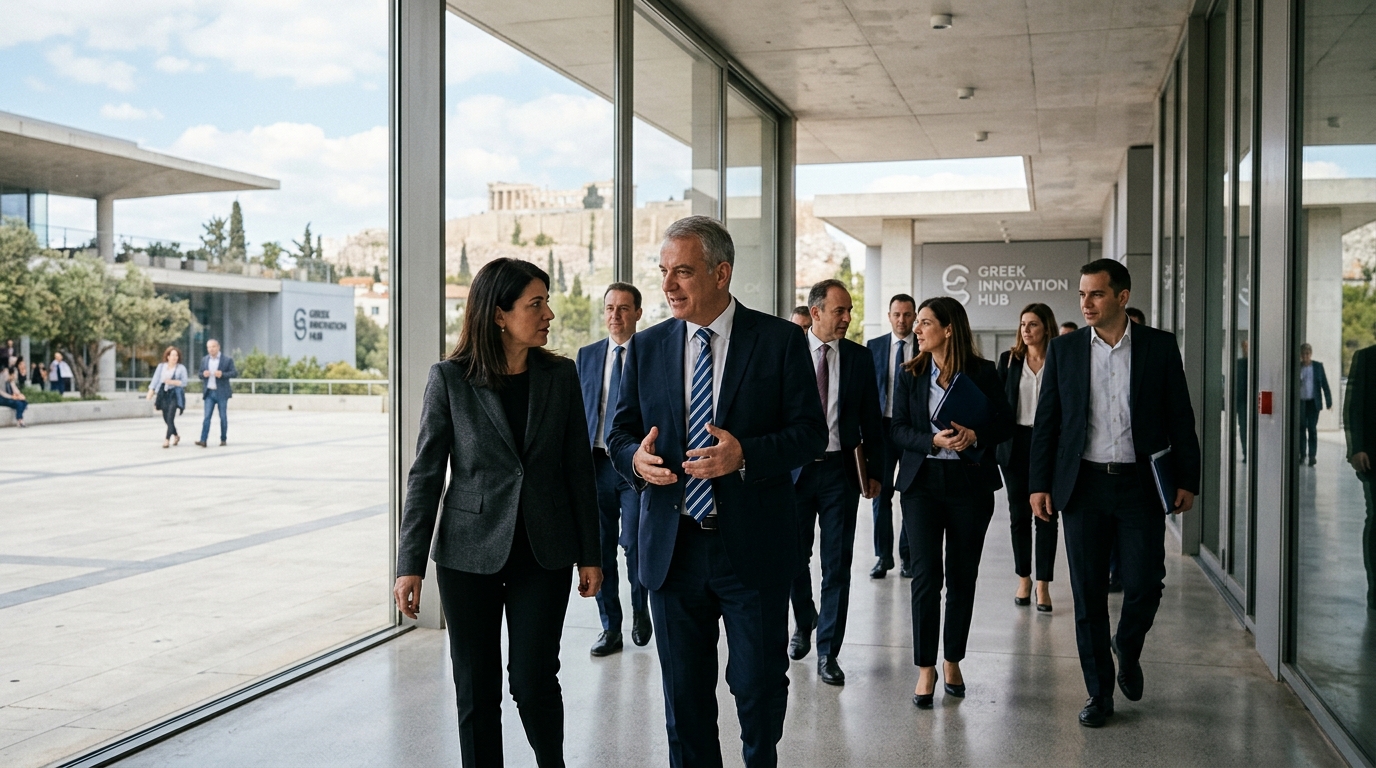
In a move that signals a significant shift in Greek foreign and economic policy toward technological sovereignty, Greece has announced its official accession to the "Pax Silica" initiative. This international partnership aims to secure supply chains for critical minerals and rare earth elements, which form the backbone of the semiconductor industry and, by extension, Artificial Intelligence (AI). This development is not merely a diplomatic success but a recognition of the country's geological wealth as a strategic reserve for the European Union and the West at large.
The Strategic Significance of Pax Silica
The Pax Silica initiative was born out of the need for Western economies to decouple from monopolistic practices in the mining and processing of materials such as lithium, cobalt, gallium, and germanium. As the demand for computational power skyrockets due to Generative AI, the need for advanced processors (GPUs) makes these minerals more valuable than oil. Greece, possessing significant deposits of bauxite, nickel, and potentially rare earth elements in its subsoil, is emerging as a critical partner.
Participation in Pax Silica provides Athens with access to advanced mining expertise with a low environmental footprint, as well as investment capital aimed at vertical integration. The goal is not just the export of raw materials, but the creation of a domestic value chain that will include processing and, eventually, participation in the assembly of high-tech components.
Critical Minerals: Greece's New "Oil"
For decades, Greece's mineral wealth was considered a traditional industry with limited growth prospects. However, the digital transition is changing the landscape. Nickel and cobalt are essential for energy storage batteries in data centers, while bauxite is the source of aluminum, widely used in high-tech infrastructure. Pax Silica provides the framework so that these materials can be certified as "ethical" and "green," giving them a competitive advantage in the global market.
- Bauxite: Greece is already a leading producer in Europe, essential for lightweight alloys in hardware.
- Nickel: Vital for the energy autonomy of AI systems.
- Rare Earths: Indications of deposits in Northern Greece that could tip the balance in the EU.
Joining the initiative comes with commitments to strict environmental standards (ESG). This poses a challenge for the Greek metallurgical industry, which is called upon to modernize radically. The use of AI in the mining process itself—for predicting deposits and optimizing energy consumption—is one of the first programs to be launched under the agreement.
Geopolitical Implications and European Autonomy
From a geopolitical perspective, this move aligns perfectly with the European Critical Raw Materials Act. The EU seeks to produce at least 10% of its critical mineral needs from European soil by 2030. Greece, as a pillar of stability in the Eastern Mediterranean, offers a secure alternative supply route, away from the geopolitical tensions of the South China Sea.
"Pax Silica is not just a trade agreement; it is a shield for democratic technological development," said a government official during the signing of the agreement.
In conclusion, Greece's accession to Pax Silica is a bold step into the future. The country ceases to be a mere spectator of AI developments and becomes an active part of the infrastructure that makes them possible. The challenge now lies in the speed of investment implementation and the ability of the Greek economy to absorb new technologies, turning physical wealth into digital power.





