In an era where the initial euphoria surrounding general Artificial Intelligence (GenAI) is giving way to a more mature reflection on actual Return on Investment (ROI), Eleni Nika, head of Covariance, is pointing toward a critical truth. According to Nika, the "golden age" of AI will not be judged by how well a bot can write a poem, but by how effectively it can solve complex, industry-specific problems in sectors like insurance, healthcare, and shipping.
The Pitfall of Generalization and the Need for Specialization
In recent years, the global market has been flooded with tools promising to be everything to everyone. However, large enterprises are now realizing that "general" knowledge often comes with inaccuracies, the notorious "hallucinations," and a dangerous lack of context. Eleni Nika emphasizes that Artificial Intelligence must be "trained" on the intricacies of each industry to provide real value.
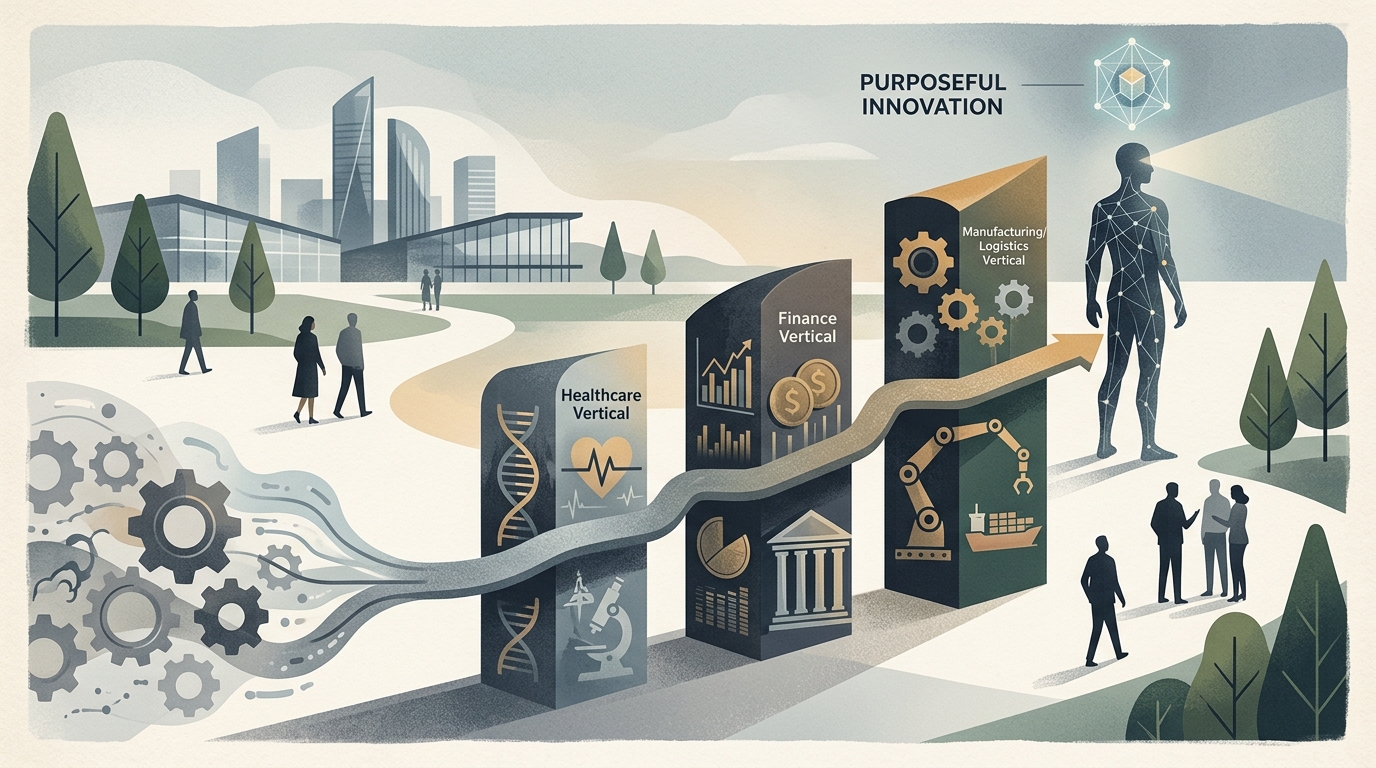
By focusing on vertical markets, Covariance chooses a path that requires deep data literacy. As Nika explains, for an AI model intended for the insurance sector, it is not enough to understand language; it must understand actuarial studies, the Solvency II regulatory framework, and the subtle nuances of risk management. This "vertical" approach allows for the creation of tools that are not merely supportive but structural components of decision-making.
Transforming the Insurance Sector
One of the most striking examples of Covariance's strategy is the application of AI in insurance. In this field, precision is not a luxury but a prerequisite for survival. The use of specialized algorithms allows for automated document analysis, faster claims processing, and, most importantly, more accurate risk pricing.
- Process Automation: Reducing response times for customer requests from days to seconds.
- Fraud Detection: Identifying suspicious patterns that the human eye would fail to discern within oceans of data.
- Personalization: Creating products that respond to the actual needs of each insured individual, rather than generic packages.
Nika points out that Vertical AI does not come to replace humans but to relieve them of the burden of bureaucracy, allowing them to focus on strategy and human interaction. In reality, the technology acts as an "augmented partner" that offers evidence-based recommendations in real-time.
The Greek Ecosystem and International Competitiveness
The trajectory of Covariance is also proof that Greek tech companies can lead on the global stage, provided they choose the right battles. Instead of competing with Silicon Valley giants on general models, they focus on specialization where local knowledge and agility constitute comparative advantages.
"The future belongs to those who can translate data into business intelligence," Nika notes emphatically.
The challenge for the future remains the availability and quality of data. In Greece, the digital transformation of the state and businesses has created a critical mass of information, which, however, often remains "trapped" in incompatible systems. Vertical AI is the key that will unlock this value, turning static data into dynamic growth tools.
Conclusions and Outlook
In conclusion, Eleni Nika's approach highlights a fundamental truth about technological evolution: technology is only as good as the problem it is called to solve. The transition from "AI for all" to "AI for every industry" marks the coming of age of the market. For businesses, this means that investing in AI should not be a move for show, but a strategic decision based on understanding their own unique needs.