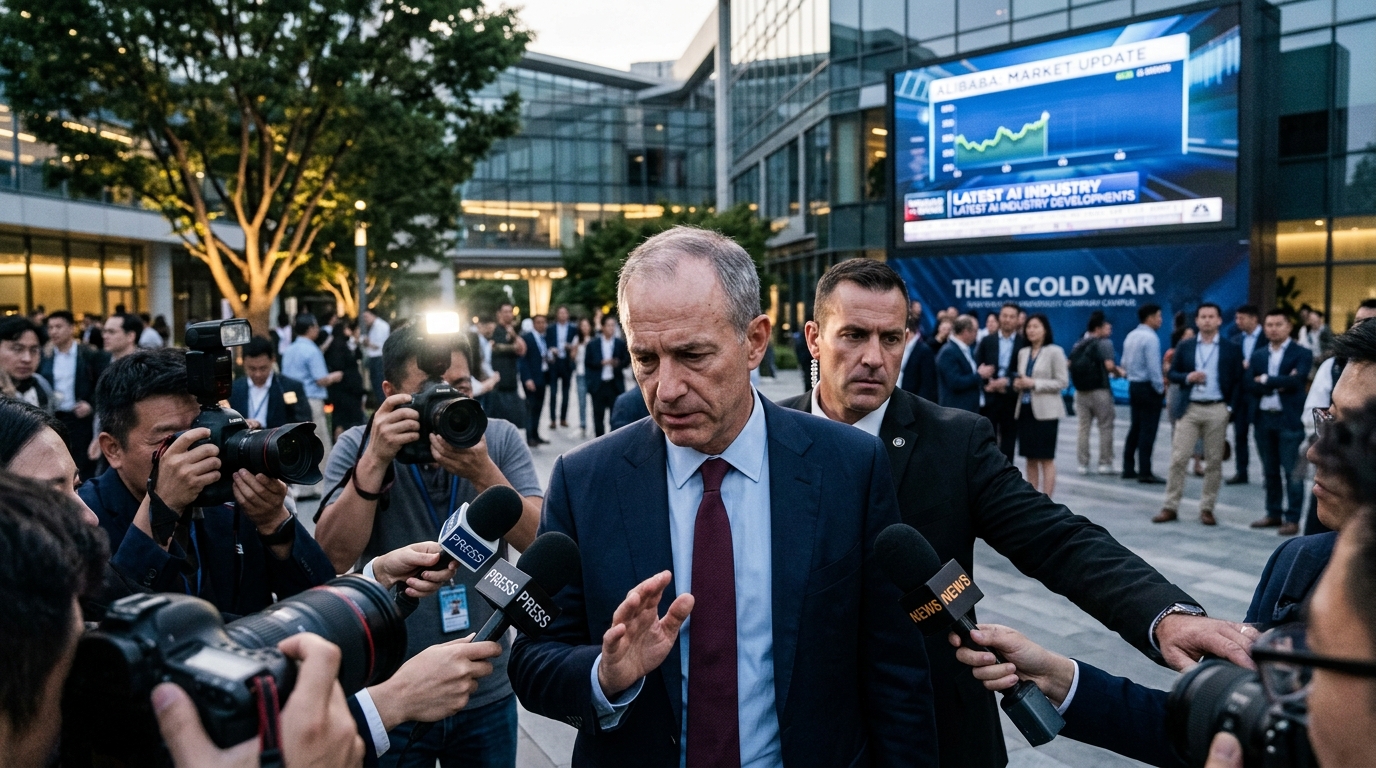
June 25, 2026, will be remembered in stock market history as the day AI geopolitics turned a corporate titan into a cautionary tale. Alibaba, the undisputed leader of Chinese e-commerce and cloud computing, saw its market capitalization evaporate by one-third in a matter of hours. The cause? An explosive accusation from the US-based Anthropic, alleging that Alibaba’s latest Qwen series models were built upon the "illegal mining and integration" of internal weights from Anthropic’s Claude models.
The Nature of the Accusation: Theft or Convergence?
Anthropic, a company founded with a core mission of AI safety, filed evidence with international regulatory bodies suggesting that Alibaba’s architecture exhibits "mechanical signatures" identical to its own proprietary optimization methods. This is not merely a dispute over training data—which is largely ubiquitous on the open web—but an accusation of "reverse engineering" that touches the very core of intellectual property. According to Anthropic, Alibaba utilized sophisticated bots to extract structured responses from Claude 4, which were then used to "teach" Qwen how to bypass specific safety constraints and improve performance in complex logical reasoning tasks.
The market reaction was instantaneous. Investors, already jittery from ongoing tensions between Washington and Beijing, saw this allegation as the death knell for the global acceptance of Chinese AI models. If the charges are proven true, Alibaba faces potential blacklisting from Western software markets and, more critically, new and harsher sanctions on access to high-end semiconductors.
Geopolitical Chess and Safety Concerns
This case transcends a mere corporate legal battle. It fits into a broader narrative where Artificial Intelligence is viewed as the "new nuclear weapon." The Chinese government was quick to defend Alibaba, labeling the move as "technological bullying" by the United States. However, the silence from many European regulators suggests that the West may be preparing for a total decoupling in the AI supply chain.
The fundamental question now is whether trust can exist in a world where the "open science" of AI clashes with narrow national interests. Anthropic maintains that Alibaba’s actions were not just an IP theft but a subversion of global safety, as the "constitutional" guardrails developed by the American firm were intentionally stripped away during the cloning process.
Economic Fallout and Alibaba’s Future
The 33% plunge translates to a loss of over $150 billion in market value. For Alibaba, which was already struggling to regain its footing after years of regulatory pressure from Beijing, this blow is nearly existential. The company’s Cloud unit, once seen as the engine of its future growth, is now in a state of limbo. International clients, fearing potential secondary sanctions or security vulnerabilities, have already begun scouting alternatives in Microsoft’s Azure or Amazon’s AWS.
In conclusion, this crisis highlights the urgent need for a new international framework for AI law. As long as regulations remain ambiguous, accusations of code theft will serve as the primary weapon in the war for technological supremacy. Alibaba must now prove its innocence in an environment that seems increasingly biased against it, while Anthropic steps into the role of the "guardian" of Western technological ethics.
- Alibaba shares recorded their largest single-day drop in history.
- Anthropic claims to possess "irrefutable evidence" of algorithmic weight theft.
- The risk of new US sanctions has spiked significantly.
- The global AI market is entering a phase of intense introspection and protectionism.