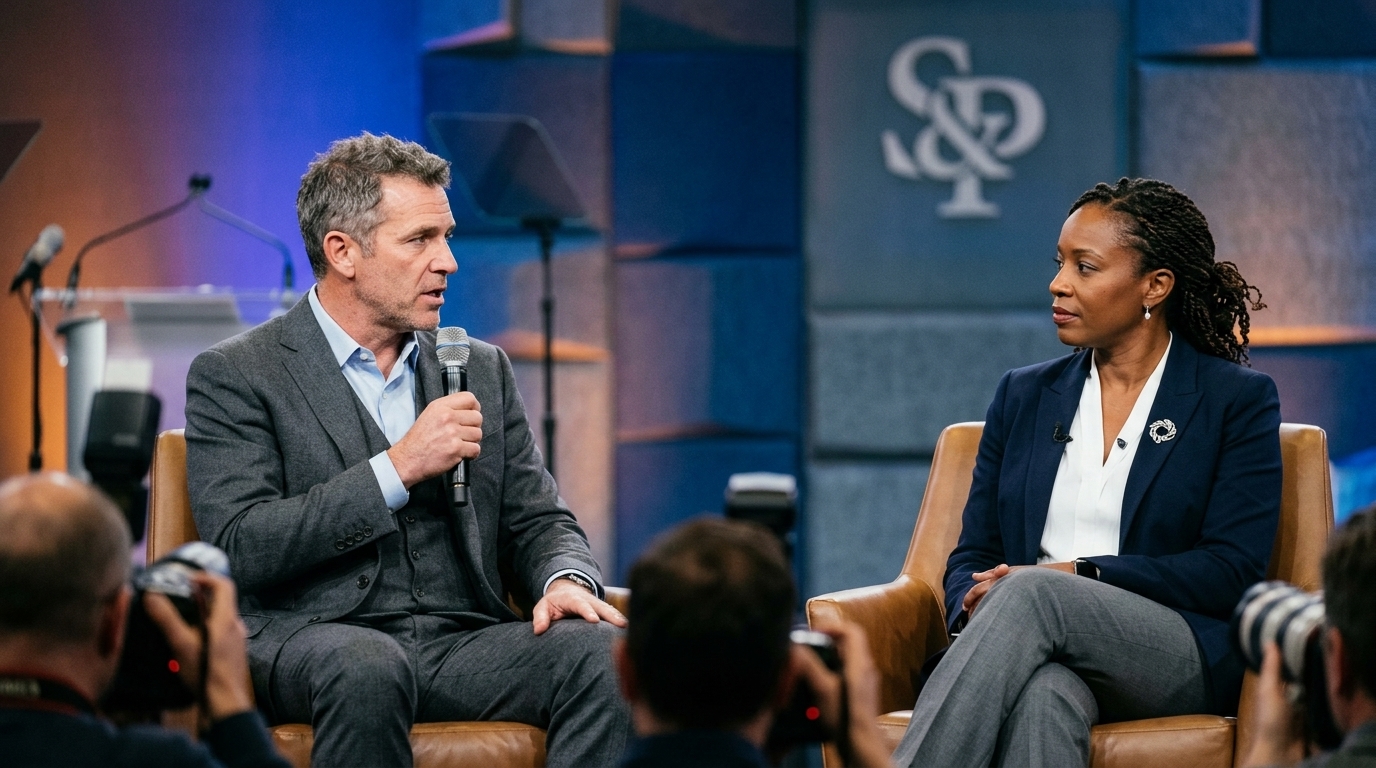
At Fortune’s AIQ Summit in New York, top executives from Bank of America (BofA) and S&P Global discussed the delicate balance between innovation and responsibility in regulated sectors. Despite massive investments, the core message was clear: AI is not always the right answer.
Bank of America’s Approach: Needs First, Technology Second
Hari Gopalkrishnan, BofA’s chief technology and information officer, noted that one of the biggest mistakes is rushing to AI as a solution when 'deterministic models' (rule-based systems) can perform perfectly well. The bank reviews every AI project through 16 'pillars' of risk, covering privacy, bias, and workforce impact.
Despite this caution, BofA is investing heavily. CEO Brian Moynihan recently stated that 140 AI use cases cost $400 million but generated $800 million in benefits. The bank plans to double its AI budget next year. Its virtual assistant, Erica, has handled 3.6 billion transactions—an efficiency gain that Gopalkrishnan says would otherwise require 11,000 more staff to handle calls.
S&P Global: Data as the Currency of AI
Sally Moore of S&P Global emphasized that for an organization providing credit ratings and financial data, accuracy and auditability are paramount. "Data is the currency within AI," she stated, explaining that clients demand citations and traceability back to the source.
S&P Global is leveraging its 2018 acquisition of AI firm Kensho, placing it at the center of its business strategy. Moore shared an example of a tier-one bank where S&P’s intervention raised process accuracy from 60% to 98%, bringing the system to production six times faster. For Moore, the real question isn't just the tool, but the "reinvention" of business processes.
Security and the Human Element
Both executives agreed on the importance of keeping humans in the loop. BofA is not rushing toward fully autonomous agents, preferring assistive tools that work alongside employees. Furthermore, Gopalkrishnan highlighted that system security is a collective responsibility, as a failure at even a small bank could undermine faith in the entire financial system.