

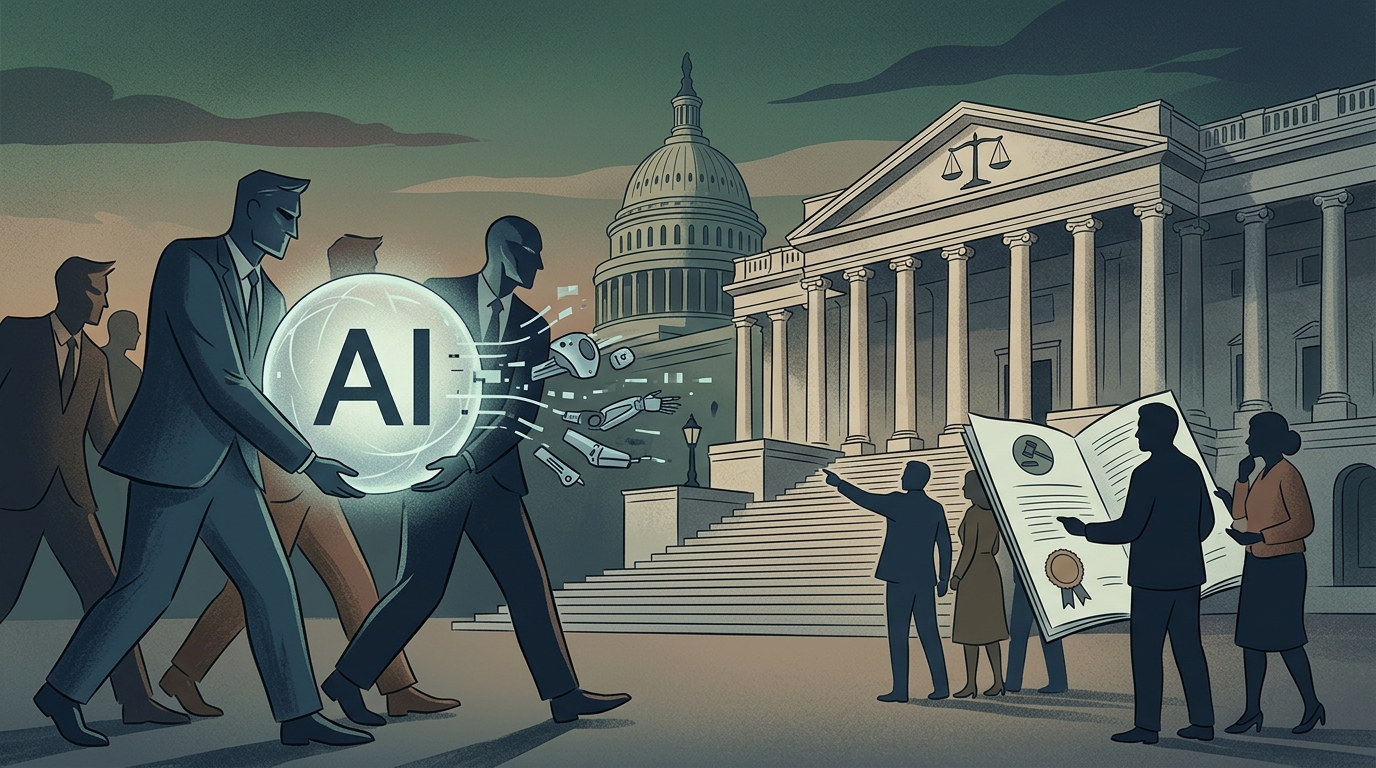
In the sun-drenched squares of my homeland, we have a word for the kind of ambition that forgets its limits: hubris. Today, as I read the latest dispatches from the frontiers of Silicon Valley, I cannot help but feel that we are witnessing a modern reenactment of this ancient drama. Sam Altman, the architect of OpenAI, recently suggested on a podcast that society must tolerate some “bad things”—scams, hacks, and misuse—to secure the broader benefits of AI. But I ask you: who decides which 'bad things' are acceptable, and who is forced to bear their weight?
The Mission and the Mask
OpenAI is currently piloting a “mission interview” to ensure new hires are aligned with the goal of making AGI benefit humanity. It is a noble-sounding sentiment, backed by compensation packages reaching nearly a million dollars. Yet, there is a jarring disconnect between this high-minded mission and the reality of corporate behavior. When a journalist recently attempted to ask Altman about a tragic case involving a user’s suicide, PR handlers repeatedly intervened to shut down the inquiry. Is this the transparency we are promised? We are told to accept “bounded risks,” yet when those risks manifest in human tragedy, the corporate shutters are pulled tight. It reminds me of the dragnet-type surveillance we see in Texas, where officials demand a ludicrous $2.3 million just to release public records. Transparency, it seems, has a price tag that the average citizen cannot afford.
The Greek Shield: A Lesson in Metron
While some tech leaders advocate for a “move fast and break things” approach to ethics, I find hope in the recent initiative from the Greek Ministry of Labor. Minister Niki Kerameus is moving to integrate EU directives that do something revolutionary in this digital age: they prioritize the human. The proposed law explicitly prohibits AI from tracking an employee’s emotional state or private conversations. It demands human oversight for critical decisions. This is what we call metron—the middle path of balance and measure. Unlike the “mission interviews” of the West, which focus on alignment with a corporate goal, the Greek framework focuses on the protection of the individual from algorithmic management.
“People will do tremendously, orders of magnitude, more good stuff than bad stuff,” Altman claims. Perhaps. But progress is not a blind gamble where we bet with other people’s lives.
Security in the Hallways
We are rushing to build “agentic architectures” where AI agents talk to one another, yet researchers are finding that we have abandoned the principle of “zero trust.” We are building grand palaces with locked front doors but leaving the hallways entirely unmonitored. Whether it is vulnerabilities in the Model Context Protocol or AI systems in Utah prescribing acne medication with only phased physician oversight, we are automating life at a pace that outstrips our safeguards. We must ask ourselves: are we building a future that serves us, or are we merely becoming data points in a global experiment? Progress is only worthy of the name if it preserves our dignity, our privacy, and our humanity. Anything less is just a very expensive form of chaos.