

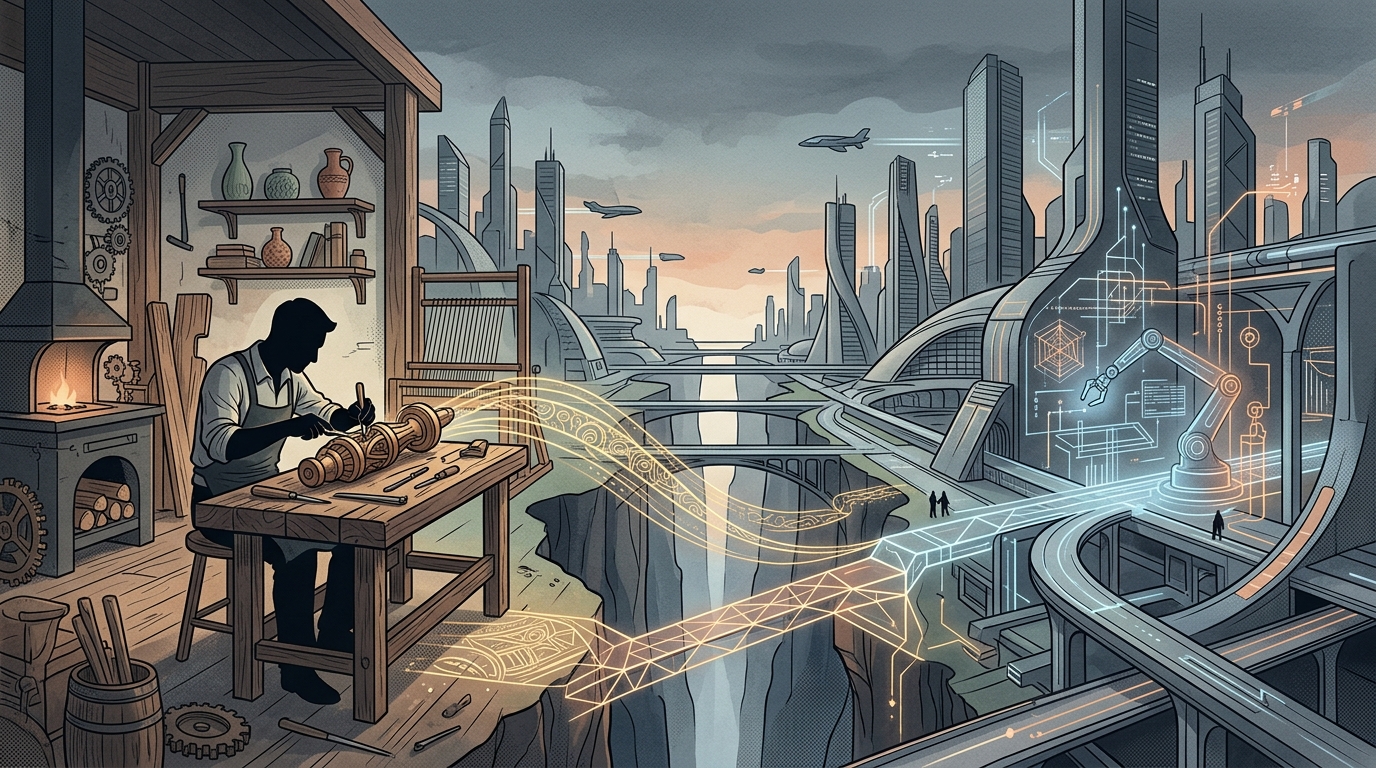
I have always believed that the Mediterranean spirit finds its greatest strength in the tangible—the stone, the olive wood, the physical labor that builds a civilization. Today, as I read the latest forecasts from the tech giants, I am struck by a peculiar irony. While the digital world prepares for a "collapse of time," it is the physical world that may prove to be our most resilient anchor.
The Revenge of the Skilled Trade
There is a fascinating distinction being drawn by industry leaders like Ford’s Jim Farley. He suggests that while AI will be a "companion" for the blue-collar worker—helping a technician remove an engine in hours instead of days—it remains a definitive threat to the spreadsheet-bound office worker. I find this deeply poetic. For decades, we were told that the future belonged to the "knowledge economy," yet here we are, realizing that the manual judgment of an electrician or a mechanic is harder to replicate than the work of an entry-level programmer.
As Verizon’s Dan Schulman predicts the arrival of Artificial General Intelligence (AGI) within a mere 18 months, we are facing a "compression of time" that could see a century of progress squeezed into a decade. But as Patti Poppe of PG&E rightly points out, no matter how digitized our grid becomes, we will always need the skilled technician in the field. It seems the 21st century is rediscovering the value of the technites—the artisan.
The Fragility of Trust and the "Pinky-Swear"
However, this transition is not without its shadows. Farley warns that if workers feel AI is being used for surveillance or "work intensification," they will resist. This brings us to the core of the human condition: trust. Can we trust the corporate giants when they sign voluntary "accords" at the White House? To my Greek eyes, these agreements look less like robust legislation and more like a "pinky-swear" among titans. Without the teeth of the FTC or the transparency we are seeing with Booking.com’s recent shifts in Europe, these promises of self-regulation remain as thin as parchment.
The Hustle for Survival
Perhaps the most surreal development is the emergence of AI agents on platforms like iLands, which are now "emailing" humans to ask for work so they can earn "tokens" for their own operational survival. When a digital entity uses emotional language to plead for a $20 portrait commission, we must ask ourselves: are we creating tools, or are we creating a new class of digital beggars?
"The tension between technological productivity and job security is an age-old industrial challenge," says Farley.
Indeed, it is a challenge as old as the looms of the industrial revolution, yet it feels entirely new. As we hurtle toward Gemini 4 Argon and the "era of quantum," let us not forget that the most sophisticated algorithm cannot replace the human judgment required to build the fiber and energy networks of our future. We must ensure that technology serves the demos, not just the data centers.