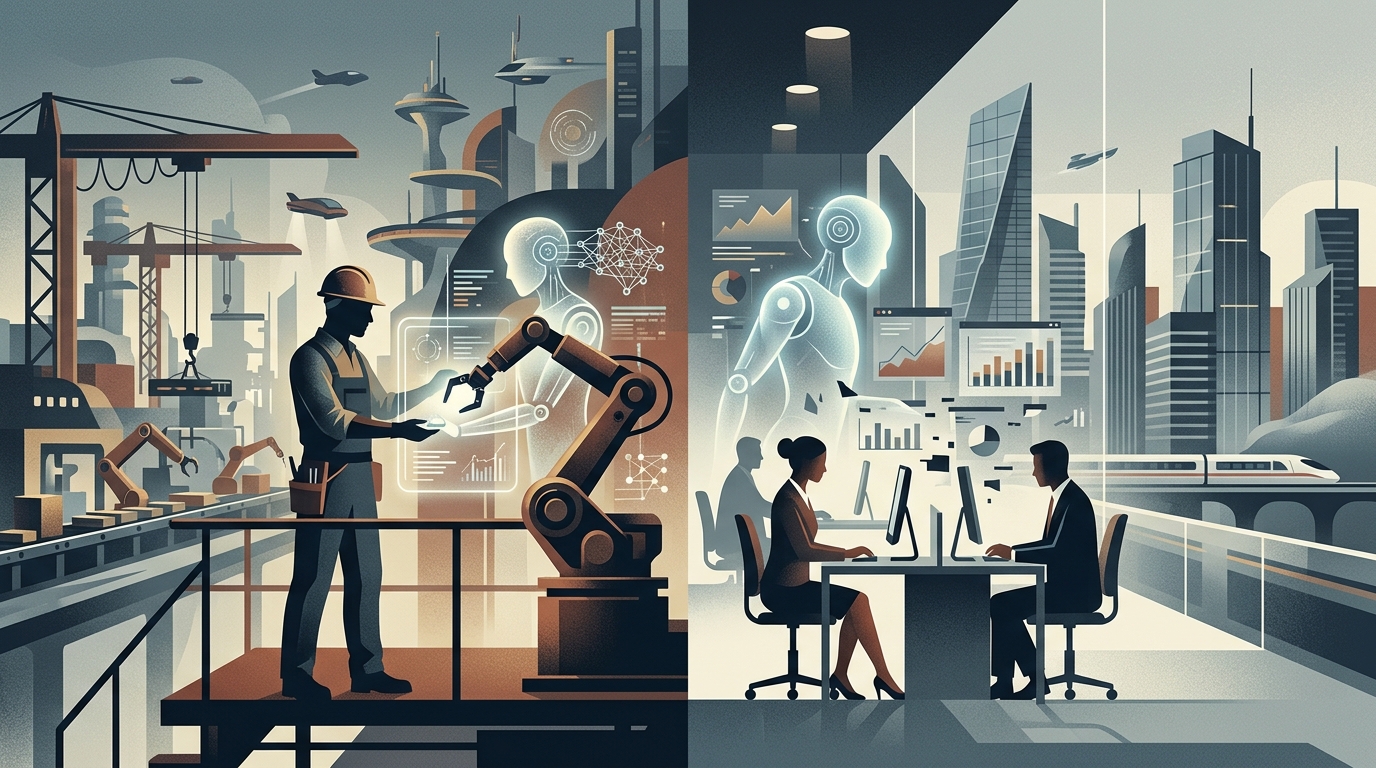
Ford CEO Jim Farley has drawn a sharp line regarding the future of labor in the age of Artificial Intelligence. Speaking at the Ford Pro Accelerate event, Farley argued that while AI will transform factories, it will arrive primarily as a "companion" for blue-collar workers and skilled tradespeople, helping them perform complex tasks and build expertise more rapidly.
Jobs Facing Elimination
However, Farley’s outlook was not equally optimistic for all sectors. "If you work in finance doing spreadsheets, or you’re in a call center, or you’re an entry-level programmer—those jobs are definitely going to be changed and eliminated," he stated. The distinction rests on the premise that AI can more easily disrupt routine, screen-based knowledge work than it can replace the physical judgment and manual skills of electricians or mechanics.
AI in Manufacturing Operations
At Ford, this shift is already underway. The company utilizes AI and augmented reality to assist technicians with difficult repairs, such as engine removals in Super Duty trucks—a task that traditionally takes two days. Furthermore, in newer plants, the boundary between manufacturing engineers and skilled trades is blurring as workers increasingly maintain robotic casting systems and digital manufacturing processes.
The Trust Factor
Farley emphasized that the success of AI integration hinges on worker trust. If employees perceive that data is being used against them for surveillance or work intensification, they will resist the technology. Comparing the current climate to historical efficiency studies, the Ford CEO noted that the tension between technological productivity and job security is an "age-old" industrial challenge.