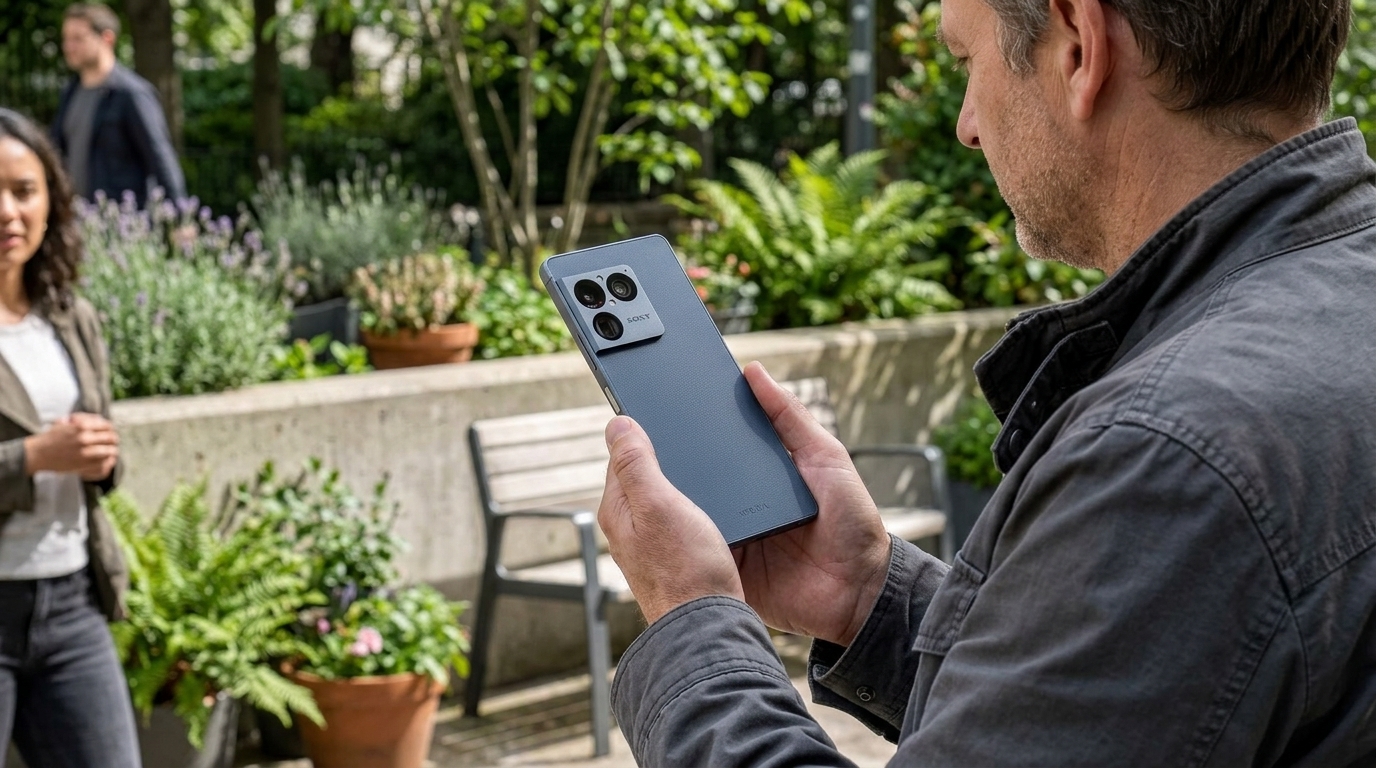
In a global smartphone market dominated by Apple and Samsung through the lens of mass consumption, Sony continues to tread a path that many consider lonely, but the company itself calls "specialized." The new Sony Xperia 1 VIII, released in the summer of 2026, represents the Japanese giant's boldest attempt yet to redefine its identity without betraying its most loyal followers. For years, the Xperia 1 series was synonymous with the 21:9 cinematic aspect ratio and the complex continuous optical zoom system. This year, Sony decided to break the mold.
The Aesthetic Overhaul: Moving Beyond 21:9
The first and most obvious change in the Xperia 1 VIII is its design. After nearly seven generations of adhering to the ultra-tall 21:9 screen, Sony has adopted a slightly wider aspect ratio, moving closer to the 19.5:9 standard found in competitors. This change was not accidental. While 21:9 was ideal for watching movies, it made the device cumbersome for daily web browsing and social media use. The new 6.5-inch LTPO OLED display retains its 4K resolution, maintaining Sony’s tradition as the only manufacturer offering such pixel density in a mobile device.
Build quality remains top-tier, featuring the new Gorilla Glass Victus 3 and a frame made from recycled aluminum that provides a sense of sturdiness and luxury. Sony chose to keep the bezels at the top and bottom of the screen, avoiding punch-holes or notches. This allows for the placement of symmetrical, front-firing stereo speakers that offer the best acoustic experience in the category, while also housing a selfie camera that doesn't obstruct the viewing area.
The Camera Shift: From Gimmicks to Raw Quality
The most significant technical shift is found in the camera system. Sony has decided to retire the continuous optical zoom mechanism that defined previous models. Although technologically impressive, this mechanism often sacrificed brightness and image sharpness compared to fixed telephoto lenses. In the Xperia 1 VIII, we find a new 50MP telephoto lens with a fixed focal length, utilizing a massive sensor for a telephoto unit, providing stunning low-light performance.
"Our philosophy is not to chase numbers, but to bring the Alpha camera experience to your pocket," a Sony executive stated during the launch event.
The main sensor remains the Sony Lytia, optimized to offer a dynamic range approaching professional mirrorless cameras. The Photography Pro app remains the central reference point, allowing users to control every parameter of their shot. For the average user who just wants to point and shoot, Sony has significantly improved its AI algorithms, though the processing remains "natural" and less aggressive than that of the iPhone or Pixel.
Audio, Performance, and the "Sacred" 3.5mm Jack
In a world that has largely forgotten wired headphones, Sony continues to equip its flagship with a 3.5mm jack. This, combined with Hi-Res Audio and LDAC support, makes the Xperia 1 VIII the only choice for audiophiles. Internally, the Snapdragon 8 Gen 5 processor provides raw power, while the new cooling system promises to solve the overheating issues that plagued older generations during 4K/120fps video recording.
The 5.000mAh battery, while standard in capacity, benefits from Sony's new power management technology, offering battery life that exceeds a day of heavy use. Charging, though sped up to 45W, remains conservative compared to Chinese manufacturers, as Sony prioritizes battery longevity (Battery Care) over a three-year lifespan.
The Verdict: A Tool for the Few
The Sony Xperia 1 VIII is not trying to be the next best-seller. It is a precision tool for content creators, photographers, and tech enthusiasts who refuse to settle for mass-market solutions. Its price, expected to hit the $1,400 mark, places it in the premium category where competition is ruthless. However, for those who value a notch-less 4K screen, full camera control, and unparalleled audio quality, the Xperia 1 VIII remains the only path. Sony has proven it can evolve without losing its soul, offering a device that is more of a "camera that makes calls" than just another smartphone.