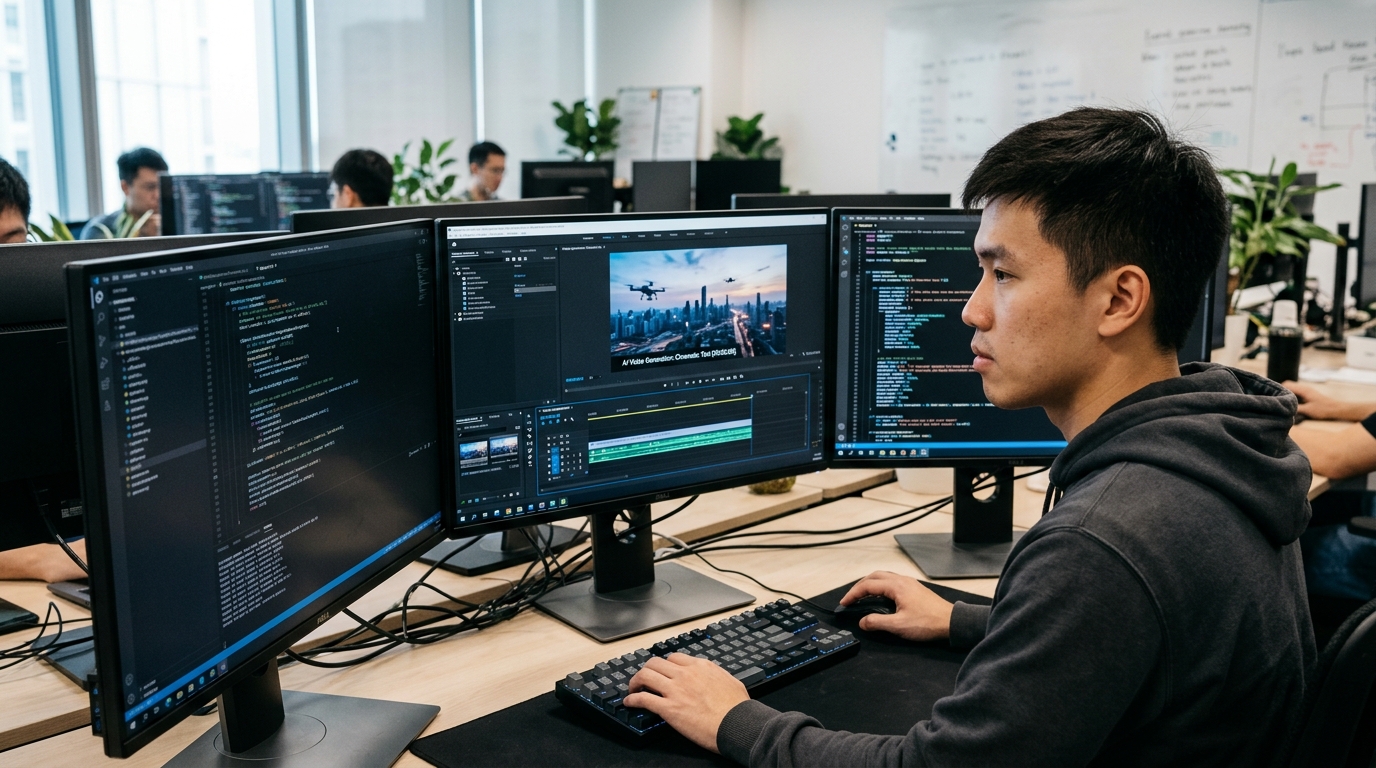
In the high-stakes global chessboard of artificial intelligence, ByteDance has just made a move that fundamentally alters the rules of engagement. While Silicon Valley giants like OpenAI, with their Sora model, are still striving to perfect temporal consistency in short clips, the Chinese tech titan has unveiled a model capable of generating continuous 30-second videos from a single prompt. This development is not merely a technical refinement; it is a structural shift in how we perceive and produce digital content.
The Technical Feat of Temporal Consistency
The primary hurdle in AI video generation has always been the 'hallucinatory' nature of models after the initial few seconds. Objects tend to morph, lighting flickers, and the laws of physics often dissolve. ByteDance's new model appears to solve these issues by employing a sophisticated Diffusion Transformer (DiT) architecture. This allows the system to 'predict' the flow of motion across a longer temporal horizon with significantly higher precision than previous iterations.
The ability to produce 30 seconds of high-definition footage in one go dramatically slashes production time for creators. Instead of stitching together dozens of 3-to-5-second clips, users can now generate coherent scenes or short narratives. This feat requires immense computational power and specialized GPU memory optimization algorithms—an area where ByteDance has invested billions of dollars over the last few years to maintain its edge.
Strategic Enterprise Focus
Currently, access to the model is restricted to a select group of enterprise users. This strategic move is calculated. ByteDance is targeting the lucrative advertising and e-commerce markets, where the hunger for fast, affordable, and visually stunning content is insatiable. By enabling businesses to create 30-second spots—the gold standard duration for television and digital ads—the company is positioning itself as an indispensable partner for marketing departments worldwide.
Furthermore, this limited release allows ByteDance to fine-tune its safety guardrails. The production of long-form, realistic video carries significant risks regarding misinformation and deepfakes. By restricting use to vetted corporate entities, the company can implement more robust watermarking and identity protocols, temporarily insulating itself from the public backlash that often accompanies the release of such powerful generative tools.
Geopolitical Implications and the Race with the West
This announcement comes at a time of intense pressure for ByteDance in the United States. While TikTok's future remains clouded by legislative battles in Washington, the company is demonstrating that its technological core is more resilient than ever. The ability to leapfrog Western models in certain performance metrics sends a clear message: China is not just a participant in the AI race; it is a frontrunner.
- Social media dominance is evolving into dominance over production tools.
- ByteDance leverages the vast ocean of video data from TikTok to train its generative engines.
- The battle for AI talent is increasingly shifting between San Francisco, Beijing, and Singapore.
As this model eventually scales to the public, the impact on the entertainment industry will be seismic. Traditional production houses and visual effects artists are facing an existential challenge. If an AI model can produce in seconds what previously required weeks of specialized labor, the value of human craftsmanship will need to be redefined around creative direction and conceptualization rather than mere technical execution.