

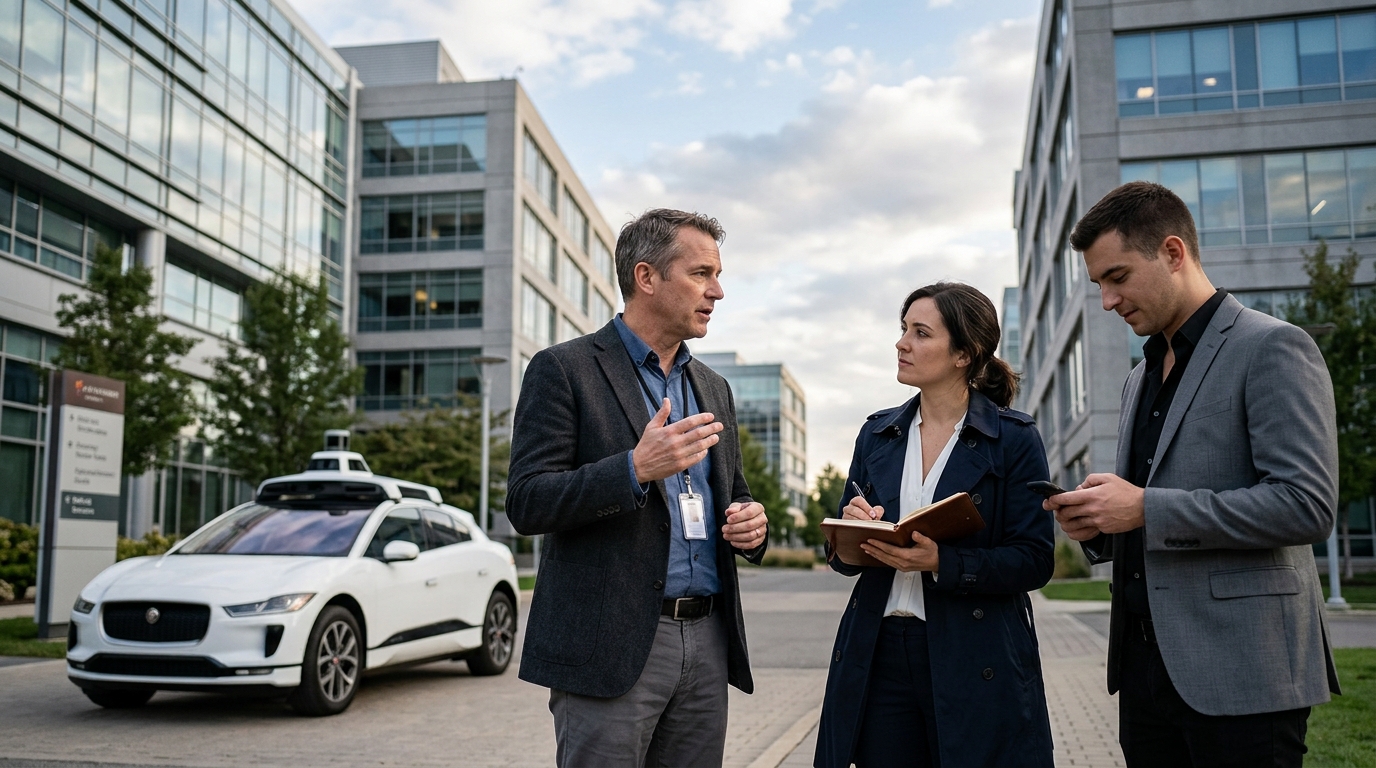
In a move that reshuffles the deck of the global autonomous driving market, Uber Technologies Inc. has announced the termination of its robotaxi partnership with Waymo, a subsidiary of Alphabet Inc., in the city of Phoenix. The news, first reported by Bloomberg, is not merely a business disruption but the climax of years of tension between two giants that function simultaneously as close partners and bitter rivals. Uber is already bracing for the next chapter, with reports suggesting that the announcement of a new strategic partner is imminent.
The Strategic Divergence: Why Phoenix Was Just the Beginning
Phoenix served as the ideal laboratory for the Uber-Waymo alliance. With its wide streets and favorable weather, the city allowed Uber users to hail Waymo autonomous vehicles directly from their app. However, this model began to show cracks as the strategic priorities of the two companies diverged sharply. Waymo, seeking full control over the customer experience and the resulting data, now appears to favor strengthening its own standalone app, Waymo One.
On the other hand, Uber, under the leadership of Dara Khosrowshahi, has adopted an "asset-light" approach. It no longer wishes to manufacture its own autonomous vehicles—a venture it abandoned in 2020—but aims to be the "operating system" of urban mobility. The wind-down in Phoenix suggests that Uber is looking for a partner more willing to integrate fully into its ecosystem without threatening the platform's dominance.
The New Partner Puzzle: Tesla, Cruise, or Zoox?
The market is buzzing with speculation about who will fill the void left by Waymo. Analysts are turning their eyes toward Elon Musk’s Tesla, especially following recent advancements in FSD (Full Self-Driving) software and promises of a "Cybercab" network. An Uber-Tesla partnership would be historic, though the temperaments of both leaderships make such a deal complex. Alternatively, GM’s Cruise, which is attempting a comeback after a series of safety setbacks, could find in Uber the lifeline it needs to regain public trust.
- Tesla: Technological prowess meets massive scale, but with a high risk of personality clashes.
- Cruise (GM): A regrouping move that could provide Uber with a more compliant partner.
- Zoox (Amazon): A potential alliance between the giants of logistics and transportation.
"The relationship between Uber and Waymo was always a marriage of convenience in a minefield. The end of their Phoenix tie-up marks the beginning of the real war over who owns the interface with the end consumer," says a leading Silicon Valley analyst.
Economic Implications and the Consumer Experience
For the average citizen in Phoenix, this change means fewer integrated options within a single app. However, on a macroeconomic level, this competition is expected to accelerate development. Uber needs autonomous vehicles to reduce driver costs, which remain its largest expense. Waymo needs rider density to amortize its massive R&D costs.
The exit from Phoenix doesn't necessarily mean the end of their cooperation in other markets like San Francisco or Los Angeles, at least for now. But the trend is clear: tech companies are building moats around their data. Uber is betting that its base of 150 million monthly active users is strong enough to force any autonomous vehicle manufacturer to the negotiating table on favorable terms.
The Future of Autonomous Mobility
As we head into the second half of 2026, the robotaxi industry is entering a phase of maturity. The experiments are over, and the battle for profitability has begun. Uber’s move to seek a new partner shows it is not willing to hand over the keys to the market to Alphabet. The question remains: can a platform without its own fleet survive in a world where hardware and software are becoming inextricably linked?





