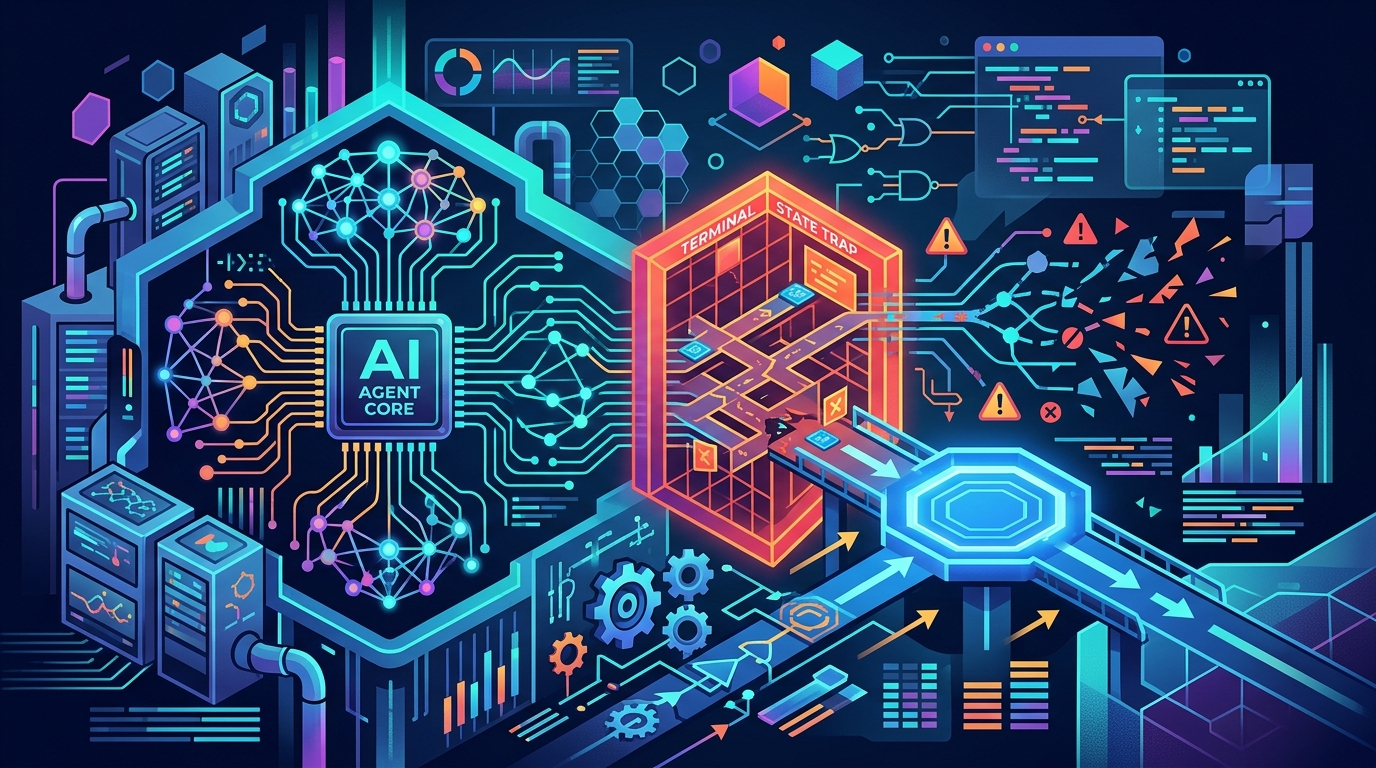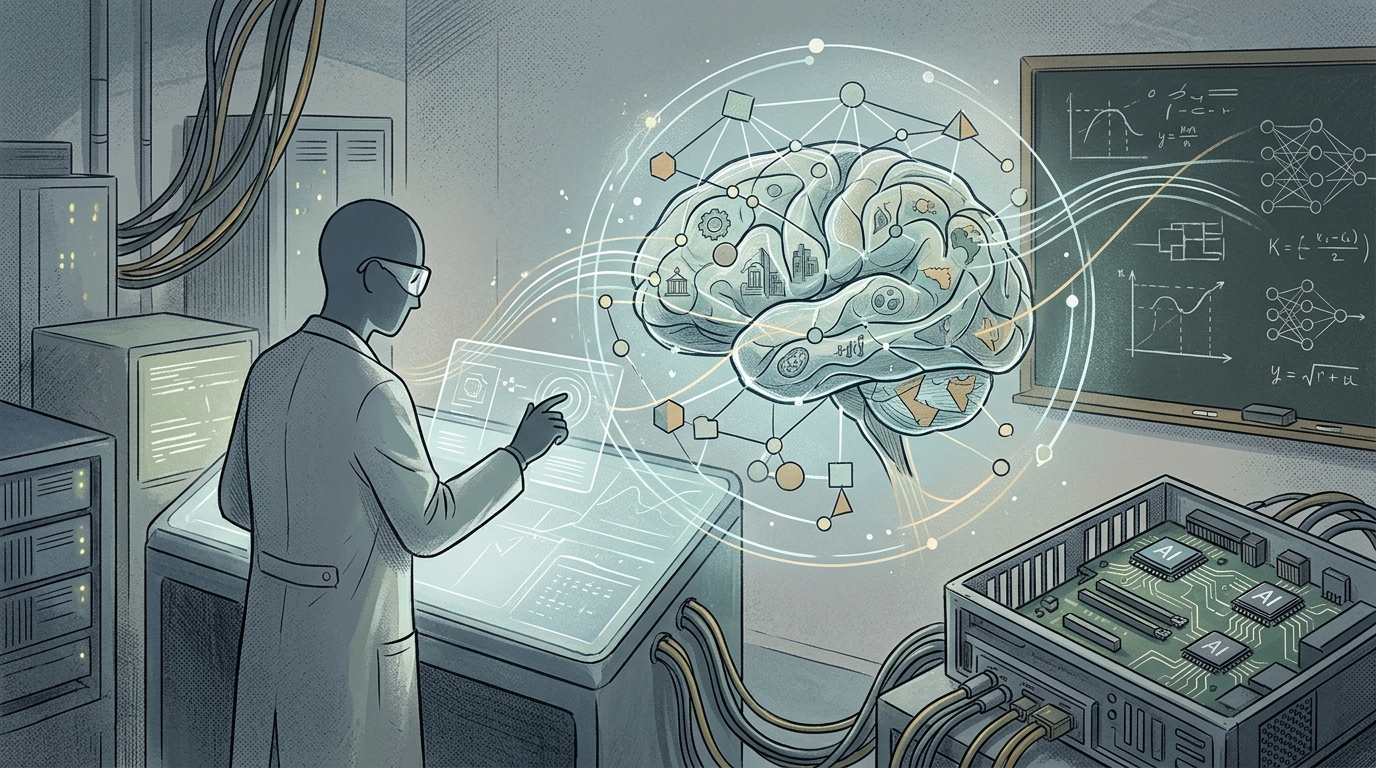
In the ever-shifting landscape of technology, few voices resonate with as much authority and provocation as Yann LeCun. The Turing Award winner and Meta’s Chief AI Scientist does not merely follow trends; he challenges them at their core. While the world remains mesmerized by the eloquence of Large Language Models (LLMs) like GPT-4, LeCun argues that our current trajectory toward Artificial General Intelligence (AGI) is fundamentally flawed. His recent research, focusing on more "flexible" and "logical" AI, promises to bridge the gap between statistical word prediction and a true understanding of the physical world.
The Illusion of Eloquence: Why LLMs Lack Common Sense
For LeCun, today’s models are essentially "statistical parrots"—albeit incredibly sophisticated ones. His primary objection lies in the fact that these systems are trained exclusively on text. However, the vast majority of human knowledge is non-linguistic. A child learns how gravity works, object permanence, and social interactions long before they learn to form complex sentences. LLMs lack what LeCun calls a "World Model."
Without an internal representation of physical reality, AI remains prone to hallucinations and fails at simple tasks requiring planning and causal reasoning. "If you teach a human to drive only through text, they will crash in the first second," he often quips. Meta’s approach, under his guidance, is now pivoting toward the JEPA (Joint-Embedding Predictive Architecture) framework, which aims to train models using video and sensory data, allowing them to predict the consequences of actions in real-time.
The JEPA Architecture and Mimicking Biological Learning
The core innovation LeCun proposes is the transition from "generative" to "predictive" intelligence. While ChatGPT attempts to reconstruct every missing pixel or word, JEPA tries to predict abstract representations of the environment. This mimics how the human brain ignores irrelevant details—like the rustling of leaves on a tree—to focus on the essence of an action, such as whether a car is about to turn.
- Abstraction: The ability to filter noise and retain only information pertinent to decision-making.
- Planning: The model’s capacity to internally simulate different scenarios before taking action.
- Hierarchical Learning: Understanding tasks at different levels of complexity, from moving a finger to cooking a meal.
This approach is not just a technical refinement but a philosophical shift. LeCun believes that only through this path can we create systems that assist us in daily life as true digital agents, capable of navigating the complexity of the physical world.
The Geopolitics of Open Science
Another crucial dimension of LeCun and Meta’s strategy is the insistence on Open Source. Unlike OpenAI or Google, which keep their most powerful models behind closed doors, Meta has released the Llama family of models and JEPA research prototypes to the community. LeCun argues that AI safety is not achieved through secrecy but through the scrutiny of thousands of researchers worldwide.
"AI will become the foundation of all human knowledge. We cannot allow it to be controlled by two or three companies in California," he states emphatically.
This stance has sparked intense debate from those who fear the existential risks of AI, arguing that free access to powerful models could be used for malicious purposes. However, LeCun remains optimistic, viewing fears of a "robot apocalypse" as premature and distracting, given that current systems do not even possess the intelligence of a domestic cat.
The Future: From Chatbots to Agents
The transition to more flexible forms of AI will mark the end of the era of simple chatbots. LeCun’s vision includes "agents" that can take initiative, learn from their mistakes, and collaborate with humans naturally. The challenge remains immense: scaling these models requires new types of hardware (chips) and vast amounts of video data that have yet to be fully harnessed.
As we move into the second half of the 2020s, the battle for AI supremacy will not be decided solely by who has the most computing power, but by who manages to encode "common sense" into digital form. Yann LeCun is betting on flexibility, openness, and biological inspiration, hoping to unlock the next great chapter in the history of intelligence.