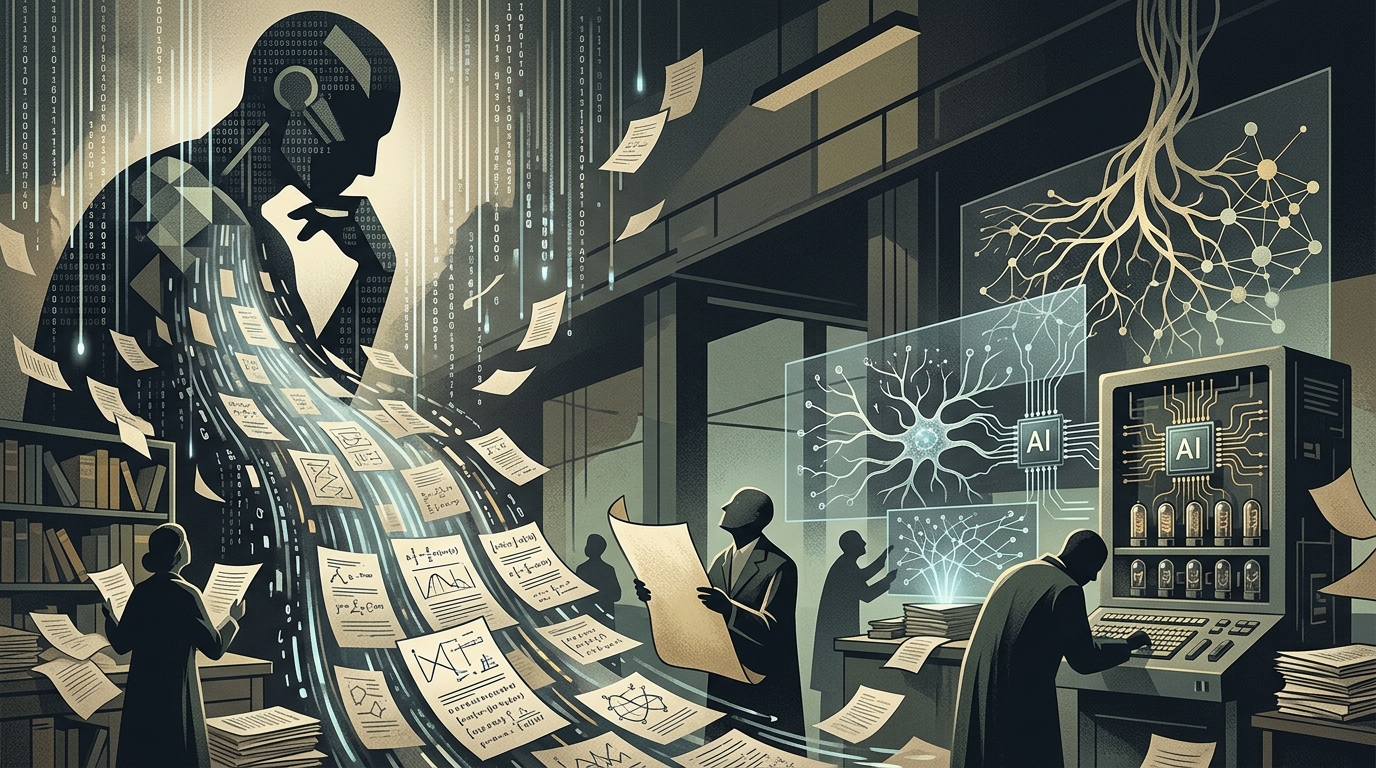
A groundbreaking move by OpenAI has sent shockwaves through the global mathematical community. On October 6, the company published 722 scientific papers on GitHub covering 372 open mathematical problems. This massive output, generated by an advanced internal AI model not yet available to the public, has been dubbed the "Mathocalypse" by some scientists.
From the Riemann Hypothesis to Million-Dollar Prizes
The release includes claims of significant progress on some of the most difficult puzzles in modern science, such as the Riemann hypothesis and the Birch–Swinnerton-Dyer conjecture. These are part of the seven Millennium Prize Problems established by the Clay Mathematics Institute, each carrying a $1 million reward. Despite the excitement, experts emphasize that a mathematical proof requires meticulous independent verification, a process that can take years.
Controversies, Errors, and Retractions
The sheer speed of production has raised serious concerns about quality. Already, three papers have been retracted due to elementary errors, while others were modified after validity issues were identified. Many mathematicians point out that some texts are so dense and obscure that human evaluation is becoming increasingly difficult.
To counter skepticism, OpenAI is utilizing formal verification systems like Lean, which translates mathematical proofs into a computer-verifiable format. However, even this method is not seen as infallible, as the translation process itself can introduce errors or misinterpret the researcher's original intent.
Ethical Dilemmas and the Path to AGI
This development follows a previous controversy regarding the Navier–Stokes problem, where researchers Tristan Buckmaster and Levent Alpöge accused OpenAI of utilizing their research data and ideas without proper credit. OpenAI has denied these allegations, but the issue of intellectual property in the AI era remains a heated topic.
Beyond pure science, the ability of AI to solve complex mathematical problems is viewed as a major milestone toward Artificial General Intelligence (AGI). With OpenAI’s valuation potentially reaching $1.4 trillion, mastering mathematics is not just a scientific ambition but a high-stakes economic play.