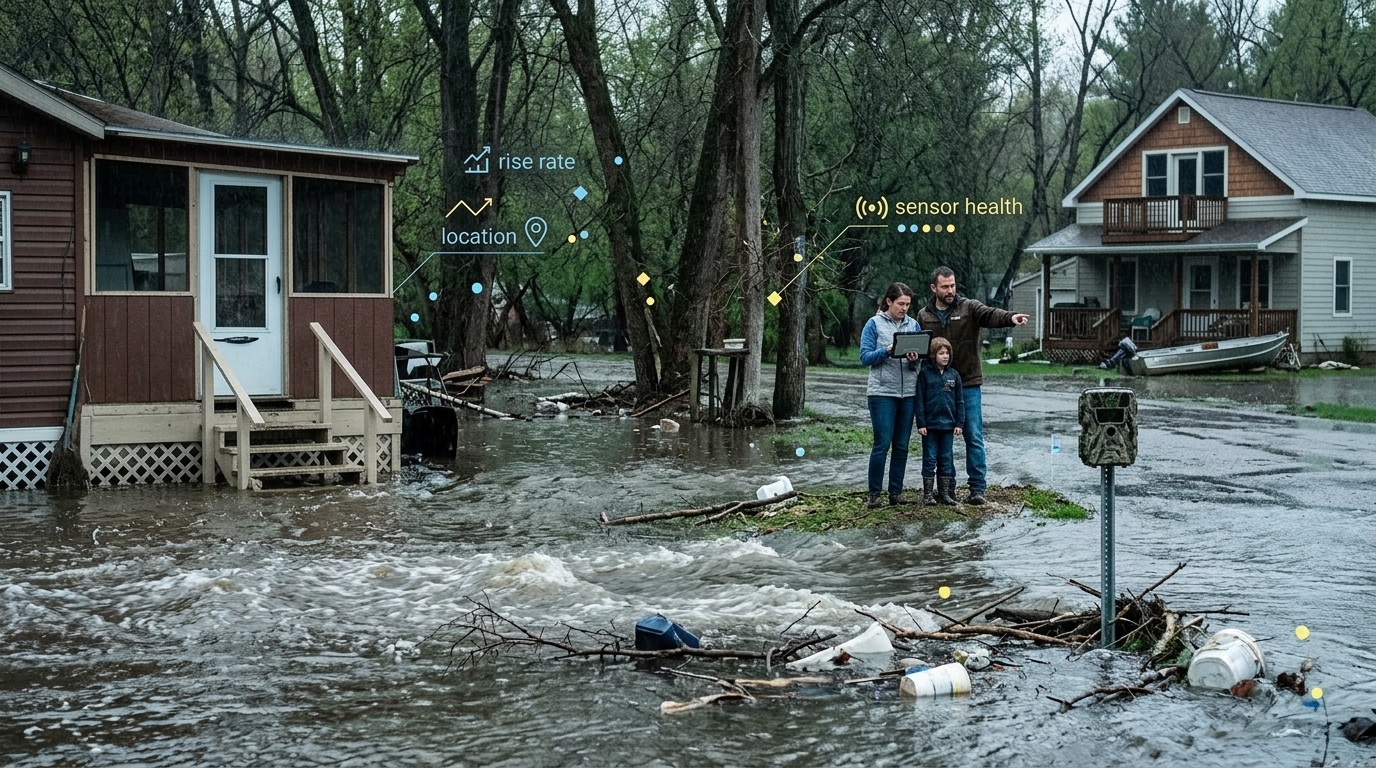
Last June, Laura Lin of Lanesville, Indiana, watched her yard vanish under eight inches of rain in just a few hours. By the time the official alerts urged residents to get on their roofs, the town was already underwater. This dangerous lag in communication is exactly what the Transient Artifact and Continuous Learning System (TACLS) aims to eliminate. Developed by scientists from UCSD, NASA, and the National Weather Service (NWS), this new software leverages satellite data to predict disasters before they hit the ground.
The Limitations of Current Technology
Flash floods—defined as flooding occurring in under six hours—are the deadliest weather events globally. Current forecasting relies heavily on rain and stream gauges, which are often sparse in rural or desert areas. Yehuda Bock, TACLS project lead at the Scripps Institution of Oceanography, notes that tracking rainfall as it happens provides insufficient lead time. "Once there’s precipitation, you’re already in the event itself," Bock explains.
How TACLS Changes the Forecast
The system utilizes the Global Navigation Satellite System (GNSS), a network primarily used for earthquake monitoring. TACLS measures the delay in signals between satellites and ground sensors, which increases based on the amount of water vapor in the atmosphere. This "precipitable water" data is then processed through a machine learning model using long short-term memory architecture.
- The model identifies geographic areas at risk of transitioning from rain to dangerous flooding.
- It provides real-time atmospheric data to verify the accuracy of weather models.
- It acts as a decision-support tool for meteorologists issuing life-and-death warnings.
Currently operational in NWS offices in Los Angeles and San Diego, an updated version of TACLS featuring detailed mapping and graphics is scheduled for a nationwide rollout to all NWS offices in the second half of October. While the system is currently dense in the Western US due to existing earthquake sensors, researchers believe the technology could eventually be adapted globally.