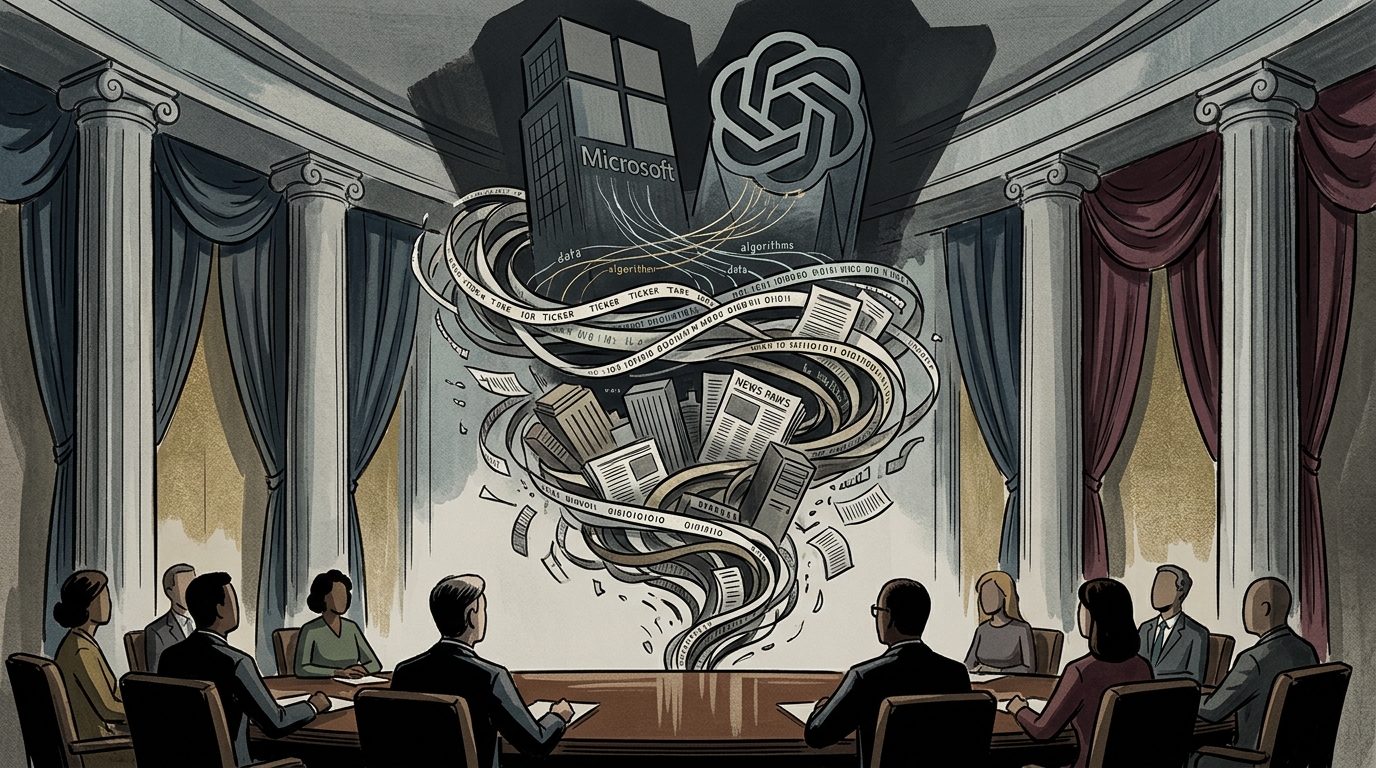
Recently unsealed court documents in the New York Times’ case against OpenAI and Microsoft reveal a damning internal consensus: the companies were aware that their AI models were initiating a "doom loop" for the internet. Internal documentation characterized the scraping of data to train these models as the "largest theft of labor in human history," suggesting a clear understanding of the potential damage to the digital ecosystem.
Destroying the Supply Chain
A central revelation from the filings is Microsoft’s internal admission that Large Language Models (LLMs) are a product that "destroys its own supply chain." One internal document noted the irony of an end-product threatening the economic foundations of its essential suppliers, creating a precarious situation for the LLM business model regarding its "content supply chain."
Brent Hecht, Microsoft’s Director of Applied Science, was quoted calling the companies' defense a "complete mockery of the idea of fair use." While Microsoft has attempted to distance itself from Hecht’s remarks, labeling them as individual academic perspectives, the documents suggest these concerns were discussed at high levels.
The Era of 'Google Zero'
The documents indicate that executives, including Satya Nadella and Sam Altman, recognized that chatbots are replacing traditional search. This shift toward "Google Zero"—where users never leave the search interface—removes the incentive to visit original sources. OpenAI’s Nick Turley admitted that once a chatbot provides an answer, there is "no good reason to click" on a link. OpenAI’s own experts speculated that search referral traffic to publishers could plummet by as much as 60%.
'Insanely Good at Regurgitation'
Internally, OpenAI was well aware of ChatGPT’s tendency to reproduce copyrighted material verbatim. Despite public claims of minimizing memorization, employees admitted that GPT-4 had "memorized a ton of data" and was "insanely good at regurgitation." The filing cites numerous examples of the AI outputting long strings of text directly from the Times and other publications.
"We are creating systems that substitute for the labor of the people that define the ‘culture’ of society," stated OpenAI Policy Director Jack Clark.