

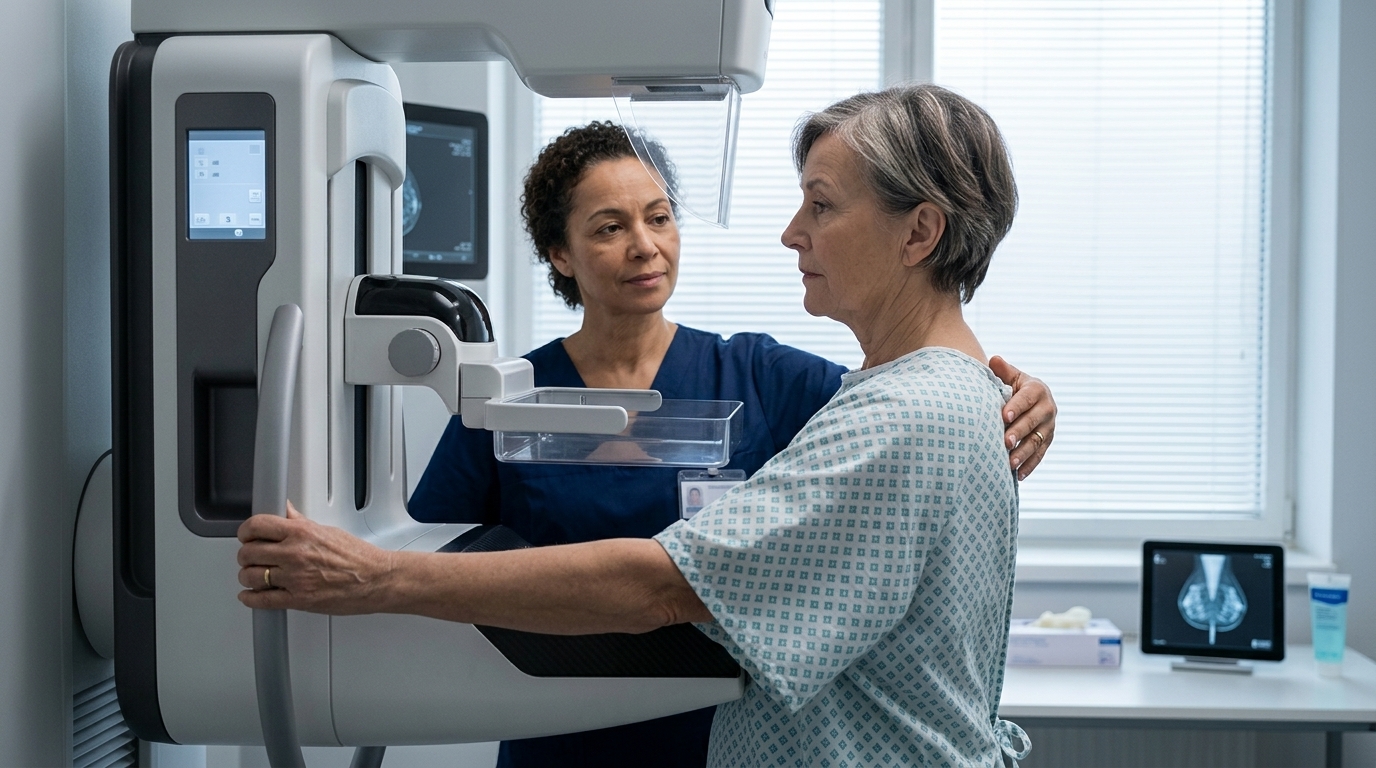
Routine breast cancer screenings may soon serve a dual purpose, evolving beyond tumor detection to identify cardiovascular risks. New research presented at the European Society of Cardiology congress in Munich suggests that mammograms, assisted by artificial intelligence, can reveal signs of heart disease.
The Study and Key Findings
A team of Israeli researchers conducted an analysis of 97,364 mammograms from 29,921 women, with an average age of 54. By comparing these images with medical records, they trained a machine learning model to identify specific conditions using only the imaging data.
The AI model exhibited significant diagnostic accuracy across several categories:
- 86% in identifying a history of stroke.
- 79% for high blood pressure (hypertension).
- 78% for coronary artery disease.
Dr. Viana Copeland from Tel Aviv University noted that this method could be implemented on a large scale. Since mammograms are already a standard procedure for middle-aged women, they provide a critical opportunity to address cardiovascular risk factors early.
Addressing the Prevention Gap
Cardiovascular disease remains a leading cause of death for women globally, yet it is frequently underdiagnosed. Dr. Sonya Babu-Narayan of the British Heart Foundation highlighted that a persistent myth—viewing heart disease as a primarily "male" condition—often leads to delayed diagnosis for women. Utilizing existing imaging data through AI could bridge this gap without requiring additional medical procedures.
Elena Arebo, from the European Society of Cardiology's communication committee, described the findings as highly significant, suggesting that mammography could one day function as a "window" into a woman's cardiovascular health. However, researchers emphasize that the technology is still in development. Future efforts will focus on refining the model's precision and validating the results across more diverse populations before it can be integrated into daily clinical practice.




