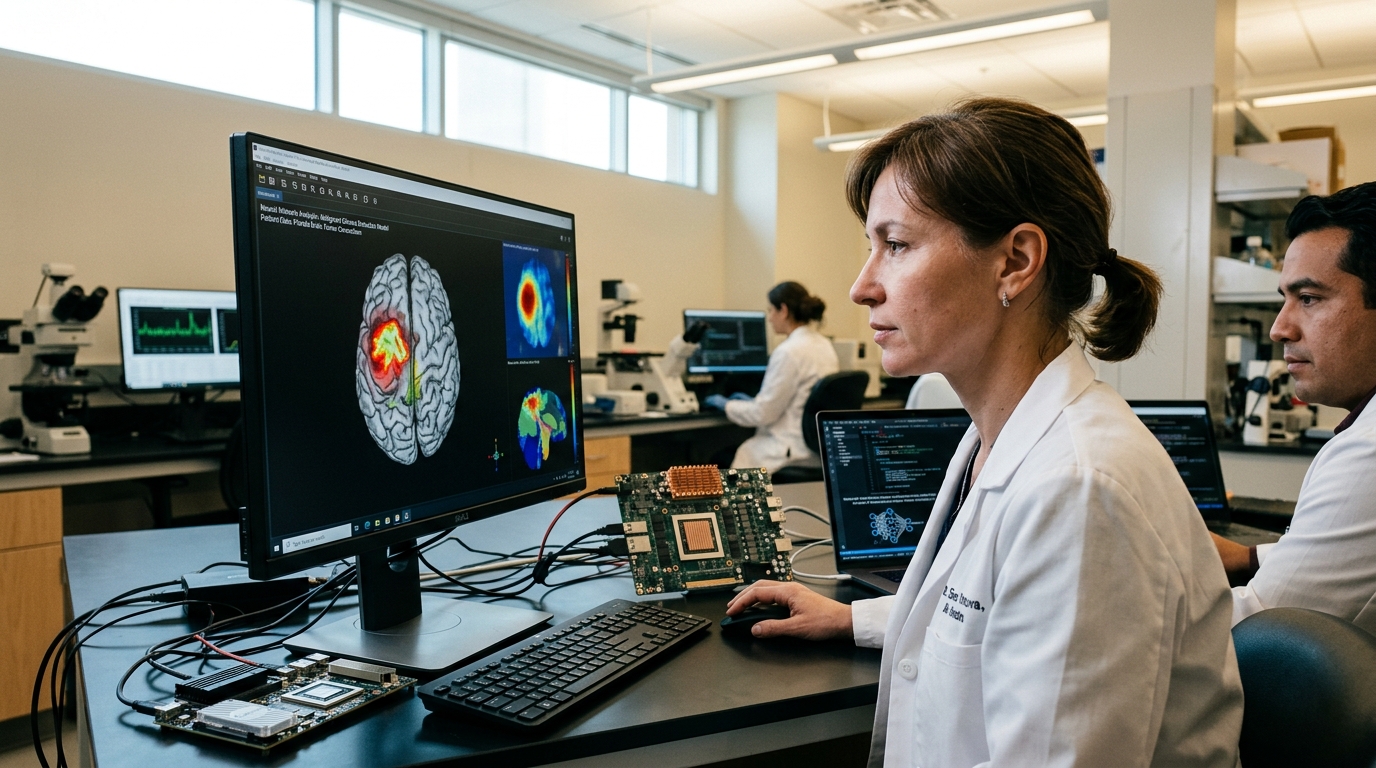
In the heart of Florida, a silent revolution is unfolding within the operating rooms and laboratories of the state's leading medical institutions. Artificial Intelligence (AI), often discussed for its ability to write essays or generate art, has found a far more critical mission: saving human lives from one of medicine's most daunting diagnoses — brain tumors. The use of AI in neuro-oncology is no longer a science fiction scenario; it is a daily reality enhancing surgical precision and treatment efficacy.
Surgical Precision and Real-Time Digital Pathology
One of the greatest challenges in brain surgery is distinguishing between cancerous tissue and healthy brain matter. Historically, surgeons had to wait hours or even days for pathologists to examine tissue samples. Today, at institutions like the Mayo Clinic in Jacksonville and AdventHealth in Orlando, AI technology enables real-time "digital pathology."
By utilizing advanced machine learning algorithms, doctors can analyze tissue images during the surgery itself. AI can identify molecular characteristics of a tumor within minutes, allowing the surgeon to know exactly how much tissue needs to be resected. This dramatically reduces the risk of damaging critical brain regions controlling speech or movement, while ensuring the maximum possible removal of the tumor.
Radiomics: Decoding the Invisible
Progress does not stop in the operating room. "Radiomics" is an emerging field where AI analyzes thousands of features from MRI scans that are impossible for the human eye to detect. In Florida, researchers are using AI to predict a tumor's genetic makeup — such as the presence of the IDH mutation — without the need for an invasive biopsy.
This "imaging-based liquid biopsy" allows oncologists to design personalized treatment plans much earlier. For example, if AI predicts a tumor will be particularly aggressive, doctors can immediately initiate a more intensive combination therapy. AI's ability to process vast amounts of data means patients receive treatment "tailor-made" to their unique biology.
Personalized Care and the Power of Data
Moffitt Cancer Center in Tampa is at the forefront of using AI to predict patient response to treatment. By analyzing historical data from thousands of previous cases, algorithms can estimate how a specific patient will react to a particular dose of radiation or a new immunotherapy drug.
- Reduction of diagnostic time from days to minutes.
- Increased precision in identifying tumor margins.
- Prediction of side effects before treatment begins.
- Eligibility for clinical trials perfectly matched to the patient's genetic profile.
This approach not only improves survival rates but also enhances the quality of life for patients, as ineffective or overly toxic treatments are avoided.
Challenges and the Human Element
Despite the excitement, experts in Florida emphasize that AI is an ally, not a replacement for the physician. The ethical use of data and ensuring that this technology is accessible to all citizens, regardless of socioeconomic status, remains a significant challenge. The "black box" nature of some algorithms — where doctors may not know exactly how the AI reached a conclusion — requires constant oversight and transparency.
However, the direction is clear. The integration of artificial intelligence in the fight against brain tumors in Florida serves as a model for how technology can serve humanity in its most difficult moments. Hope is no longer based solely on luck, but on computational power and medical genius working hand in hand.