The transition from childhood to adolescence is one of the most critical and enigmatic periods of human development. As hormonal shifts reshape the body, the brain undergoes an equally dramatic reorganization that determines how an individual will face the challenges of adulthood. A recent study, detailed by PsyPost, highlights the power of Artificial Intelligence (AI) in decoding these internal processes, offering a glimpse into the future of preventative mental health.
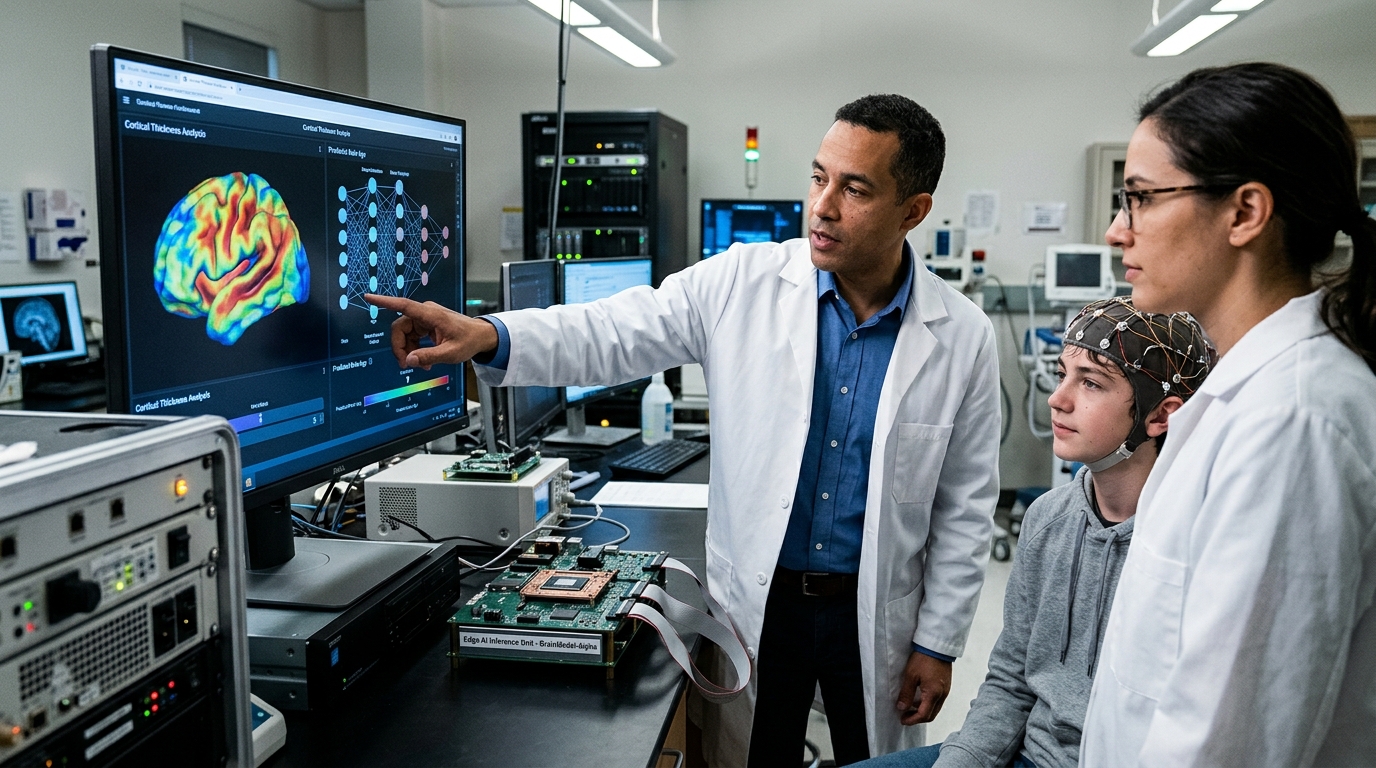
Researchers utilized advanced machine learning models to estimate what is known as "brain age"—a metric that differs from chronological age and reflects the degree of biological maturation of the nervous system. The study found that AI estimates of brain age during childhood can predict with remarkable accuracy the coping skills a child will develop upon reaching adolescence. This finding opens new avenues for understanding psychological resilience and vulnerability.
The Methodology: When Algorithms Meet Neuroscience
The research was based on neuroimaging (MRI) data from a large longitudinal sample of children. The AI was trained to recognize patterns in gray and white matter, as well as connectivity between different brain regions, such as the prefrontal cortex and the amygdala—key areas for impulse control and emotional regulation. The "brain age gap," the difference between predicted biological age and a child's actual chronological age, emerged as a potent biomarker.
According to the results, children whose brains exhibited a more "mature" structure for their age tended to employ healthier coping strategies in adolescence. These strategies include cognitive reappraisal—the ability to view a negative situation in a more positive light—and active problem-solving. Conversely, children with a "younger" brain relative to their chronological age were more prone to avoidant behaviors or emotional suppression, factors often linked to anxiety and depression.
Predicting Psychological Resilience
The significance of this discovery lies in the fact that the ability to cope with difficulties is not merely a learned personality trait but is deeply rooted in the brain's biological architecture. The use of AI allows scientists to identify early on those children who might struggle to manage the stress of adolescence, not based on their behavior, which can be misleading, but based on their neural development.
- Cognitive Maturity: Faster development of the prefrontal cortex is linked to better self-regulation.
- Emotional Regulation: Strong connections between emotional and logical centers predict lower anxiety levels.
- Early Intervention: Identifying the "brain age gap" can lead to targeted psychological support before issues manifest.
However, researchers are quick to clarify that a "younger" brain is not a definitive sentence. Brain plasticity during childhood and adolescence is immense. This means that environment, education, and family support can modify these developmental trajectories, strengthening the skills that biology might be slow to provide.
Ethical Questions and the Future of Neuro-Prognosis
Despite the promising prospects, using AI to "score" children's brain development raises serious ethical concerns. There is a risk of biological determinism—the notion that a child's future is predestined by their MRI scans. Furthermore, questions arise regarding data privacy and the potential for stigmatizing children labeled as "developmentally behind" by an algorithm.
"Technology allows us to see beneath the surface, but we must not forget that the brain is a dynamic system interacting with the world. AI is a diagnostic tool, not a crystal ball of destiny," industry analysts note.
In the future, integrating such tools into pediatrics and school psychology could transform the educational system, allowing for a truly personalized approach that respects the unique developmental pace of every brain. The challenge remains to balance technological precision with human empathy.