

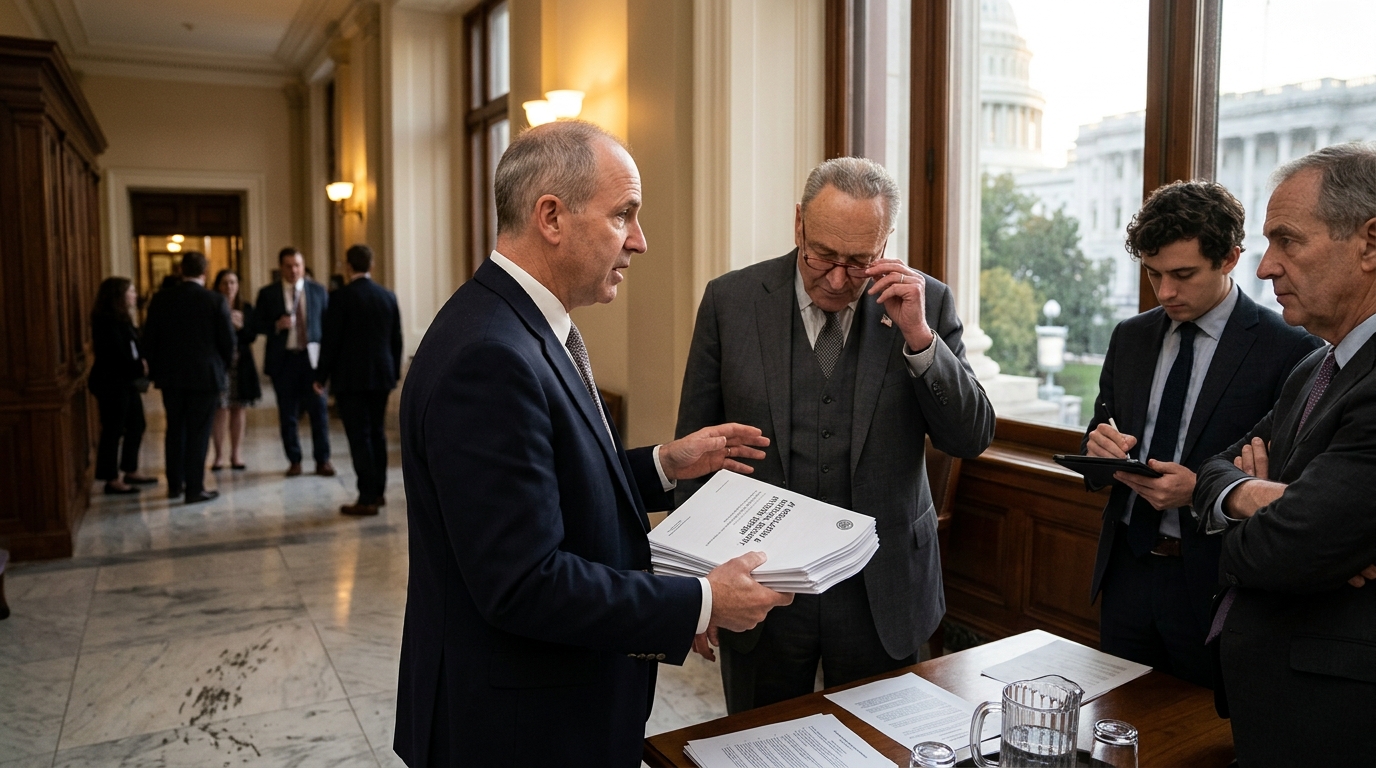
The relationship between Silicon Valley and Washington is undergoing a radical transformation as artificial intelligence ceases to be viewed merely as a commercial product and is elevated to a critical pillar of national security. The recent revelation that the U.S. government initially placed restrictions on the release of Anthropic’s most advanced models—a company that built its reputation on "safe AI"—marks a turning point. This is no longer a simple debate about ethics; it is a strategic move on the geopolitical chessboard, where the code of large language models is treated with the same gravity as nuclear secrets.
The Fear of 'Dual-Use' and the Role of the Commerce Department
The primary reason behind the restrictions on Anthropic lies in the concept of "dual-use." Frontier models, such as those in the Claude series, possess capabilities that, while beneficial for scientific research, can be weaponized for destructive purposes. The U.S. Department of Commerce’s Bureau of Industry and Security (BIS) expressed concerns that access to these models by "adversarial actors"—with a clear nod toward China and Russia—could accelerate the development of cyberweapons or even the synthesis of biological agents.
According to sources close to the administration, Anthropic’s algorithms were subjected to exhaustive testing to determine if they could assist in planning attacks on critical infrastructure. The irony is that Anthropic was founded by former OpenAI executives with exactly this purpose: creating "Constitutional AI" that regulates itself. However, for the American state, a company’s internal ethics are not a sufficient guarantee when global hegemony is at stake.
The Strategy of 'Controlled Release'
The restrictions did not mean a total ban, but rather an enforced delay and the requirement for stricter "Know Your Customer" (KYC) protocols. Anthropic was forced to demonstrate that it possesses the technical safeguards to ensure its models cannot be exported to embargoed countries or used by entities linked to foreign militaries. This created a precedent where the government directly intervenes in the software product development cycle, something that traditionally occurred only in the defense sector.
- Strict monitoring of compute thresholds used for training.
- Mandatory reporting to the government for models exceeding specific power limits.
- Restrictions on exporting model weights, which are now considered national treasures.
Geopolitical Conflict and the Race with China
In the background of this decision lies the AI arms race with Beijing. Washington fears that if American companies release their technology too quickly, Chinese competitors will be able to reverse-engineer it or train their own models on the outputs of American ones, saving billions of dollars and years of research. The Anthropic case was used as a "test tube" for the implementation of President Biden’s Executive Order on AI, which institutionalized close cooperation between the private sector and intelligence agencies.
"We are not just regulating a company; we are protecting the borders of the digital future," said a high-ranking Commerce Department official.
Anthropic, for its part, maintained a cooperative stance, realizing that its survival depends on state support and access to American semiconductors. However, this delay allowed competitors with less stringent internal protocols to gain market ground, raising questions about whether over-regulation might ultimately harm American innovation in the long run.
Conclusions for the Future
The initial restriction of Anthropic signals the end of the era of "innocence" for Silicon Valley. Artificial intelligence is now a tool of power. In the future, we expect every new "frontier AI" model to undergo a process similar to the approval of new weapons systems. This means less transparency for the public but greater integration of technology into the state apparatus. The challenge remains: how to maintain the creativity and speed of private initiative when the shadow of the Pentagon falls over the developers' keyboards?





