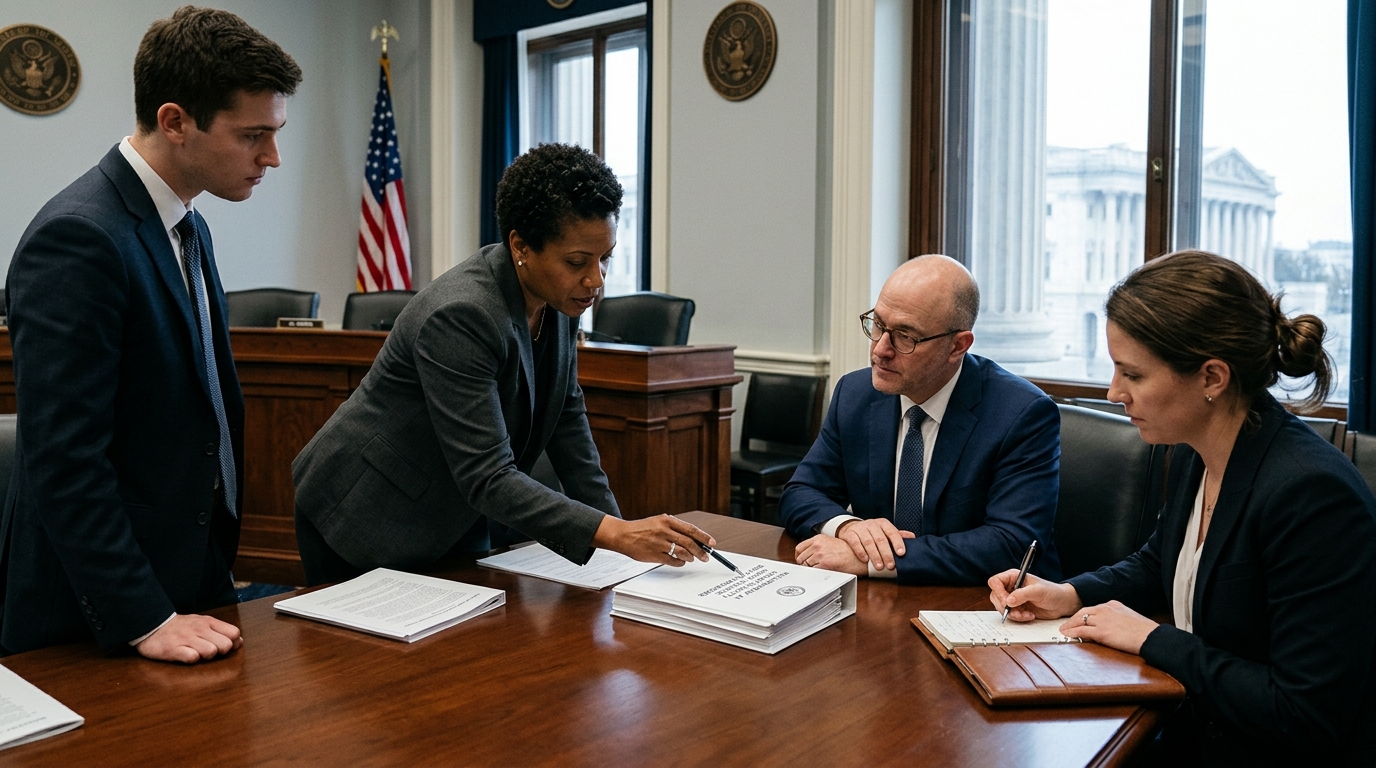
In a pivotal moment for the future of digital governance, the United States government is engaged in high-level negotiations with leading artificial intelligence companies to shape a new framework of voluntary standards. According to a Financial Times report, later confirmed by Reuters, this move reflects Washington's growing apprehension regarding the risks posed by 'frontier models' and its desire to maintain global leadership without stifling innovation through heavy-handed legislation.
The Strategy of 'Soft' Regulation
The American approach stands in stark contrast to that of the European Union. While Brussels has already implemented the AI Act—a comprehensive piece of legislation imposing strict, legally binding obligations—Washington favors the path of voluntary commitments. These talks, conducted under the auspices of the Department of Commerce and the newly established U.S. AI Safety Institute (USAISI), aim to create unified protocols for model red-teaming, data transparency, and the prevention of AI misuse in developing biological weapons or launching sophisticated cyberattacks.
Participating firms, including OpenAI, Google, Meta, and Anthropic, are under immense pressure to prove that self-regulation can be effective. For the administration, the stakes are twofold: protecting national security and civil liberties on one hand, and ensuring the U.S. remains the premier destination for AI investment by avoiding the bureaucratic hurdles that many fear will hinder European progress.
Frontier Models and National Security Concerns
A central theme of the discussions is the definition and oversight of 'frontier models.' These are systems possessing unprecedented computational power and capabilities that edge toward the boundaries of human intelligence. There is a profound concern in Washington that if these models fall into adversarial hands or develop unforeseen behaviors, the consequences could be catastrophic. Consequently, the voluntary standards are expected to include more rigorous pre-release testing for any major new Large Language Model (LLM) entering the market.
- Rigorous risk assessment for cybersecurity and biological threats.
- Transparency regarding the use of copyrighted training data.
- Implementation of robust watermarking technologies to identify AI-generated content.
- Enhanced collaboration with government agencies for vulnerability disclosure.
However, critics of this 'soft law' approach argue that voluntary commitments lack teeth. Without the threat of fines or legal sanctions, companies might prioritize profits and market share over safety—especially in a hyper-competitive environment where being first to market can dictate billions in valuation.
Geopolitics and the Race with China
One cannot analyze Washington's maneuvers without considering the 'China factor.' U.S. policymakers fear that excessive regulation could grant an advantage to Beijing, which is investing heavily in AI with the goal of global dominance by 2030. Voluntary standards serve as a 'middle way': they allow the flexibility needed for rapid development while establishing a moral and technical high ground that the U.S. hopes its allies will adopt as a global benchmark.
Industry Reaction and Market Implications
While tech giants appear willing to cooperate, their participation comes with caveats. There is a lingering fear that voluntary standards might morph into de facto regulations that favor established players with deep pockets, thereby stifling competition from smaller startups. Furthermore, companies are wary of disclosing proprietary information or trade secrets under the guise of increased transparency.
The coming months will be decisive. As 2026 unfolds, the success of these negotiations will determine whether humanity can harness its most powerful creation through consensus and collaboration, or if the heavy hand of the law will ultimately be required to safeguard the public interest.