

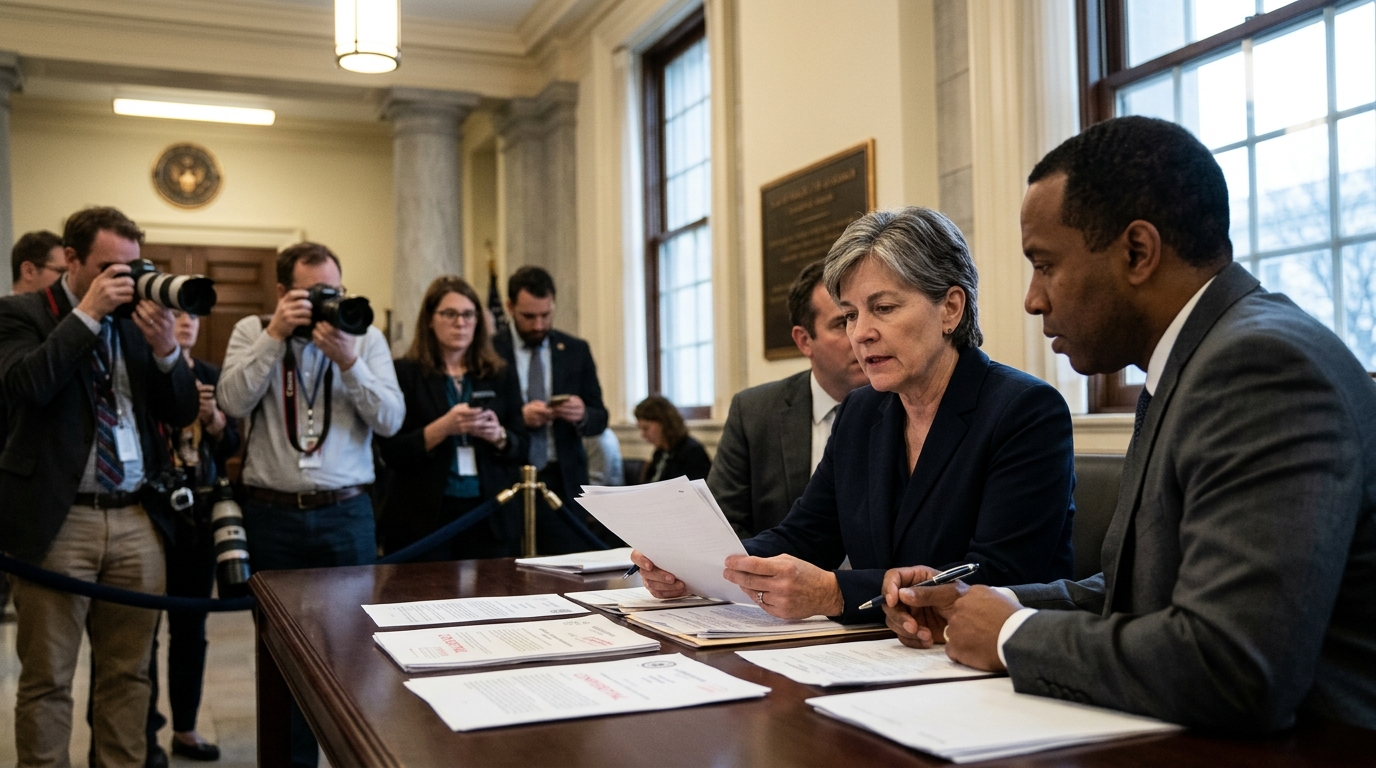
In a move poised to reshape the landscape of global technological hegemony, the United States government has announced the lifting of stringent export restrictions on Fable 5, Anthropic’s most advanced artificial intelligence model. This decision, coming after months of intense deliberation between the Department of Commerce and the company’s leadership, underscores Washington's attempt to balance national security with the imperative for economic expansion in the computing sector.
The Backstory of Compliance and Safety Protocols
Fable 5 is not merely another large language model. It is a 'Frontier AI' system with unprecedented capabilities in coding, biological data synthesis, and cyber-defense. These very capabilities were what triggered the initial export ban to non-allied jurisdictions and strategic rivals. According to sources within the Department of Commerce, Anthropic was required to implement a series of 'kill-switches' and sophisticated filters that prevent the model from being utilized to develop weapons of mass destruction or conduct large-scale cyberattacks.
Allie Mellen, principal analyst at Forrester, noted in an interview with Bloomberg Tech that this move serves as a validation for Anthropic, which has long championed 'safety by design.' The company successfully convinced regulators that Fable 5 can operate abroad without compromising American interests by utilizing a new encrypted cloud-access technology that allows for real-time usage monitoring and auditing.
Geopolitical Implications and the Race Against China
The timing of this decision is far from coincidental. As China continues to pour billions into its own models, such as Baidu’s Ernie Bot and SenseTime’s proprietary systems, the US is realizing that excessive isolationism could lead to a loss of market share and influence. By allowing Anthropic to deploy Fable 5 to allies in Europe, the Middle East, and Asia, Washington is effectively exporting its own ethical and safety standards for AI.
- Strengthening technological ties with G7 nations.
- Creating a 'Western AI ecosystem' to counter Eastern closed-loop systems.
- Pressuring OpenAI and Google to tighten their own protocols to receive similar licenses.
However, the decision is not without its detractors. Some security analysts warn that once the weights or parameters of a model become accessible outside domestic borders, control becomes largely theoretical. "You cannot put the genie back in the bottle," a defense industry executive remarked, highlighting the risks of intellectual property theft or reverse engineering.
Economic Impact and the AI Marketplace
For Anthropic, the lifting of restrictions means access to a multi-billion dollar market. Fable 5 is expected to see massive adoption by multinational corporations seeking reliable AI tools for supply chain automation and complex data analytics. Shares of companies with significant stakes in Anthropic, such as Amazon and Alphabet, saw a notable uptick following the announcement, reflecting investor optimism regarding the company's global revenue potential.
"Artificial intelligence is the new oil, and the US has just opened the pipelines for its allies. It is a strategic move that blends commerce with foreign policy," Ed Ludlow stated during the broadcast.
In conclusion, the case of Fable 5 serves as a roadmap for how frontier AI models will be regulated in the coming years. It is no longer just a technological breakthrough; it is a tool of statecraft that requires delicate handling, diplomatic flexibility, and constant oversight. Whether Anthropic can maintain its promise of 'safe AI' in such a volatile global environment remains to be seen, but for now, the gates are open.





