

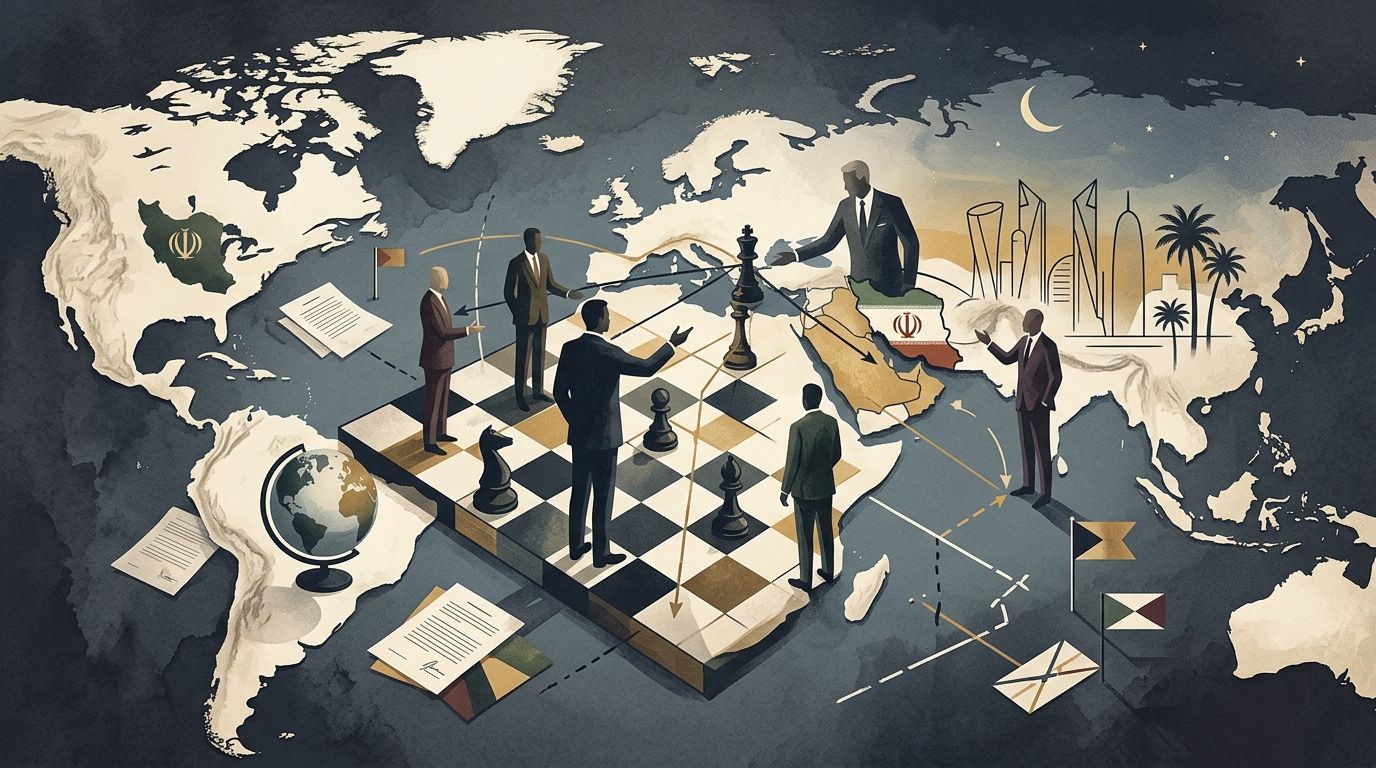
In the height of the summer of 2026, the diplomatic atmosphere in the Persian Gulf feels more like a psychological thriller than traditional foreign policy. President Donald Trump's recent statements from Doha, where he characterized a potential meeting with the Iranian leadership as "maybe important, maybe not," represent the pinnacle of a strategy he has spent decades perfecting: the art of strategic ambiguity. While rumors of a backchannel rapprochement between Washington and Tehran swirl, the official White House stance remains intentionally nebulous, leaving allies, adversaries, and international markets in a state of perpetual suspense.
The Strategy of Ambiguity and the "Art of the Deal"
For Trump, diplomacy is not a linear process governed by protocols, but a series of maneuvers designed to shock and apply pressure. By labeling the meeting as "maybe unimportant," he lowers expectations, stripping Iran of the leverage associated with a "historic moment." Simultaneously, he leaves the door wide open for a bargain that could fundamentally shift regional dynamics. This tactic is designed to force Tehran into making the first substantive concession, fearing that the window for sanctions relief might slam shut permanently.
In Tehran, the silence is equally deafening. Regime hardliners remain deeply skeptical, fearing that any photo op with Trump would be viewed as a capitulation. However, the internal economic pressure in Iran, despite bolstered ties with China and Russia, remains the Islamic Republic's Achilles' heel. Doha, acting as the mediator, plays a role requiring exquisite finesse, attempting to bridge the gap between American bravado and Iranian reticence.
Qatar as the Indispensable Intermediary
It is no coincidence that these discussions are unfolding in Qatar. The small but immensely wealthy emirate has emerged as the "Switzerland" of the Middle East. By maintaining excellent relations with the US (hosting the Al Udeid Air Base) and functional communication channels with Iran, Qatar is the only actor capable of guaranteeing the security and secrecy of such high-stakes contacts. The leadership in Doha understands that successful mediation will enhance its geopolitical weight, making it indispensable to global energy stability.
- Using Doha as neutral ground allows both sides to save face and maintain their domestic narratives.
- Qatari diplomats act as "translators" not just of language, but of the intentions behind aggressive rhetoric.
- The presence of a high-level US delegation suggests that, despite the flippant public tone, there is serious interest in de-escalation.
Energy and Markets: The Silent Anxiety
Global oil markets hang on every word uttered by the American President. A potential deal that would allow Iranian crude to return to global markets without restrictions could lead to a sharp decline in prices, offering relief to Western economies struggling with persistent inflationary pressures. Conversely, a failure of the Doha talks could ignite a new cycle of tensions in the Strait of Hormuz, potentially sending crude prices to record highs.
Wall Street analysts note that Trump uses uncertainty as a tool for price control. By neither confirming nor denying progress, he keeps speculators at bay and maintains prices in a state of "managed" volatility. The reality is that the global economy of 2026 is exceptionally vulnerable to geopolitical shocks, and a meeting in Doha, no matter how "insignificant" Trump claims it to be, is the single most important event of the year for energy investors.
The Geopolitical Stakes for 2026
Beyond oil and personal strategies, the stakes involve the very security architecture of the Middle East. If Trump manages to extract a new agreement—a "Trump Deal" to replace the long-defunct JCPOA—he will have achieved what his predecessors failed to do: contain Iran's regional influence without resorting to military force. However, the risks are immense. Israel watches with trepidation, fearing that Trump might sacrifice the security of regional allies for a "victory photo."
"In 21st-century diplomacy, truth is often the first casualty of negotiation, but ambiguity is the most powerful weapon," note sources close to the State Department.
In conclusion, the Doha meeting, whether it manifests as a formal summit or remains a series of shadow contacts, signals a new phase in West-East relations. Trump, playing the game of probabilities, knows that history will judge him not by his cryptic remarks, but by whether he secures the "grand bargain" that stabilizes the region or precipitates a new, more dangerous conflagration.




