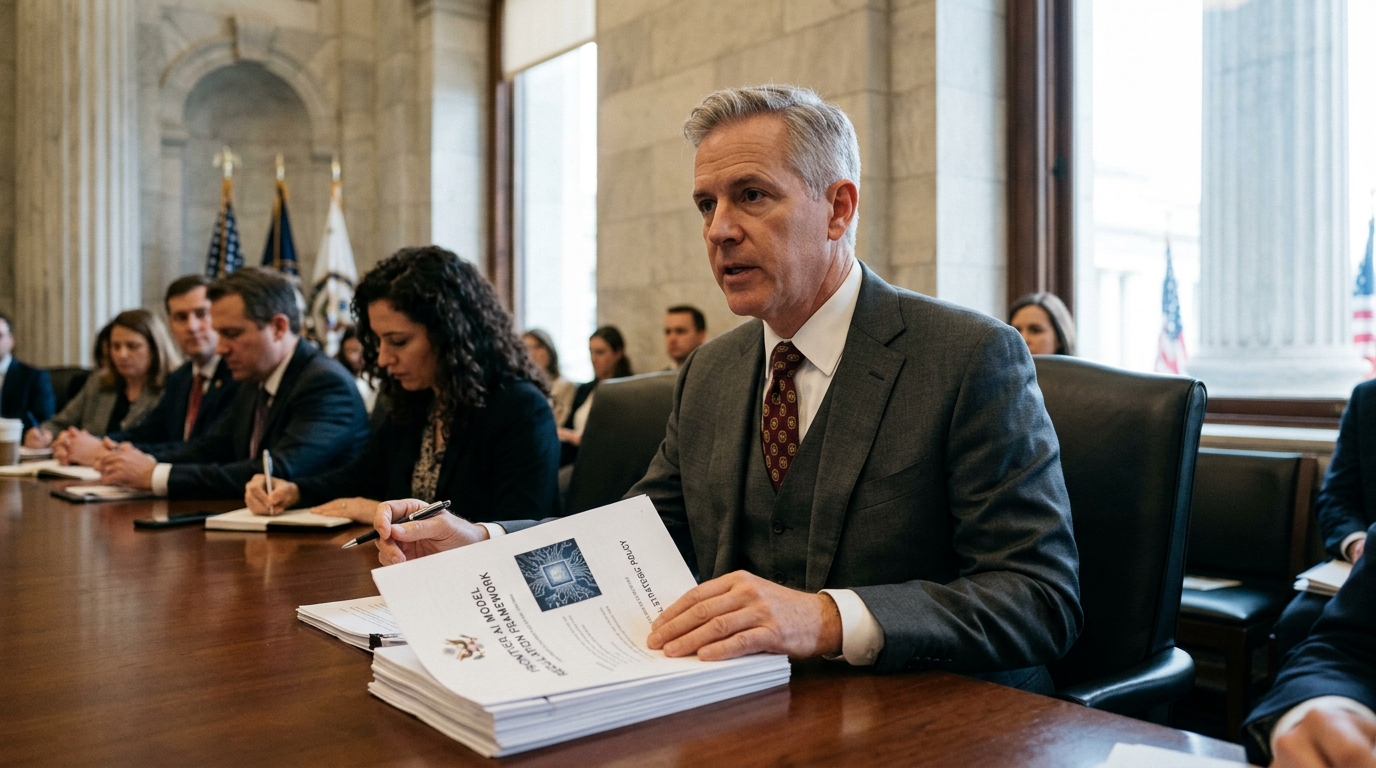
As we navigate the summer of 2026, the global technological chessboard is vibrating with Washington's latest maneuvers. President Trump’s new Executive Order on Artificial Intelligence is not merely a bureaucratic continuation but a radical pivot from the previous administration's approach. While the 2023 Biden order focused on safety, equity, and the mitigation of bias, the new direction is stark: AI is now treated as the ultimate weapon of geopolitical power and economic supremacy.
The centerpiece of this new policy is the so-called "Frontier Models." These are next-generation AI systems requiring billions of dollars in computational power, capable of transforming fields ranging from molecular biology to cybersecurity. The Trump administration, through this new framework, seeks to unshackle American companies from the "bonds of over-regulation" while maintaining a draconian grip on technology exports to rival states, primarily China.
The Great Repeal and the New Philosophy
The first move of the administration was the de facto cancellation of the core pillars of the previous executive order. For Trump and his advisors, requirements for "inclusivity" and "ethical alignment" in AI were viewed as hurdles that stifle innovation. The new order emphasizes "freedom of inquiry" and rapid deployment, promoting a model where the market—not the state—determines safety standards, unless national security is directly compromised.
According to analysts, this approach reflects the influence of a Silicon Valley faction aligned with the "effective accelerationism" (e/acc) movement. Major tech companies are now being called upon to act as national champions. "We cannot worry about the hypothetical sensitivities of an algorithm when the adversary is developing systems to control the global web," says a source close to the White House. This rhetoric marks the end of the era of "precautionary regulation" and the beginning of an era of "strategic aggression."
Energy and Infrastructure: A Manhattan Project for AI
One of the most intriguing and perhaps under-discussed aspects of the order is the link between AI and energy policy. Training Frontier models requires astronomical amounts of electricity, which has pushed the American grid to its limits. Trump proposes an aggressive deregulation of the energy sector, promoting the use of nuclear power and natural gas specifically for data centers.
- Creation of "AI Special Economic Zones" with low energy costs.
- Accelerated licensing for Small Modular Reactors (SMRs) to power GPU clusters.
- Incentives for the construction of ultra-high-speed data transmission infrastructure across the US.
This "energy dominance" is seen as the key to maintaining the lead over China, which faces similar challenges. The logic is simple: whoever possesses the cheapest energy and the most processors will write the rules of the 21st century.
Geopolitics and the Digital Iron Curtain
The order also introduces strict limitations on foreign entities accessing American Frontier models via the cloud. The government is mandating that cloud service providers (AWS, Azure, Google Cloud) verify the identity of every foreign user training models above a certain computational threshold. This creates a "digital wall" aimed at preventing China, Russia, and Iran from leveraging American infrastructure to develop their own AI systems.
"AI is the new oil, and Frontier models are the refineries. We will not allow our adversaries to use our refineries to fuel their machines," the Secretary of Commerce stated.
However, this policy carries risks. The European Union, following its own path with the AI Act, finds itself in a difficult position. The divergence between American deregulation and European rights protection could lead to a market fragmentation, where top-tier innovations remain within US borders, leaving Europe as a regulated but technologically dependent region.
Conclusion and Outlook
Trump’s new Executive Order on Frontier models is a declaration of power. It shifts the weight from ethics to strength and from global cooperation to national competition. While the risks of uncontrolled AI remain in the background, Washington seems to be betting that the greatest risk is not AI itself, but America losing its primacy in the field. The coming months will show whether this aggressive strategy will bear fruit or if it will ignite a new arms race with unpredictable consequences for humanity.