

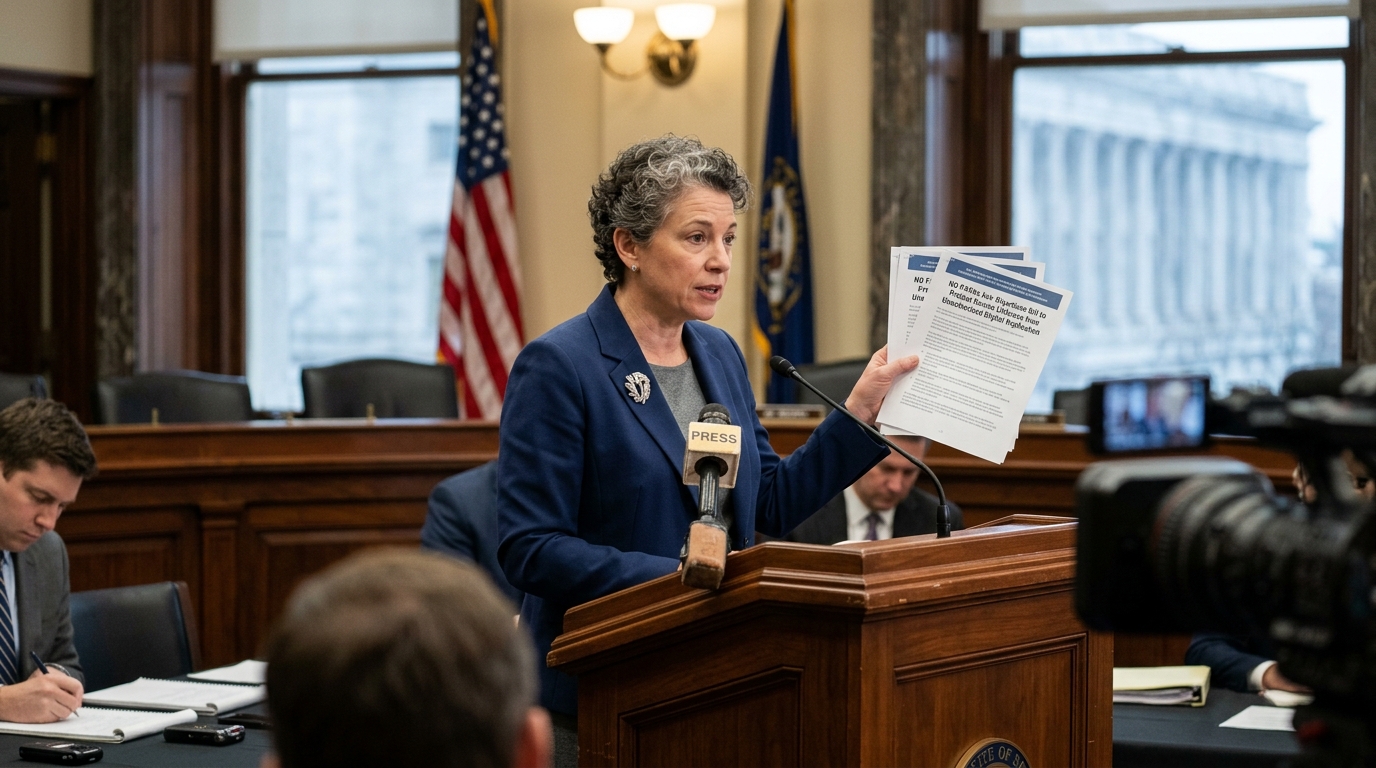
In an era where the digital replication of human existence has become a matter of a few clicks, the United States legislative branch is attempting to establish the first significant safeguards. The approval of the "Nurture Originals, Foster Art, and Keep Entertainment Safe" (NO FAKES Act) by the US Senate Judiciary Committee marks a milestone in the effort to regulate generative artificial intelligence. The bill, which passed with broad bipartisan support, aims to establish a federal intellectual property right over the voice and likeness of every individual, protecting citizens from the creation of "digital replicas" without their express consent.
Legal Protection of Digital Identity
The NO FAKES Act is not merely a reaction to technological challenges but a fundamental reassessment of what constitutes "property" in the digital age. Until now, the protection of voice and likeness relied on a patchwork of state "right of publicity" laws, which varied significantly from state to state. With the new bill, a uniform federal framework is created that covers all Americans, regardless of whether they are celebrities or private citizens.
The central point of the legislation is the prohibition of producing, hosting, or distributing unauthorized digital replicas used in audiovisual works or sound recordings. This means that platforms and content creators will now bear legal responsibility if they allow the use of AI to produce content that convincingly mimics a real person without permission. The need for this regulation became imperative after incidents like "Heart on My Sleeve," the AI-generated song that mimicked the voices of Drake and The Weeknd, causing an earthquake in the music industry.
The Conflict of Interests: Art vs. Technology
The bill's progress was not without friction. On one side, powerful unions like SAG-AFTRA and associations like the RIAA (Recording Industry Association of America) lobbied heavily for its passage, viewing AI as an existential threat to their members. Artists argue that their voice is the tool of their trade and the soul of their art, and its theft by algorithms constitutes a flagrant violation of their human rights.
On the other hand, tech giants and free speech advocates expressed concerns that the legislation could stifle innovation or be used as a tool for censorship. The critical question was where protection ends and creative freedom begins. To appease these concerns, the bill includes significant exemptions for parody, satire, criticism, news reporting, and documentaries. These exemptions, based on the First Amendment of the US Constitution, aim to ensure that art and journalism will not be unduly restricted.
Global Implications and the Future of AI
The move by the US Senate is being closely watched by the international community. As the European Union is already implementing its own AI Act, the US approach focuses more on individual rights and intellectual property than on the horizontal regulation of technology. The success of the NO FAKES Act could serve as a model for similar legislation worldwide, creating a global network for the protection of human identity.
However, challenges remain. The duration of post-mortem rights was a point of intense friction, with the final compromise proposal setting a specific timeframe, allowing artists' heirs to manage their digital legacy. Furthermore, the technical difficulty of identifying and removing such content from the internet means the law will be severely tested in practice. What is certain is that the era of impunity for deepfakes is coming to an end, giving way to a new legal reality where human uniqueness regains its rightful value.




