

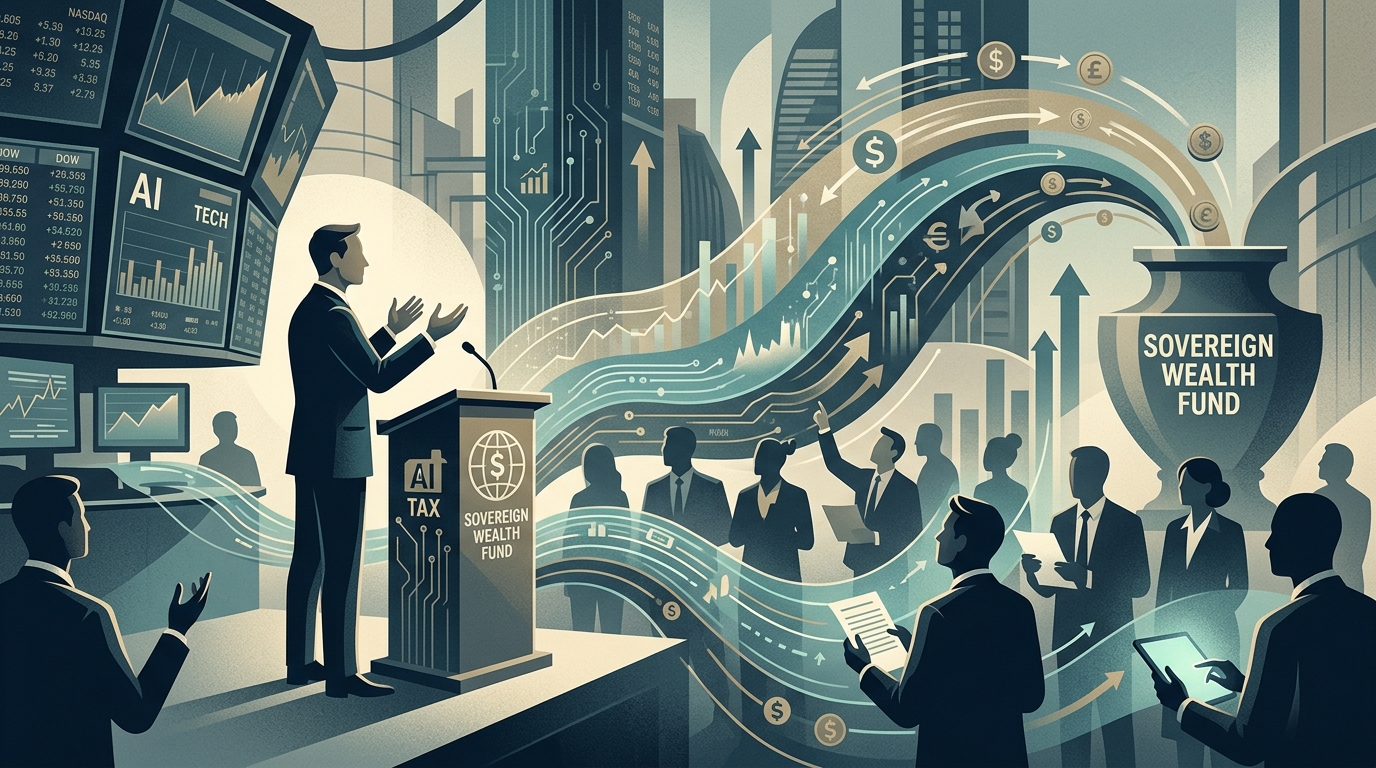
In a move poised to ignite one of the most consequential political and economic debates of the decade, Senator Bernie Sanders has introduced landmark legislation: a specialized tax on corporations reaping massive profits from Artificial Intelligence automation. The proposal aims to establish a U.S. Sovereign Wealth Fund, designed to distribute the dividends of the technological revolution directly to citizens, serving as a buffer against the looming employment crisis.
The Philosophy of the 'AI Dividend'
The Sanders proposal, unveiled via Roll Call, is predicated on the belief that Artificial Intelligence is not merely another corporate tool, but a collective achievement of humanity, built upon decades of publicly available data and government-funded research. Consequently, the Senator argues that the fruits of this technology should not be hoarded exclusively by a handful of Silicon Valley tech titans.
The plan outlines a graduated tax on companies that replace human workers with AI systems or exhibit explosive productivity growth without a corresponding rise in employee wages. These revenues would be funneled into a Sovereign Wealth Fund, which would invest in a diversified portfolio of assets. The returns on these investments would be returned to American citizens as an annual dividend, mirroring the model of the Alaska Permanent Fund derived from oil revenues.
Economic Implications and Market Reaction
Critics of the proposal, primarily from the Republican camp and technology lobbies, warn of catastrophic consequences for innovation. They argue that such a tax would act as a disincentive for research and development investments, placing American firms at a disadvantage against global competitors, particularly from China.
- Capital Flight Risk: Fears persist that AI giants might relocate their headquarters to jurisdictions with more favorable tax regimes.
- Measurement Difficulty: Quantifying profits derived solely from AI is technically complex and legally contentious.
- Inflationary Pressures: Some economists express concern that distributing dividends could fuel inflation in an already sensitive economy.
However, Sanders and his supporters maintain that without such intervention, inequality will reach levels that threaten social cohesion. As AI assumes more tasks—from coding to medical diagnostics—the traditional model of labor for survival appears to be fracturing.
The Alaska Model and Global Perspectives
The proposed fund is not without precedent. Nations like Norway, with its oil fund, have successfully converted natural resources into intergenerational wealth. Sanders argues that data and computing power are the 'new oil' of the 21st century. The difference is that this resource is inexhaustible and ever-growing.
"If technology is going to replace millions of jobs, then the workers must own a piece of that technology," Sanders stated during the bill's introduction. "We cannot allow AI to become the ultimate tool for transferring wealth from the bottom to the top."
Political Hurdles and the Future of Legislation
With Congress remaining deeply polarized, the chances of the bill passing immediately are slim. However, this move sets the stage for the 2028 presidential election cycle. The proposal forces politicians on all sides to take a stand on a critical question: Who owns machine intelligence? In a world where productivity is decoupling from human labor, redistribution through a sovereign fund may no longer be a socialist utopia, but an economic necessity to maintain the consumer base of capitalism itself.





