

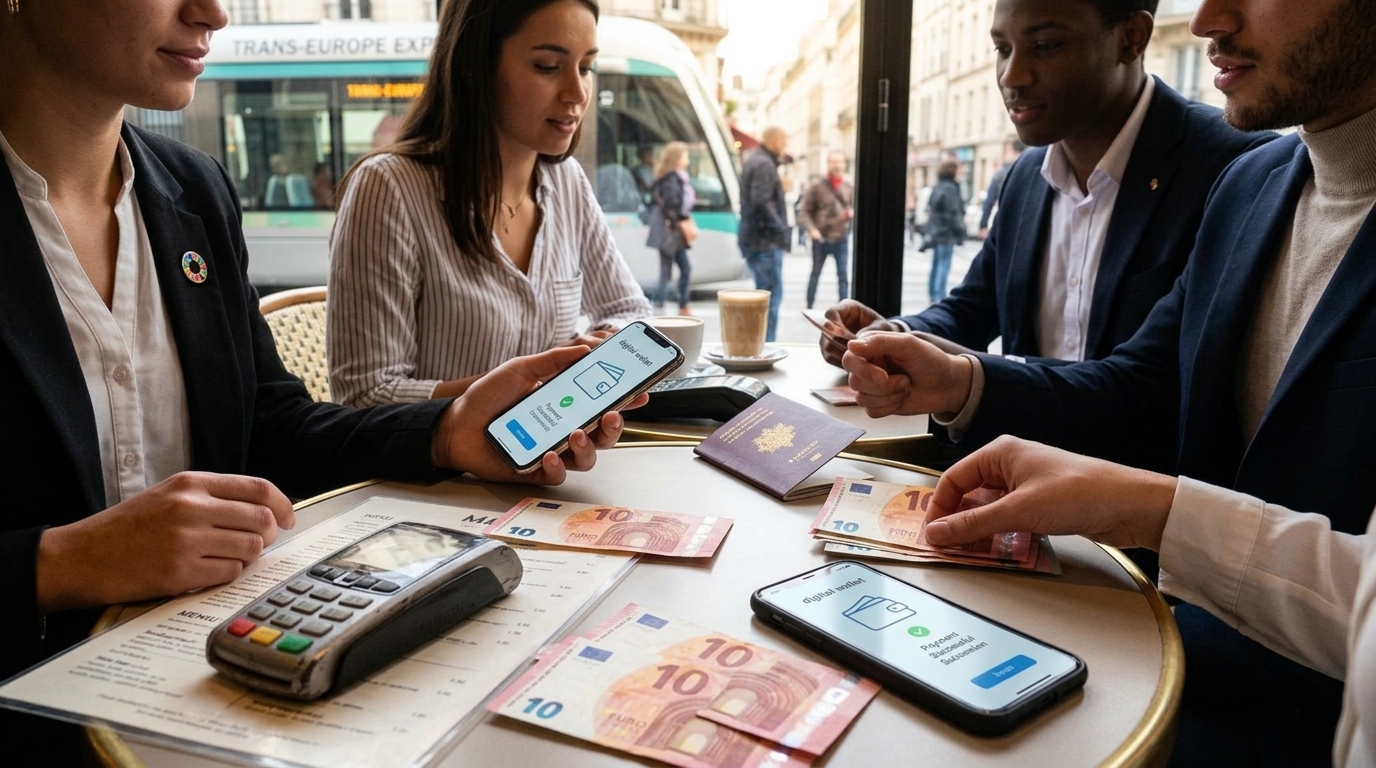
The digital economy of Greece is experiencing one of its most pivotal moments as the IRIS instant payment system, which began as a local banking initiative, transforms into an international player. As of late June 2026, the interconnection of IRIS with the European Payments Alliance (EuroPA) marks the beginning of a new era where borders in monetary transfers cease to be an obstacle for the average citizen.
This move is not merely a technical upgrade; it is a strategic response from the Eurozone to the dominance of American giants like Visa and Mastercard. Through the EuroPA platform, IRIS is now linked with similar systems in other countries, such as Bizum in Spain and Andorra, and Bancomat Pay in Italy. This allows users to send and receive money in real-time using only their mobile phone number, without the need for an IBAN or the wait associated with traditional wire transfers.
The EuroPA Alliance and Geographical Expansion
The European Payments Alliance serves as the cornerstone of this transition. In the initial phase, the interconnection focuses on the Mediterranean axis, where instant payment systems already have high penetration. Greek travelers in Italy or Spain can now split restaurant bills or pay small amounts to merchants with the same ease they do in Athens. EuroPA aims to cover the entire Eurozone by 2027, creating a homogeneous network that bypasses traditional correspondent banking.
The significance of this collaboration lies in "interoperability." Until recently, these systems were "closed ecosystems." An IRIS user could not interact with a Bizum user. The bridge built now allows for instant settlement of transactions in seconds, 24/7, 365 days a year. For the Greek market, where IRIS has already surpassed 3 million users, this development provides immense added value.
Transaction Limits and the Regulatory Framework
Despite the freedom offered by cross-border use, there are clear restrictions aimed at security and fraud prevention. The daily limit for peer-to-peer (P2P) transfers remains, at this stage, at 500 euros. This limit was deemed necessary to prevent large losses in case of credential theft, as the speed of instant payments makes reversing a transaction extremely difficult.
However, for payments to merchants (P2B), the limits are more flexible and depend on each user's bank and risk profile. The European Union, through the Instant Payments Regulation (IPR), now mandates that banks offer these services at no additional cost compared to standard transfers. This means that for the consumer, sending money to Madrid via IRIS will soon be—if it isn't already—free or with a minimal fee, overturning the reality of high commissions that held for decades.
The Threat to Cards and the Future of Payments
Why are banks and the EU pushing IRIS and EuroPA so aggressively? The answer lies in "interchange fees." Every time you use a Visa or Mastercard, the merchant pays a fee, part of which ends up with the American organizations. Account-to-Account (A2A) payments, like IRIS, remove the intermediary. This reduces costs for businesses and strengthens European "strategic autonomy" in the field of financial infrastructure.
- Cost Reduction: Merchants are freed from the high costs of POS rentals and card scheme commissions.
- Speed: Funds are credited to the recipient's account in less than 10 seconds.
- Security: Utilization of biometric data and strong authentication through mobile banking apps.
In conclusion, IRIS's expansion into Europe is not just a convenience for tourism. It is the first step toward creating a "European Wallet" that will compete on equal terms with Apple Pay and Google Pay, based on European banking infrastructures. The unification of payments is the final act of completing the single market, and Greece, through IRIS, is at the forefront of this digital revolution.





