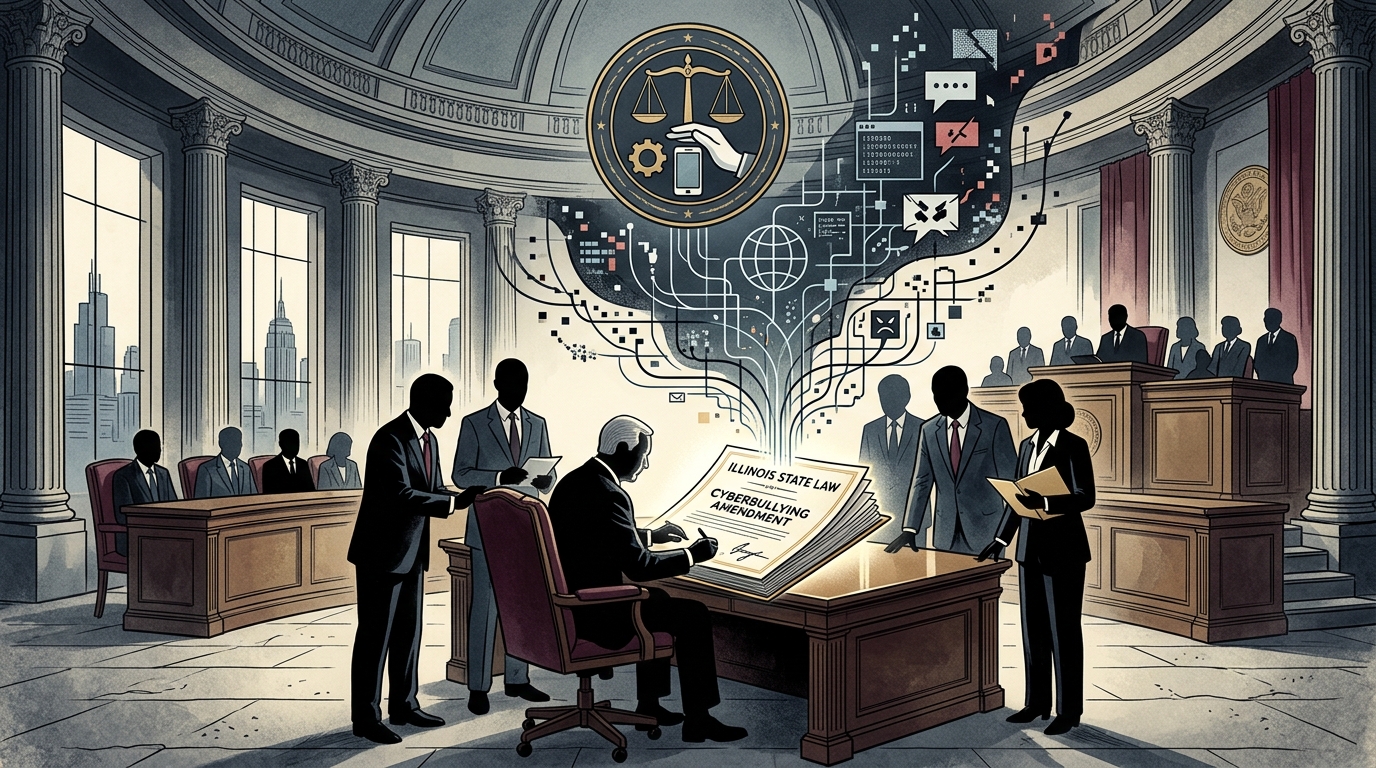
In an era where technology evolves faster than legislation, the state of Illinois is taking a decisive step to protect its citizens—especially minors—from the darker manifestations of artificial intelligence. A newly signed law expands the legal definition of cyberbullying to explicitly include the use of AI-generated images and content. This move is not merely a local legislative update; it is a global signal regarding the urgent need to redefine digital safety in the age of deepfakes.
The Urgency of Legislative Adaptation
The rise of Generative AI tools has made the creation of realistic, yet entirely fabricated, images and videos easier than ever before. What once required specialized graphic design skills can now be accomplished in seconds by anyone with an internet connection. This accessibility has led to a surge in incidents where minors are targeted through the creation of non-consensual deepfake pornography or humiliating imagery intended for extortion or social ostracization.
The new Illinois law recognizes that the psychological impact of these attacks is just as severe, if not more so, than traditional forms of bullying. The digital permanence of this material means victims often feel trapped in a reality they did not create, yet one that haunts their every step online. By codifying AI-generated harassment as cyberbullying, the state provides victims with a clear legal path to seek justice and protection.
Responsibilities of Schools and Educational Institutions
One of the most significant aspects of the new legislation is the mandate it places on schools to update their anti-bullying policies. Educational institutions are now required to manage incidents involving AI content, even if the creation occurred off-campus, provided it disrupts the educational environment or the mental well-being of students.
- Enhancement of digital literacy programs for students, teachers, and parents.
- Stricter reporting and investigation protocols for AI-related bullying incidents.
- Collaboration with law enforcement for serious cases involving the production of non-consensual imagery.
The challenge for educators is immense. How can a school verify the origin of an image? AI detection technology is still in its infancy, making the task of school administrations particularly complex. However, the law provides the necessary legal framework so that these acts do not go unpunished due to a 'technological loophole.'
Privacy Protection and Legal Implications
The law's reach extends beyond the classroom. It paves the way for civil litigation against those who create or distribute such content. According to legal analysts, including AI in the definition of cyberbullying simplifies the process of establishing liability, as it removes ambiguity regarding whether a 'fabricated' image constitutes harassment.
"Technology cannot be a sanctuary for abuse. When someone's likeness is weaponized, the law must be there to disarm the perpetrator," stated a government official during the bill's signing.
Simultaneously, questions are being raised about free speech and the boundaries of satire. However, proponents of the law emphasize that the protection of human dignity and the safety of minors outweigh any perceived right to create harmful, false content. This debate is expected to intensify as other U.S. states and EU member nations consider similar legislative frameworks to curb the misuse of generative technologies.
Conclusion: The Future of Digital Ethics
The Illinois initiative marks a critical milestone. It demonstrates that societies are beginning to realize that artificial intelligence is not a neutral tool, but a force capable of amplifying existing social pathologies. Legislative shielding is essential, but it is not enough. A holistic culture shift is required in how we interact digitally.
In the future, the success of such laws will be judged by the ability of authorities to identify perpetrators in an anonymous digital landscape and the willingness of tech giants to integrate safeguards into their tools. Until then, Illinois provides a roadmap for how democracy can defend itself against digital lawlessness, ensuring that innovation does not come at the cost of human integrity.