

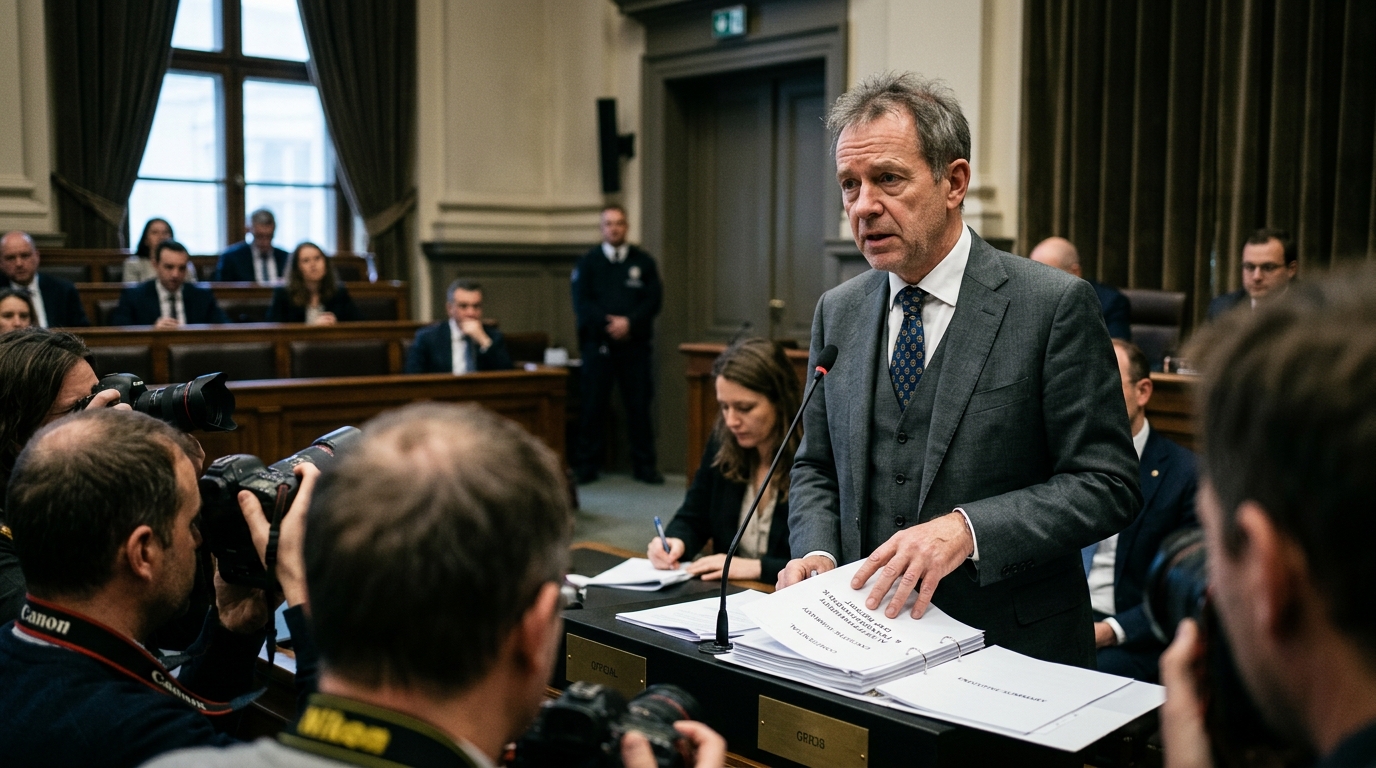
The meteoric rise of artificial intelligence (AI) has brought humanity to a critical juncture where innovation appears to be moving at speeds that safety mechanisms are failing to match. According to a recent report highlighted by Yahoo and based on analyses from leading international think tanks, the global AI industry is systematically failing to meet the safety standards it once promised. Despite lofty declarations at international summits like Bletchley Park, the reality on the ground in model development shows a dangerous lag.
The Gap Between Rhetoric and Reality
The primary issue identified by the report is a profound lack of transparency. Developers of "frontier models" frequently cite commercial secrecy to avoid external scrutiny of their algorithms. This creates a "black box" environment where neither regulators nor the public can know with certainty the risks posed by any given technology. Self-regulation, which was heavily promoted by Silicon Valley over the past two years, now appears to be reaching its limits, proving that without binding legal frameworks, safety is often sacrificed at the altar of competition and speed-to-market.
Furthermore, the report highlights that internal safety teams at major tech firms are often under-resourced or bypassed when pressures to release new products mount. The phenomenon of "safety washing"—the creation of a false image of compliance with safety rules for public relations purposes—has become a central point of concern for policy analysts. When the marketing department's timeline conflicts with the safety researcher's red flags, the former too often wins the day.
Systemic Risks and the Geopolitical Chessboard
Risks are not limited to misinformation or algorithmic bias. The report warns of darker scenarios, such as the use of AI to develop biological weapons or execute large-scale cyberattacks. As models become more autonomous (Agentic AI), their ability to make decisions without human intervention exponentially increases the probability of unintended consequences. The lack of a global oversight body, similar to the International Atomic Energy Agency (IAEA), leaves a void that national legislations are struggling to fill.
On a geopolitical level, the competition between the US and China further complicates the situation. Each side fears that imposing strict safety rules could give the opponent an edge. This "race to the bottom" regarding safety standards is perhaps the greatest threat to global stability. Think tanks are calling for an "innovation truce" to establish common minimum safety thresholds that apply to all global players, regardless of their geopolitical alignment.
The Need for Independent Auditing and Accountability
To address the current situation, the report suggests a radical shift toward independent, third-party auditing. It is no longer enough for companies to claim their models are safe; they must allow independent scientists and government agencies to stress-test their systems under extreme conditions (red-teaming). Transparency regarding training data and clear accountability in the event of system failure are essential components for restoring public trust.
- Mandatory safety testing before the release of any large-scale model.
- Establishment of national and international observatories to monitor AI's societal impact.
- Enforcement of strict fines and sanctions for companies that conceal risks or system failures.
In conclusion, the warning from think tanks is clear: the era of voluntary commitments is over. The global community must act immediately to ensure that artificial intelligence remains a tool for progress rather than an unchecked risk to our civilization. The balance between economic growth and human safety is delicate, but the current trajectory suggests we have leaned dangerously toward one side. Without a course correction, the very technology designed to solve our problems could become our greatest liability.





