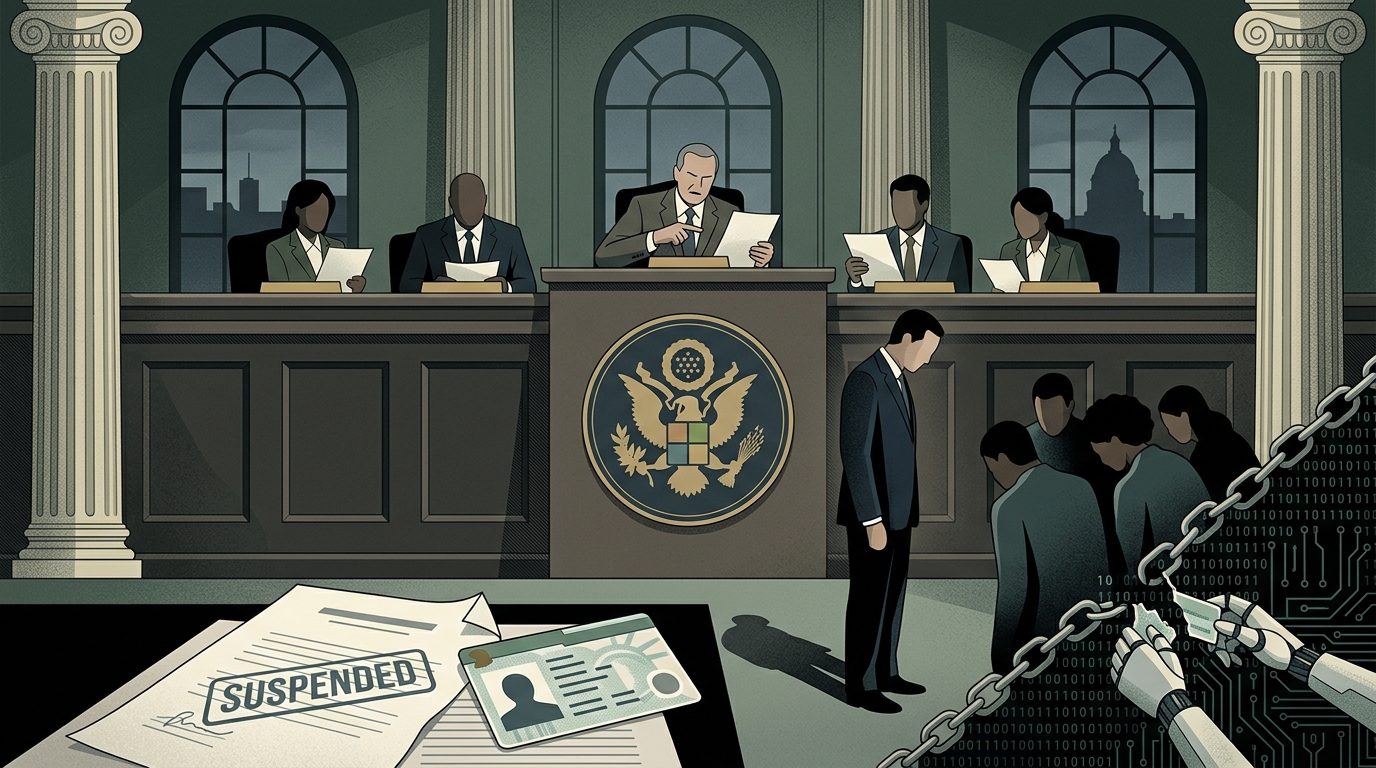
For years, the global tech community held its breath as the European Union's AI Act moved through the legislative pipeline, viewing it as the ultimate regulatory fortress that would determine the fate of innovation on the continent. However, as we move through 2026, a different reality is emerging from courtrooms and regulatory chambers: the true 'boogeyman' for Silicon Valley giants is not the AI Act, but the General Data Protection Regulation (GDPR), enacted nearly a decade ago.
The Paradox of the Regulatory Trap
According to recent research and analysis from MLex, the delays in releasing so-called 'frontier models'—such as OpenAI's GPT-5, Google's latest Gemini iterations, and Apple Intelligence—are primarily due to companies' inability to comply with GDPR requirements regarding model training. While the AI Act focuses on the risk levels of applications and algorithmic transparency, GDPR strikes at the very heart of machine learning: the data itself.
The problem lies in a fundamental incompatibility between how Large Language Models (LLMs) function and the core principles of 'data minimization' and the 'right to be forgotten.' AI models require vast amounts of data for training, often scraping public internet sources that contain personal information. GDPR requires a clear legal basis for processing this data, something companies are finding increasingly difficult to prove to national Data Protection Authorities (DPAs).
The Case of Meta and Apple
The summer of 2024 was a turning point. Meta was forced to pause training its Llama models on European user data following an intervention by the Irish Data Protection Commission. Shortly thereafter, Apple announced that Apple Intelligence would not be available in the EU at launch, citing 'regulatory uncertainties' linked to both the Digital Markets Act (DMA) and privacy protections.
These moves were not mere tactical maneuvers. They reflect a deep structural conflict. EU regulators demand that companies guarantee that citizens' personal data will not be permanently 'baked' into the weights of neural networks, from which it is technically impossible to delete individual data points. For engineers at Google or OpenAI, this requirement is akin to asking someone to forget a specific word they learned while reading an entire library, without losing the knowledge gained from those books.
The Role of National Authorities (DPAs)
Another factor exacerbating the delay is the fragmentation of enforcement. While the AI Act provides for a centralized European AI Office, GDPR is enforced by national authorities that often hold different interpretations. France's CNIL, Germany's BfDI, and Ireland's DPC have at times adopted diverging stances, creating a 'legal fog' that deters investment.
- Legal Basis: The clash between 'legitimate interest' and user 'consent'.
- Right to Erasure: The technical impossibility of deleting data from pre-trained models.
- Cross-border Transfers: Restrictions on moving European data to US servers for high-compute training.
Conclusion: Towards Digital Isolation?
The irony is that Europe, in its quest to protect its citizens, risks leaving them behind in the global technological race. While users in the US and Asia enjoy advanced productivity and medical diagnostic tools powered by AI, Europeans are often restricted to 'lite' or older versions. The challenge for the European Commission in 2026 is now clear: a middle ground must be found where GDPR does not act as a brake, but as a framework that enables ethical innovation. Without such harmonization, the 'Brussels Effect'—the EU's ability to set global standards—could transform into a 'Brussels Blockade'.