

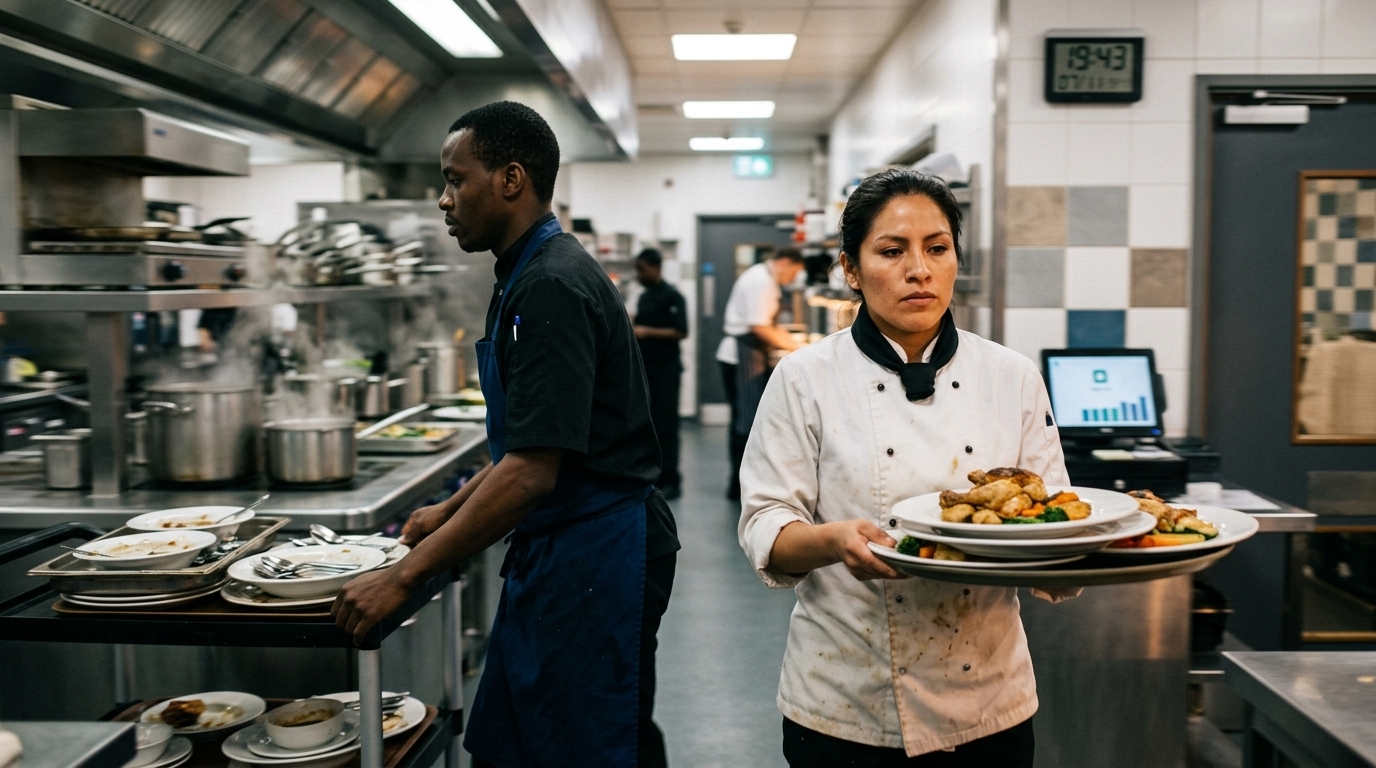
The summer of 2026 finds the Mediterranean in a familiar yet intensifying state of flux. From the shores of Andalusia to the alleys of the Cyclades, the "heavy industry" of tourism is operating at full throttle. However, behind the idyllic images on social media lies a reality that the digital age can no longer ignore: the exhaustion of the human workforce. The adage "you get what you give" is acquiring a new, almost mathematical precision in the labor market, as staff shortages and deteriorating working conditions threaten the very product that Greece and Spain are trying to sell.
The Spanish Model: Algorithms Against Arbitrariness
While in Greece the conversation often revolves around voluntary or forced overtime, Spain has already taken the next step. The Spanish Ministry of Labor has integrated sophisticated Artificial Intelligence systems into labor inspections. These algorithms do not wait for a complaint to act; they analyze vast amounts of data from social security, tax registries, and digital work cards in real-time. When patterns suggesting undeclared overtime or illegal hours are detected, the system automatically sends warnings or schedules targeted inspections.
This approach is based on the logic that human inspection alone cannot possibly cover the entire market. AI acts as a power multiplier for the rule of law. In Spain, the use of AI has already led to the conversion of thousands of fixed-term contracts into permanent ones and the recovery of millions of euros in unpaid contributions. It is a clear response to the dogma of "flexibility" that often translates into lawlessness.
The Greek Reality: The Six-Day Work Week Trap
In Greece, the situation remains more complex and socially charged. The institutionalization of the six-day work week in certain sectors, although presented as a means to combat undeclared labor, has created a sense of permanent fatigue among frontline workers. In the hospitality and catering sector, "you get what you give" translates into a mass exodus of young people from the industry. Businesses that invest only in the season's profit, neglecting the well-being of their staff, are faced with the phenomenon of the "Great Resignation."
The digital work card, although a step in the right direction, is often bypassed through analog methods or technical tricks. The lack of a centralized data analysis system, equivalent to the Spanish one, allows violations to remain hidden within the volume of information. In Greece, technology is used more as a recording tool rather than a means of predicting and preventing employer misconduct.
The Economic Dimension: Quality vs. Quantity
There is a profound economic absurdity in devaluing labor in tourism. An exhausted worker cannot provide the high-level services that the modern traveler demands. Tourists in 2026 are more sensitive to issues of social responsibility and ethical consumption. Review platforms no longer just rate the food or the room, but also the atmosphere and the behavior of the staff, which is directly linked to working conditions.
- Investing in AI for labor market monitoring reduces the cost of state inspections.
- Fair pay and legal working hours increase productivity and reduce staff turnover.
- Digital transparency creates a level playing field for healthy businesses.
"Technology is not neutral; it is the tool that will determine whether our tourism remains a sustainable industry or collapses under the weight of its own greed," a sector analyst notes.
Conclusion: Towards a New Social Contract
The future of work in the Mediterranean cannot be a return to 19th-century models with digital wrapping. Artificial Intelligence offers a unique opportunity to redefine the relationship between the state, the employer, and the employee. If "you get what you give" applies to workers, it applies doubly to states. If the state does not provide the tools to ensure justice, it will receive back a decomposing society and an economy without a future. The time for digital law enforcement has arrived, and it is the only path to saving the Greek summer.





