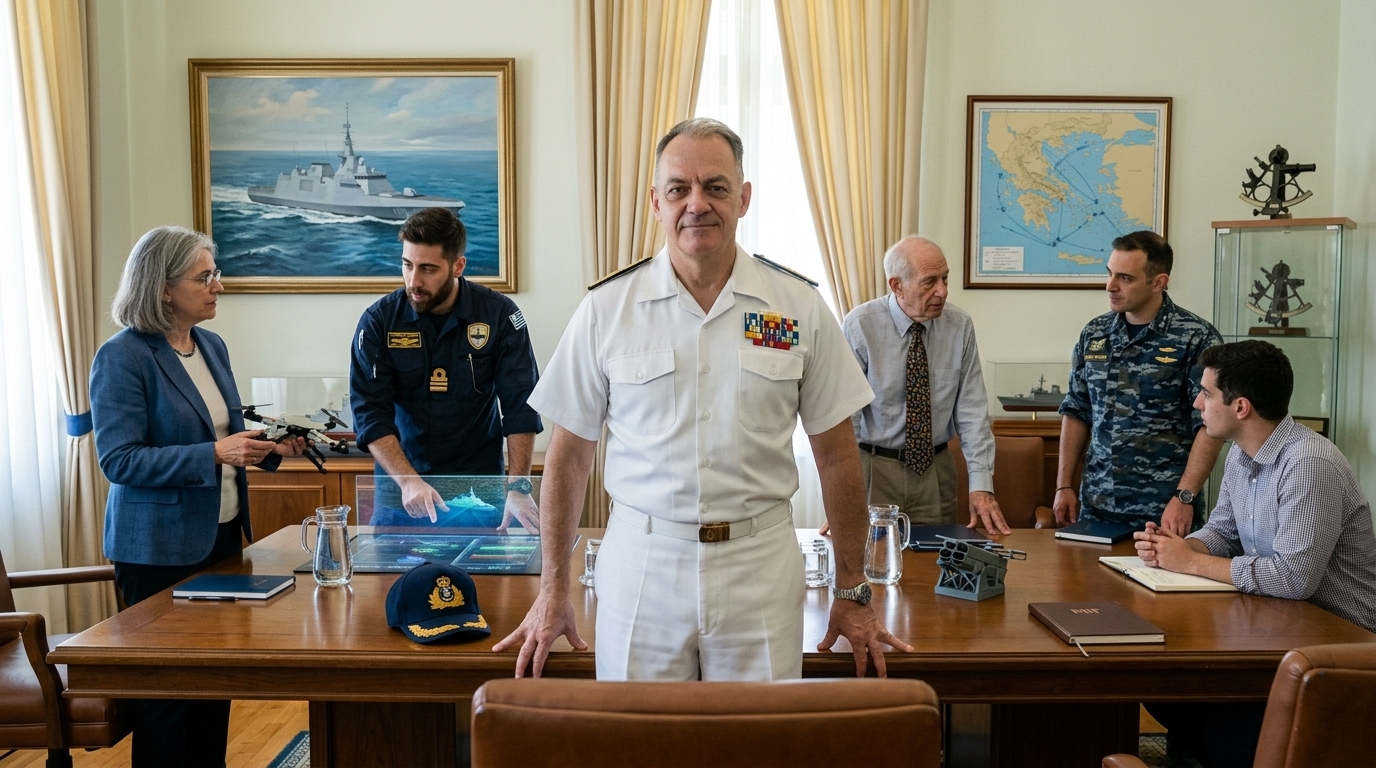
In a move that underscores Greece's pivot toward technological superiority in the defense sector, the Chief of the Hellenic Navy General Staff, Vice Admiral Dimitrios-Eleftherios Kataras, visited the Hellenic Naval Academy (SND) on Friday, June 12, 2026. The visit was far from a mere formality; it represented the culmination of intensive efforts to deepen collaboration with the Massachusetts Institute of Technology (MIT), one of the world's most prestigious hubs for research and innovation.
Bridging Theoretical Research and Maritime Reality
The partnership between the Hellenic Navy and MIT is not just an educational exchange; it is a strategic choice to upgrade the country's human capital. The program focuses on training future officers in fields that were until recently the stuff of science fiction: Big Data analysis, cybersecurity, and, most crucially, the application of Artificial Intelligence (AI) in naval tactics.
As analysts point out, the modern maritime battlefield is no longer decided solely by the tonnage of ships or the range of missiles, but by the speed of information processing. A commander's ability to make split-second decisions, aided by algorithms that predict adversary movements, constitutes the new comparative advantage. Through this collaboration, the Hellenic Naval Academy is evolving into an innovation lab where MIT's theoretical frameworks meet the Hellenic Navy's vast operational experience in the Aegean and the Eastern Mediterranean.
"Investing in knowledge is the strongest armor for our Navy. The collaboration with MIT ensures that the leaders of tomorrow will be equipped with the most advanced tools to face the hybrid threats of the 21st century," Vice Admiral Kataras emphasized during the briefing.
The Dawn of the 'Smart' Fleet: AI and Autonomous Systems
A central pillar of this collaboration is the development and deployment of unmanned systems (UAVs and USVs). MIT leads the world in autonomous navigation research, and transferring this expertise to Greece could shift the regional balance of power. Imagine swarms of autonomous vessels monitoring maritime borders, communicating via encrypted AI networks, minimizing risk to human life while maximizing deterrent effectiveness.
Furthermore, the program places heavy emphasis on "digital resilience." In an era where cyberattacks can paralyze entire fleets without a single shot being fired, training Greek cadets in MIT's methodologies for critical infrastructure protection is vital. the partnership includes joint research projects, faculty and student exchanges, and access to advanced simulators developed in the laboratories of Cambridge, Massachusetts.
Geopolitical Implications: Strengthening the East Med Posture
This initiative should not be viewed in isolation from the broader geopolitical context. Strengthening the ties between the Greek armed forces and leading American institutions is a core component of the Greece-US strategic relationship. Washington views Greece as a reliable pillar of stability in the Eastern Mediterranean, and granting access to dual-use technology through MIT is a significant vote of confidence in Athens.
At the same time, Greece seeks to become a center of excellence for defense technology in the region. This collaboration could act as a magnet for returning young scientists (brain gain), offering them the opportunity to work on world-class projects within the walls of the Hellenic Naval Academy. The Hellenic Navy, with its centuries-old tradition, is demonstrating that it does not fear change; it seeks it, transforming innovation into national power.
In conclusion, the visit of the Chief of the Navy to the Academy and the briefing on the MIT program signal a historic shift. The Hellenic Navy of 2026 is not just investing in steel and weaponry, but in code and intellect. In a rapidly changing world, the alliance between science and operational action is the only path to ensuring national sovereignty.