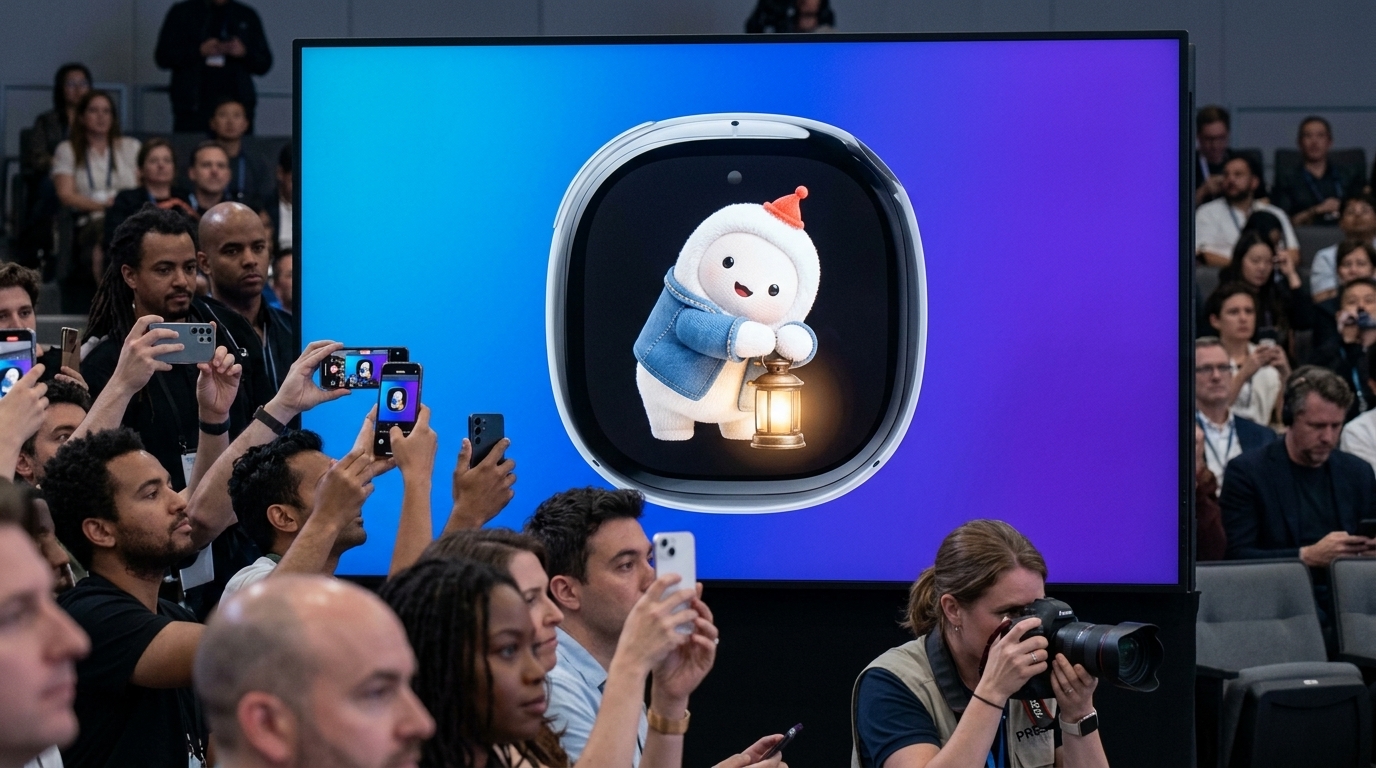
At the annual Meta Connect event in Menlo Park, California, Mark Zuckerberg revealed the company's latest hardware strategy, introducing a suite of devices built around the new AI assistant, Muse.
Meta Charm: Muse AI in Your Pocket
The most notable addition is the Meta Charm, a portable device roughly the size of an AirPods case. It features a 2-inch touchscreen and 5G connectivity, allowing users to interact with the Muse AI assistant in real-time via voice and avatars. The device is scheduled for shipment in December, though its price remains unannounced.
Evolution in VR and Audio Wearables
Meta also introduced new VR Glasses priced at $1,299, which are significantly thinner and lighter (approximately 100 grams) than previous headsets. This reduction was achieved by moving the battery and processor to a separate unit. Their release is planned for the spring of 2027.
Additionally, the company announced the Ray-Ban Meta Audio, a version of its smart glasses without cameras, aimed at addressing privacy concerns. These glasses, launching on October 13 for $349, focus on high-quality audio and Muse integration for tasks such as shopping at retailers like Walmart and Best Buy via voice commands.
Privacy Challenges and Market Competition
Despite removing cameras from certain models, analysts note that privacy concerns persist, as the devices can record audio without a clear external indicator. Meta maintains that audio has been its most popular feature since day one, and the removal of cameras allowed for the design of its thinnest glasses to date, weighing about as much as a golf ball.