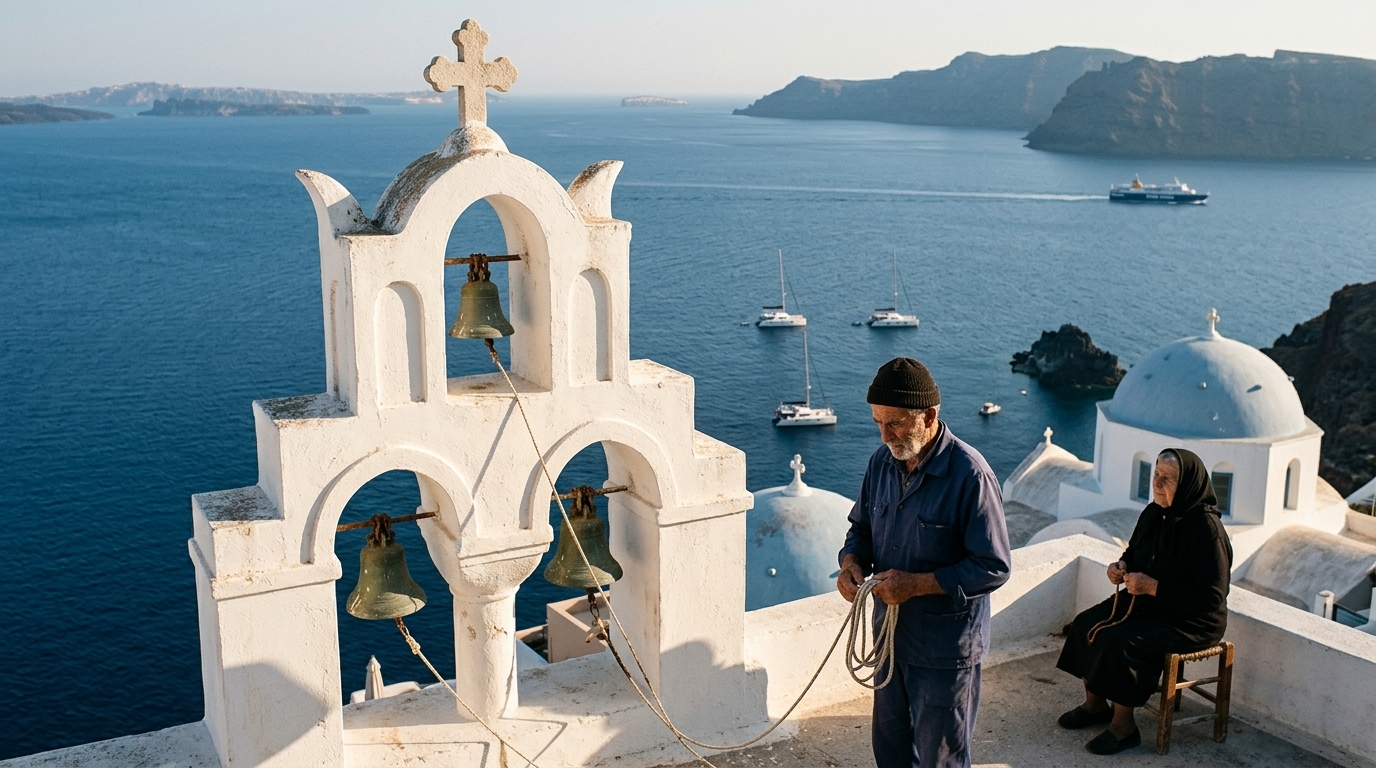
Today, Saturday, July 4, 2026, the Orthodox Church honors the memory of one of the preeminent figures of Byzantine hymnography and theology: Saint Andrew of Jerusalem, Archbishop of Crete. In an era where technology and artificial intelligence are redefining our daily lives, the persistence of religious tradition and the celebration of name days remain a steadfast pillar of social cohesion and identity for Hellenism.
The Life and Work of Saint Andrew of Crete
Born in Damascus around 660 AD, Andrew was a figure who combined spiritual discipline with high intellectualism. According to tradition, he remained mute until the age of seven, when he was healed after receiving Holy Communion. His life journey took him from Jerusalem to Constantinople, where he distinguished himself through philanthropic work, and finally to Crete, where he served as the Archbishop of Gortyn.
His work that dominates the liturgical life of the Church to this day is the "Great Canon." This is a monumental poem of 250 troparia, constituting a powerful dialogue between the soul and God—an anatomy of the human fall and the need for repentance. Andrew was not merely a clergyman; he was a master of the word who managed to transform theology into sublime poetry.
The Social Dimension of the Name Day in 2026
In the modern Greek context of 2026, the name day transcends narrow religious boundaries. Despite the dominance of AI assistants and automated greetings, July 4th remains an occasion for maintaining social bonds. Today, those named Andreas, Andriani, Martha, and Loukia celebrate.
- Andreas (Andrew): A name associated with bravery and stability.
- Martha: Symbolizing care and ministry.
- Loukia (Lucia): Connected to light (lux).
In Crete, the celebration of Saint Andrew takes on special dimensions, as the Saint is considered the protector and spiritual father of the island. Local communities, despite the challenges of urbanization, continue to honor "their" Saint with festivals (panigiria) that combine worship with social interaction.
The Theology of Repentance in a World of Algorithms
It might seem paradoxical to discuss the Great Canon and repentance in the age of total information. However, Saint Andrew’s analysis of human interiority remains relevant. In a world where image and external success are everything, the Saint’s call for "introspection" serves as a necessary counterweight.
"Where shall I begin to weep for the actions of my wretched life?"
This opening phrase of the Great Canon poses the question of self-knowledge, which is more necessary than ever as AI begins to "mirror" human biases and errors on a global scale. Saint Andrew reminds us that technological progress without spiritual cultivation remains hollow.
Conclusions and Perspectives
Today is not just a date on the calendar. It is a reminder of historical continuity. Saint Andrew of Crete, through his poetry and actions, bridges the gap between late antiquity and the Middle Ages, offering tools that reach into our post-modern era. As Greeks celebrate today, they renew a silent promise: that their roots, deeply embedded in history and spirituality, are what allow them to look toward the future with optimism.