

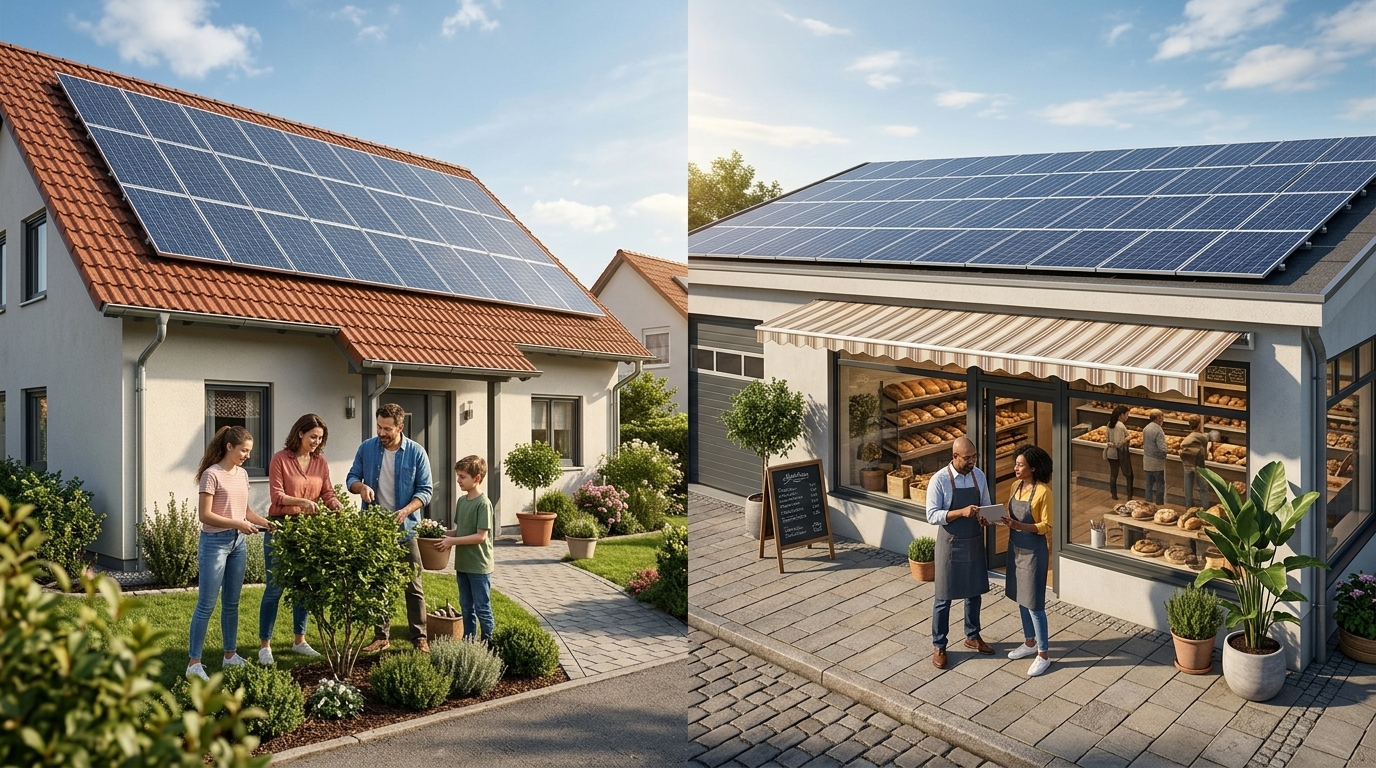
The energy crisis of recent years and the urgent need to address climate change have placed Greece at the heart of a historic transition. In this context, PPC (Public Power Corporation), the country's historic energy pillar, is moving forward with a strategy that promises to democratize access to solar energy. With the new programs "PPC myEnergy SolarSmart" and "SolarSmartPro," the utility aims to remove the primary barrier to solar adoption: the high upfront cost of equipment and installation.
Breaking the Capex Barrier
Until today, installing a solar system on a home or business roof required a significant initial investment, often exceeding 10,000 euros. Despite government subsidies, many families and small-to-medium enterprises (SMEs) were unable to allocate such capital, remaining trapped by the volatility of wholesale electricity market prices. PPC's new proposal shifts the model from "equipment ownership" to "energy as a service."
According to the program details, consumers gain access to clean energy with a low activation fee, completely avoiding the costs of purchasing panels, inverters, and labor. PPC handles the study, procurement, and installation, while the customer enjoys guaranteed savings and a fixed price for a ten-year period. This stability is perhaps the strongest incentive in an environment of geopolitical instability that directly impacts energy costs.
Strategic Transformation and Green Growth
This move is not merely a commercial product; it is the culmination of PPC's strategic transformation under the leadership of CEO Georgios Stassis. The company, which for decades was synonymous with lignite combustion in Western Macedonia and Megalopolis, is rapidly evolving into a modern, green provider. The shift toward Renewable Energy Sources (RES) is now the central axis of its profitability, as the cost of production from sun and wind is significantly lower than any other source.
Furthermore, PPC leverages economies of scale. As the largest player in the market, it can negotiate better prices with equipment suppliers globally, passing part of this benefit to the end consumer. The "Solar-as-a-Service" model it implements is already successful in Northern European countries and the US, and its application in Greece—a country with the highest sunshine duration in Europe—is considered by many analysts a natural evolution.
Grid Challenges and Infrastructure
However, the success of such programs does not depend solely on PPC's commercial policy. The Greek electricity grid (HEDNO/DEDDIE) faces serious saturation issues in many parts of the country. The mass integration of thousands of new micro-producers requires significant investments in "smart grids" and digital meters. Without infrastructure upgrades, connecting new solar systems could face significant delays, effectively canceling out the benefits for the consumer.
At the same time, there is the issue of energy storage. While solar panels produce energy during the day, peak demand for households is often in the evening. PPC seems to take this into account by integrating solutions that allow for offsetting (net metering or net billing), but the addition of batteries in the future will be the key to full energy autonomy.
"The transition to green energy must be inclusive, or it will fail. By removing the financial barrier of entry, we are making the sun a resource for everyone, not just the wealthy few."
Conclusion: A New Relationship with Energy
PPC's initiative marks a new era where the consumer ceases to be a passive recipient of a bill and becomes an active participant in the energy system. The ability to produce one's own energy without having the initial capital is a socially just approach to the green transition. It remains to be seen whether bureaucracy and the technical limitations of the grid will allow this vision to be realized with the speed required by the times. What is certain is that the path to decarbonization now runs through the rooftops of Greek homes.





