

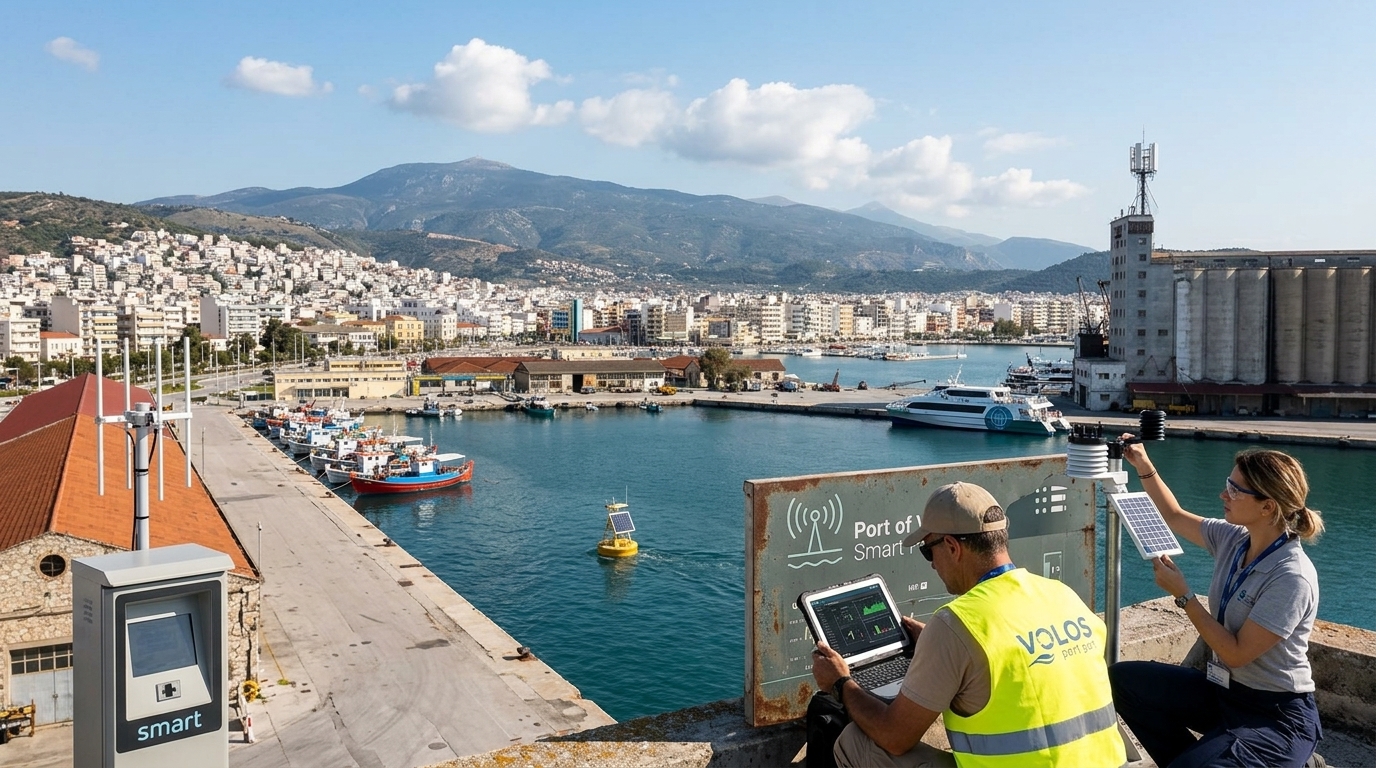
In an era where global shipping and the supply chain are being redefined through data and automation, the Port of Volos (OLV) is taking a decisive step into the future. The recent signing of the contract for the port's digital transformation is not merely a technical upgrade, but a strategic choice aimed at repositioning Volos on the map of Mediterranean "Smart Ports."
This investment comes at a critical juncture. As the Port of Volos adapts to a new administrative reality following the entry of strategic investors, it is called upon to play a leading role in connecting Central Greece with international markets. The transition from traditional, manual processes to an integrated digital ecosystem promises to reduce operating costs, increase vessel service speed, and enhance transparency at every stage of port activity.
The Architecture of Digital Transformation
The action plan outlined in the contract covers a wide range of technological applications. At the heart of the upgrade lies the adoption of an advanced Port Management Information System (PMIS), which will allow real-time monitoring of all movements within the port zone. From berthing schedules to cargo management and billing, everything will now be handled through a single, unified platform.
Furthermore, the investment includes the installation of Internet of Things (IoT) systems for monitoring infrastructure and energy consumption. This serves not only economic efficiency but also the port's commitment to environmental sustainability. The ability to detect leaks, optimize lighting, and manage waste through sensors transforms OLV into a "green" port, compliant with strict European directives on reducing carbon footprints.
"Digitalization is no longer a luxury, but a prerequisite for survival for regional ports that want to compete with Europe's major hubs," industry executives note.
Security and Cybersecurity
One of the most significant aspects of the contract concerns the enhancement of security. With the installation of modern surveillance systems and access controls, OLV is fortified against physical threats. However, the greater challenge remains cybersecurity. As the port becomes more interconnected, its exposure to digital attacks that could paralyze the supply chain also increases. The contract provides for the creation of advanced firewalls and disaster recovery protocols, ensuring that user data and port operations remain inviolable.
The use of Artificial Intelligence (AI) to predict traffic and optimize the flow of vehicles to and from the port is also expected to decongest the city of Volos. Connecting the port with the road and rail networks through digital tools will allow for better coordination of multimodal transport, reducing the delays that often plague industry professionals.
The Role of the Grimaldi Group and the Future
It cannot be ignored that this digital reorientation coincides with the presence of the Grimaldi Group in management. The Italian giant, with vast experience in automated terminals across Europe, brings the expertise and capital adequacy required for such ventures. Volos is no longer treated as a regional station but as a strategic satellite that can serve the Adriatic-Aegean line with unprecedented efficiency.
In conclusion, the digital transformation of the Port of Volos is a move that transcends the boundaries of technology. It is a social and economic investment that promises new high-skilled jobs, a better quality of life for the residents of Magnesia through reduced pollution and delays, and above all, a strong national presence in one of the world's most competitive maritime regions. The challenge now moves to the implementation stage, where speed and precision will determine the success of the project.





