

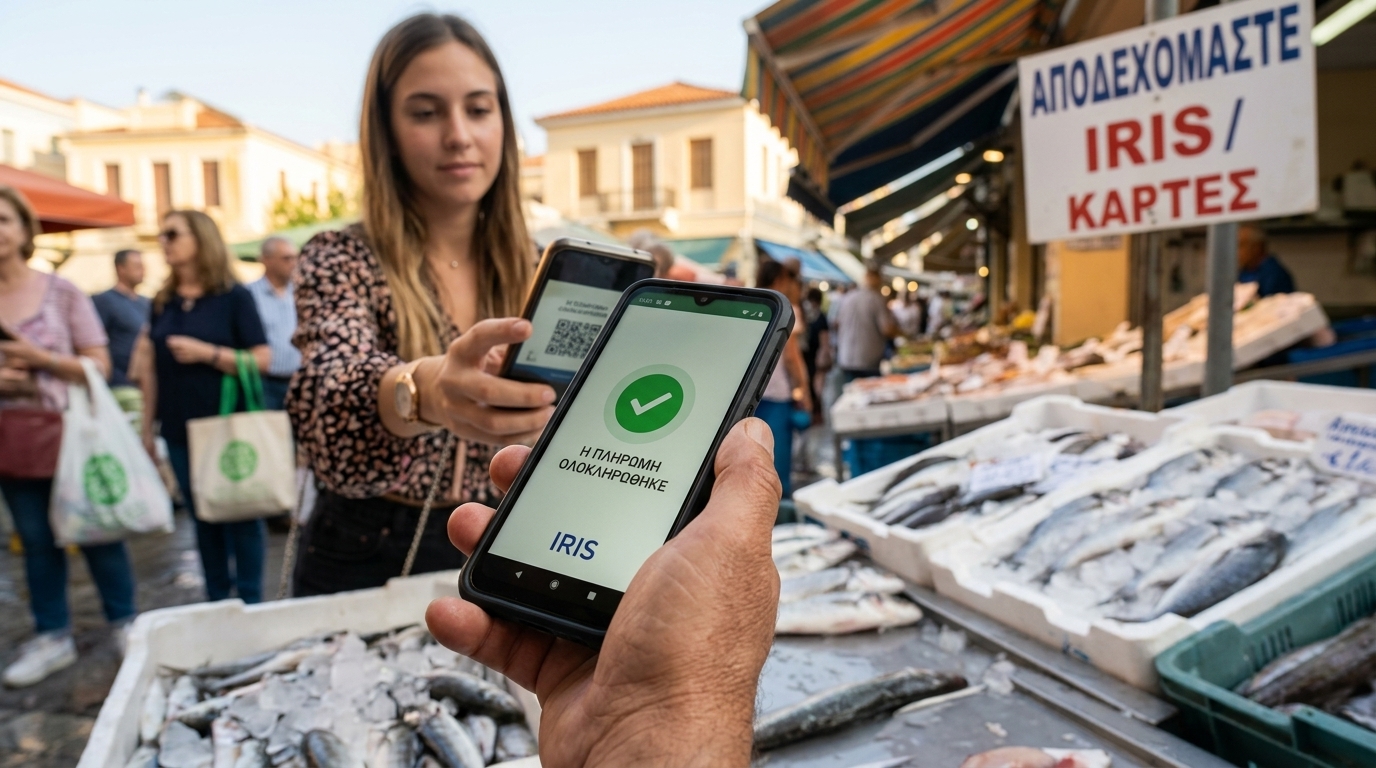
Greece's digital transformation over recent years is not merely a sequence of technical upgrades, but a profound shift in the social contract between the state, citizens, and the market. At the heart of this change, according to recent statements by Kyriakos Pierrakakis, lies the IRIS instant payment system. Speaking to Fortune Greece, the Minister characterized IRIS as the ultimate 'success story' of the Greek digital economy, emphasizing that the infrastructure is now ready, and the focus is shifting toward changing daily user behavior.
The Transition from Technological Availability to Universal Adoption
For many years, Greece lagged in the adoption of digital payments, with a cash-heavy culture dominating the landscape. IRIS has arrived to overturn this reality, offering a solution that is simultaneously simple, free for individuals, and extremely low-cost for professionals. As Mr. Pierrakakis noted, the bet is no longer whether the service works—its technological excellence has been proven—but whether it will become the 'new normal' for every transaction, from tipping at a cafe to paying a plumber.
The government's strategy to make IRIS mandatory for self-employed professionals and sole proprietorships was a bold step. Despite initial friction, the numbers show an impressive surge. The ease of using only a mobile phone number or a VAT number, bypassing the need for complex IBANs, has lowered entry barriers for less tech-savvy audiences. However, 'universal adoption' requires more than legislative decrees; it requires trust and seamlessness.
The Economic Footprint and the Fight Against Tax Evasion
IRIS is not just a convenience tool; it is a central pillar in the national strategy to curb tax evasion. The transparency offered by instant payments allows authorities to have a clearer, real-time view of the market. For businesses, the advantage is twofold: immediate liquidity, as funds are credited in seconds, and a drastic reduction in transaction fees compared to traditional POS terminals and international card networks.
- Zero fees for person-to-person (P2P) transactions.
- Significantly lower costs for merchants compared to credit cards.
- Instant settlement, improving the cash flow of small and medium-sized enterprises (SMEs).
- Easy integration into e-commerce platforms and physical stores via QR Codes.
This economic dimension is what defines it as a 'success story.' In a period of inflationary pressure, reducing transaction costs acts as indirect relief for both the end consumer and the small merchant. Mr. Pierrakakis emphasized that the digital economy must be inclusive, and IRIS is the preeminent tool democratizing access to modern financial services.
Challenges and the Future of Digital Payments
Despite the success, the road is not without obstacles. Cybersecurity remains the number one concern for citizens. As transaction volumes grow, so does the need for rigorous protection protocols and continuous user education to prevent phishing attacks. Furthermore, the interconnectivity of IRIS with the European instant payment system (SEPA Instant Credit Transfer) is the next big step, which will allow similar conveniences for cross-border transactions within the EU.
"Technology is the means, not the end. The goal is an economy that works for everyone, with speed, security, and low cost," the Minister characteristically stated.
In conclusion, IRIS represents the new phase of the Greek digital state. Following the successful digitization of documents (gov.gr), the focus has now shifted to transactions. If Greece manages to establish IRIS as the primary payment method, it will have taken a massive leap toward modernization, leaving behind decades of bureaucratic stagnation. The success of IRIS will ultimately be judged not by ministerial dashboards, but by how many Greeks choose their mobile phones over their wallets during their next visit to a street market or a local shop.





