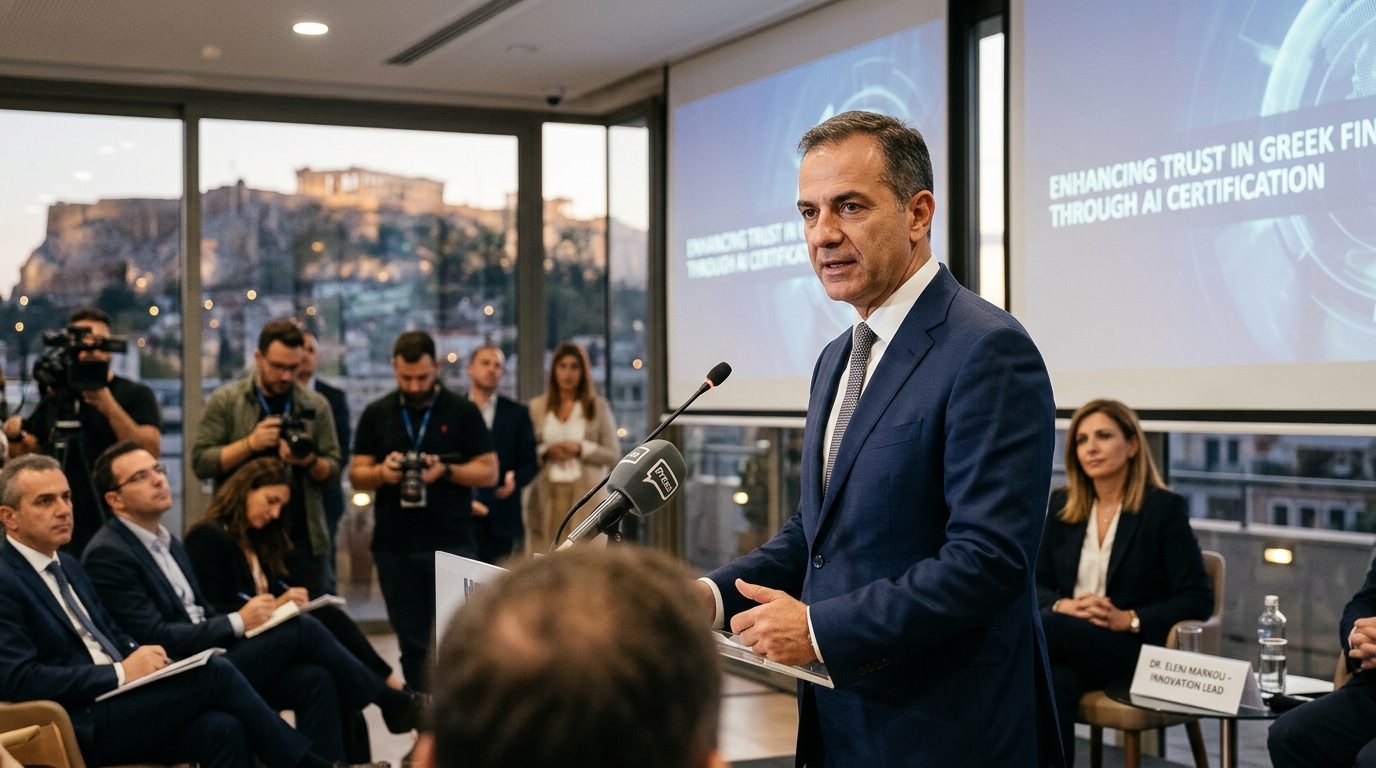
In an era where Artificial Intelligence (AI) is fundamentally reshaping the global financial landscape, Piraeus Bank has achieved a significant milestone by becoming the first Greek bank to receive the ISO/IEC 42001 certification. This development is not merely a technical accomplishment but a strategic statement on how the Greek banking sector intends to manage the challenges of ethics, transparency, and security in the digital age.
Understanding the ISO/IEC 42001 Standard
ISO/IEC 42001 is the world's first international standard for an Artificial Intelligence Management System (AIMS). Unlike previous standards that focused exclusively on data security or software quality, 42001 addresses the unique challenges posed by AI, such as algorithmic bias, lack of explainability, and the need for continuous oversight of automated decisions. By adopting this standard, Piraeus Bank signals that it has established rigorous processes for the development and use of AI models, ensuring that innovation does not come at the expense of customer trust.
Strategic Implications for Piraeus Bank
For Piraeus, this certification represents the culmination of a multi-year digital transformation effort. The bank already utilizes AI across a wide range of activities: from fraud detection and credit risk assessment to personalized customer service through advanced chatbots. With ISO/IEC 42001, the bank's leadership sends a clear message to investors and regulators: AI usage is not unchecked but governed by a structured framework that minimizes operational and ethical risks. In a sector where reputation is everything, being a first-mover in AI governance provides a significant moat.
Alignment with the EU AI Act
This move gains even more weight when considering the European Union's regulatory environment. With the implementation of the EU AI Act, businesses operating in high-risk sectors—such as banking—are required to meet strict criteria for transparency and accountability. By obtaining ISO/IEC 42001, Piraeus Bank is essentially preparing for legislative compliance before it becomes mandatory, positioning itself ahead of the curve and mitigating future regulatory shocks.
Challenges and the Future of AI in Greek Banking
Despite the success of the certification, the road to full AI integration is not without obstacles. Managing vast volumes of data while respecting GDPR, upskilling personnel, and addressing the "digital distrust" of certain segments of the public remain critical issues. However, Piraeus's initiative paves the way for other domestic institutions. It is expected that in the coming months, other systemic banks will follow suit, creating an ecosystem where technology serves humanity with safety and fairness. AI in Greece is ceasing to be an experimental tool and is becoming the pillar of the new banking reality.
"The ISO/IEC 42001 certification is not the finish line, but the starting point for a more transparent and human-centric banking experience," industry analysts suggest.
In conclusion, Piraeus Bank is positioning itself at the forefront of European banking, proving that Greek businesses can lead in matters of technological governance. The challenge now shifts to practice: how these rules will improve the daily lives of borrowers, depositors, and investors while maintaining the integrity of the financial system. The focus on governance ensures that as AI evolves, the bank's core values remain steadfast.