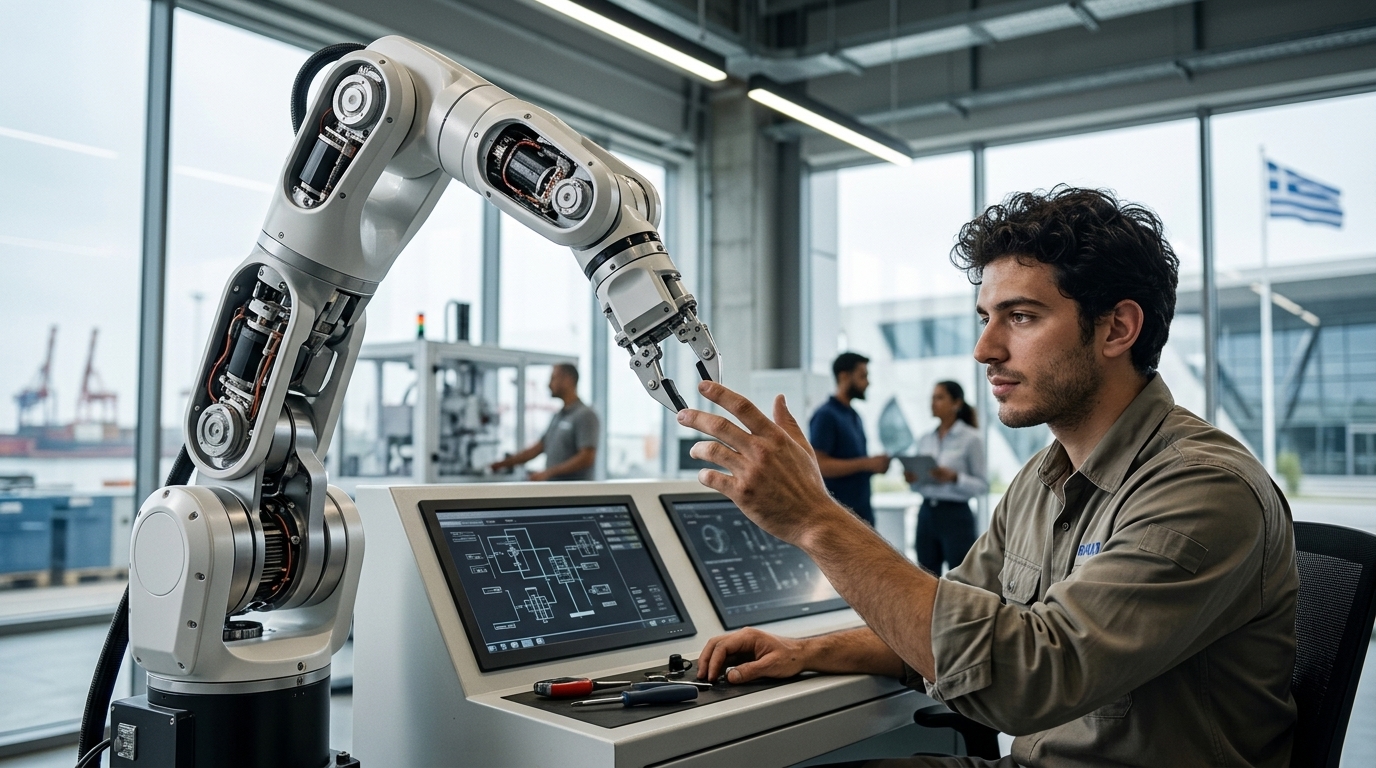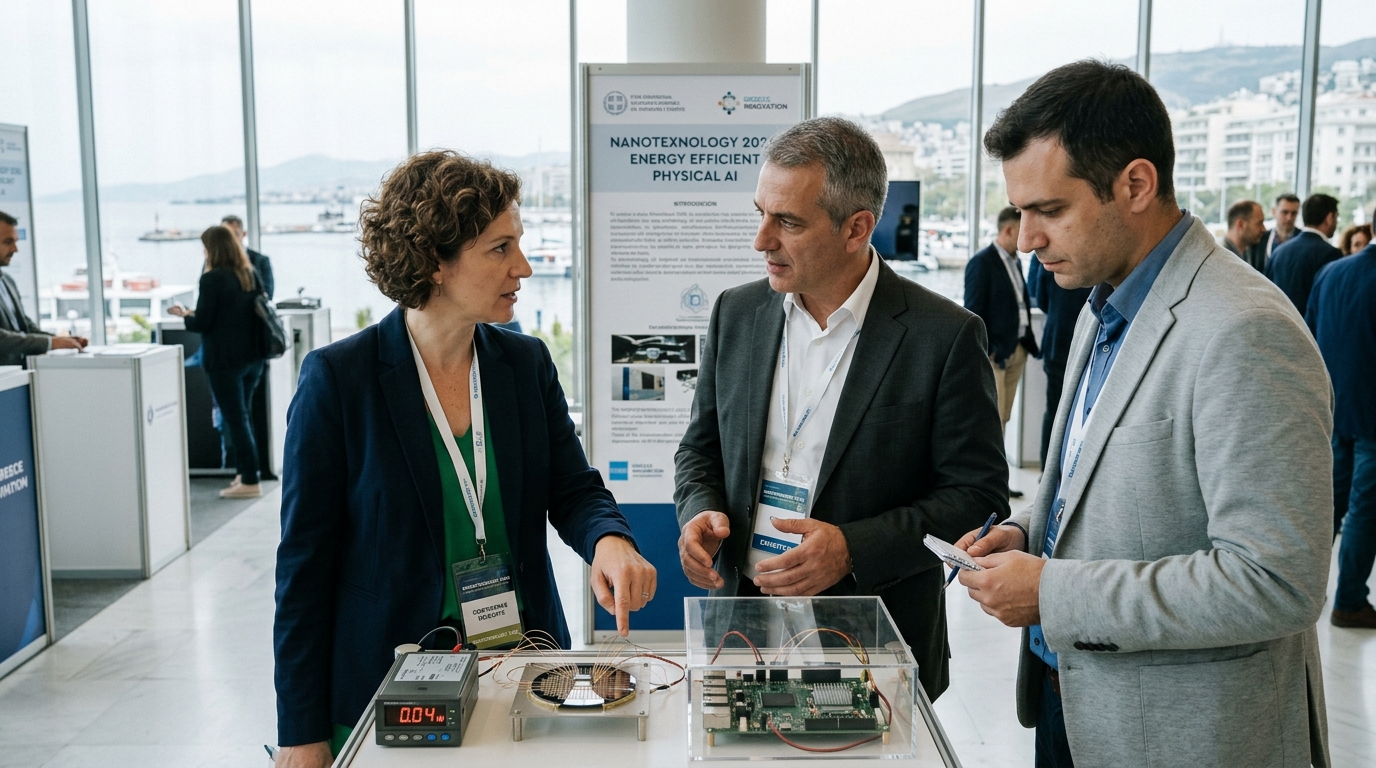
The heart of global innovation is beating in Thessaloniki this week, as NANOTEXNOLOGY 2026, the premier multi-event for Nanotechnologies, Organic Electronics, and Nanomedicine, enters its most critical phase. On Tuesday, July 7, the conference's keynote event is expected to lay the groundwork for a radical rethinking of how we perceive computational power. The central theme, "Physical AI and High Energy Efficiency Electronic Systems," is not just a technical title; it is the answer to the greatest challenge of the digital age: the energy sustainability of intelligence.
The Transition from Code to Matter
For decades, Artificial Intelligence (AI) has developed primarily at the software level, relying on massive computational structures that consume as much energy as entire cities. Physical AI, which is at the center of discussions at NANOTEXNOLOGY 2026, proposes a different approach. Instead of intelligence being an abstract process running on general-purpose processors, it is integrated directly into the physical properties of materials and devices.
According to experts participating in the conference, the use of nanomaterials allows for the creation of "neuromorphic" systems. These are circuits that mimic the function of the human brain, which remains the world's most efficient "computer," consuming only 20 Watts to perform tasks that would require Megawatt-level supercomputers. Integrating AI into hardware (Physical AI) enables data processing at the "edge" (edge computing), drastically reducing the need for data transfer to central servers and, consequently, the energy footprint.
Thessaloniki as Europe's Strategic Hub
The fact that such a discussion is taking place in Thessaloniki is no coincidence. The Nanotechnology Lab LTFN of the Aristotle University of Thessaloniki, under the guidance of Professor Stergios Logothetidis, has managed to create an ecosystem that connects academic research with global industry. The presence of representatives from the European Commission, international technology giants, and hundreds of researchers underscores Greece's importance in the European strategy for semiconductor autonomy (European Chips Act).
Within the framework of NANOTEXNOLOGY 2026, cutting-edge technologies such as printable organic electronics are being presented. These materials, which are flexible, lightweight, and environmentally friendly, can integrate AI sensors and circuits into clothing, buildings, and even the human body. The ability to produce these systems at low cost and with low energy consumption opens new horizons for the Greek and European economies at a time when the energy crisis demands immediate solutions.
The Energy Efficiency Challenge
One of the most striking points discussed in the preparatory sessions is the exponential increase in energy consumption by Large Language Models (LLMs). Experts warn that if we continue with the current model of digital AI, global energy infrastructure will be unable to meet demand by 2030. The solution proposed through nanotechnology includes the use of "memristors" (memory resistors) and photonic circuits that allow calculations to be performed with almost zero heat loss.
Tuesday's keynote event will focus precisely on this point: how Europe can lead in "Green AI." It is not just about improving existing systems, but about a paradigm shift where the physics of the material determines the intelligence of the system. This convergence of nanotechnology and informatics represents the 4th Industrial Revolution in practice.
Conclusions and Perspectives
NANOTEXNOLOGY 2026 is not just a conference; it is a statement of intent. Thessaloniki proves that it can play a leading role in developments, providing the ground for the birth of technologies that will define the next decade. Physical AI promises a world where technology is ubiquitous but invisible, powerful but energy-efficient, and above all, in harmony with physical laws rather than in conflict with them.
As the proceedings continue, attention turns to the results of the business meetings (B2B) taking place in parallel, as the commercial exploitation of these innovations is decided there. Greece, through nanotechnology, seems to be finding its way toward a sustainable and competitive digital economy, transforming scientific knowledge into social and economic capital.