

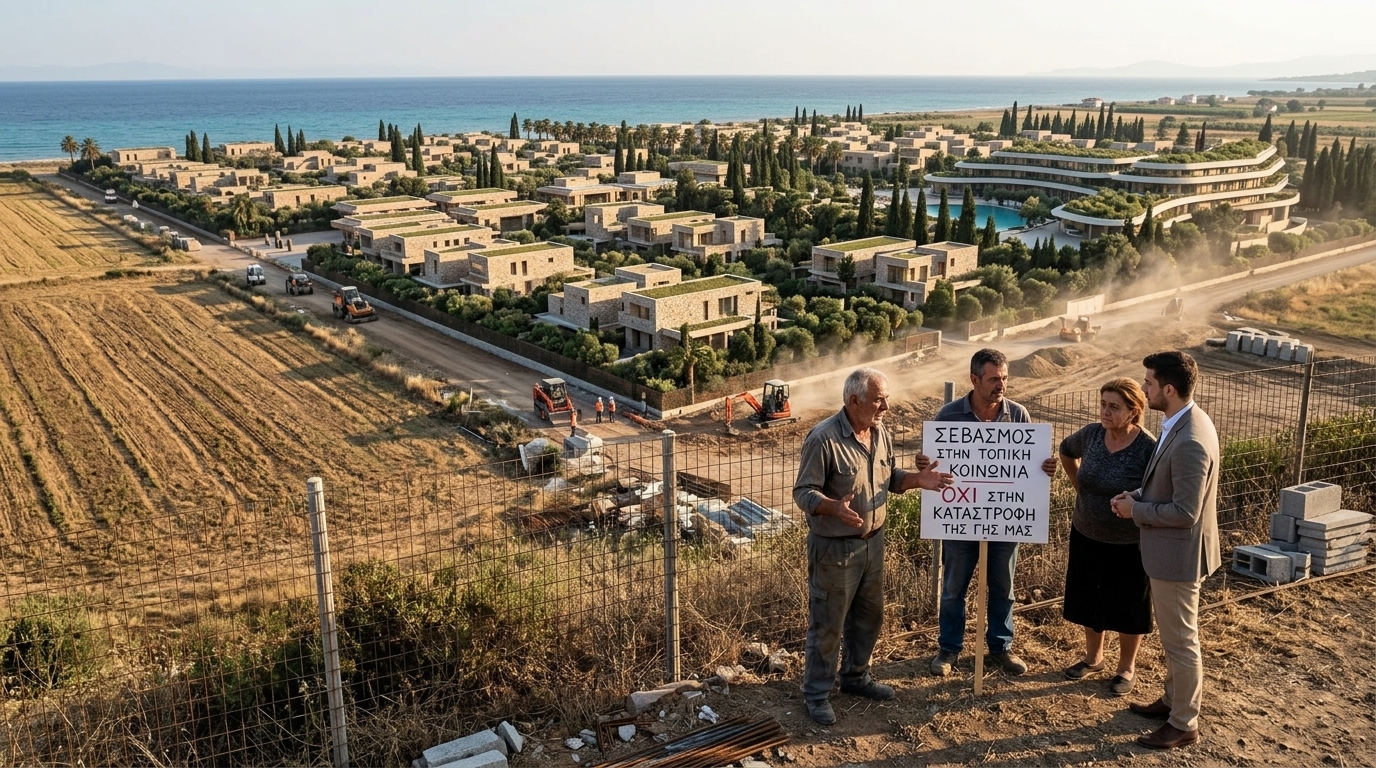
Kalamata, a city that has traditionally balanced between agricultural production and mild tourism, is now at the center of a fierce controversy that reflects the broader dilemma of the Greek provinces: Development at all costs or protection of public space? The "Nika Bay Kalamata" investment, worth 136.5 million euros, funded by the Israeli fund IDM, has caused waves of reaction in the Kordia area, forcing investors to launch a defensive PR campaign with a series of clarifying statements.
The Project Profile and IDM's Promises
The Nika Bay project is not just another hotel. It is a complex tourist accommodation that aspires to redefine the map of Messinia. According to IDM's plans, the investment includes the creation of a five-star hotel complex, luxury residences, and wellness infrastructure. The company argues that the intervention will upgrade an underdeveloped area, creating hundreds of jobs and stimulating the local economy by attracting high-income tourists.
In its recent responses, IDM emphasizes that the architectural approach is "bioclimatic" and "perfectly harmonized with the landscape." It promises the planting of thousands of trees and the use of materials that do not offend the aesthetics of the area. However, the investors' main argument remains economic: Kalamata needs an international brand name to compete with other Mediterranean destinations, especially following the success of Costa Navarino, which paved the way for Messinia.
The Backlash: Public Space vs. Privatization
Despite the promises, the local community remains suspicious. The citizens' movement that has been formed focuses on three key points: access to the beach, environmental impact, and the alteration of the character of the Kordia area. Kordia is one of the few remaining outlets for residents to the sea, and the fear that the construction of a luxury "wall" will exclude citizens is widespread.
Critics of the project point out that "strategic investments" often receive exemptions from standard urban planning rules, creating a sense of injustice. "We are not against development, but against unregulated exploitation," state representatives of local organizations. Concerns about the adequacy of water resources and the waste management of such a large-scale unit are also high on the agenda of discussions in the Kalamata City Council.
The Mitigation Strategy and the Future
Realizing the political and social cost, IDM attempted to reassure residents by explicitly stating that access to the coast will remain free and that public roads and infrastructure will be built to benefit everyone. Additionally, the company committed to creating a "green park" within the site, which will be open to the public.
The case of Nika Bay is a classic example of the conflict between Foreign Direct Investment (FDI) and local governance. The government sees the project as an opportunity for capital inflow, while the local community demands guarantees for its quality of life. The coming period will be critical, as environmental studies will be submitted for approval by the relevant ministries, while legal appeals by local associations are considered almost certain.
Ultimately, the success of Nika Bay will not be judged only by its room occupancy, but by its ability to integrate organically into a city that claims its own say in its future. Kalamata is called upon to decide whether it will become another "sterile" tourist destination or if it will manage to combine luxury with authenticity and respect for the citizen.





