

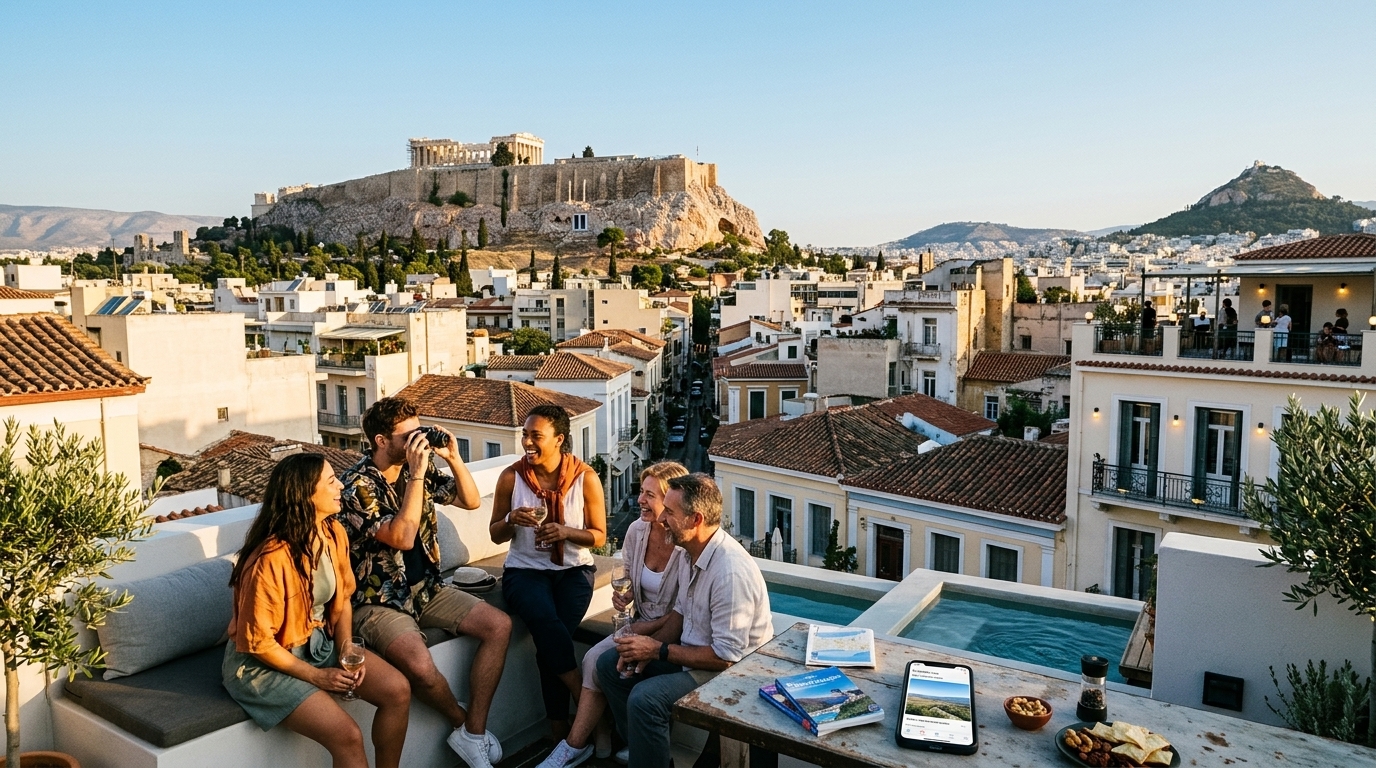
The Greek short-term rental market, spearheaded by platforms like Airbnb, continues to exhibit remarkable resilience and momentum, completely diverging from the prevailing sentiment across the rest of Europe. While major European capitals and tourist hotspots are experiencing a period of saturation or even decline due to strict regulatory frameworks and economic pressure on consumers, Greece is recording historic highs in bookings, nightly rates, and total revenue.
The Statistical Superiority of Greece in 2026
According to the latest data from market analysts, Greece is seeing a 12% increase in bookings compared to the previous year, while the European average remains stagnant or records a marginal rise of 2-3%. The Average Daily Rate (ADR) in Athens and popular islands has increased by 15%, a fact attributed both to the upgrading of the offered product and the changing profile of tourists visiting the country.
This surge is no accident. Greece has successfully extended its tourist season, with May and October now showing occupancy rates previously seen only in the height of summer. This strategy, combined with the professionalization of the sector—where the majority of properties are now managed by specialized companies rather than individual hosts—has created a highly profitable ecosystem.
Why is Greece Resisting the European Downturn?
Several factors explain this "Greek exception." First, the price-to-quality ratio remains competitive despite the increases. Compared to Italy or France, travelers in Greece feel they receive better value for their money, especially in the luxury segment. Second, the country's geopolitical stability in a turbulent region makes it a safe haven for European and American tourists alike.
Furthermore, the domestic market has quickly adapted to new requirements. The introduction of the "Climate Crisis Resilience Fee" and new tax rules for those owning three or more properties do not seem to have deterred investors. On the contrary, they led to a market cleanup of low-quality accommodations, boosting revenue from high-standard properties.
The Dark Side of Success: The Housing Problem
However, this boom comes with a heavy social price. The rapid expansion of short-term rentals has led to an unprecedented housing crisis in major urban centers. In neighborhoods like Pangrati, Koukaki, and Neos Kosmos, rents for permanent residency have skyrocketed to levels prohibitive for the average Greek worker. The conversion of entire apartment buildings into "de facto" hotels is altering the social fabric of neighborhoods, sparking reactions from local communities.
"The success of tourism cannot be built upon the ruins of social cohesion. We need a balance that allows for economic growth without displacing permanent residents," say representatives of residents' associations in central Athens.
The government, under pressure from these developments, is considering further restrictions, such as setting a maximum number of rental days per year in saturated areas, following the example of cities like Barcelona and Amsterdam. Nevertheless, market dynamics remain so strong that many analysts view these measures as mere "aspirin" for a deep structural problem.
The Future: Investment and Sustainability
Looking ahead, the challenge for Greece is the transition from quantitative to qualitative growth. Investors are now turning to more sustainable models, integrating AI technologies for energy management and service automation to reduce operating costs. The short-term rental market is no longer a transient phenomenon but a central pillar of the Greek economy that requires serious planning rather than piecemeal interventions.
In conclusion, in 2026, Greece remains the "golden destination" for Airbnb-style platforms. The country's ability to attract high spending and maintain its appeal against the European trend is impressive, but managing the side effects of this success will determine whether this model is truly sustainable in the long run.





