

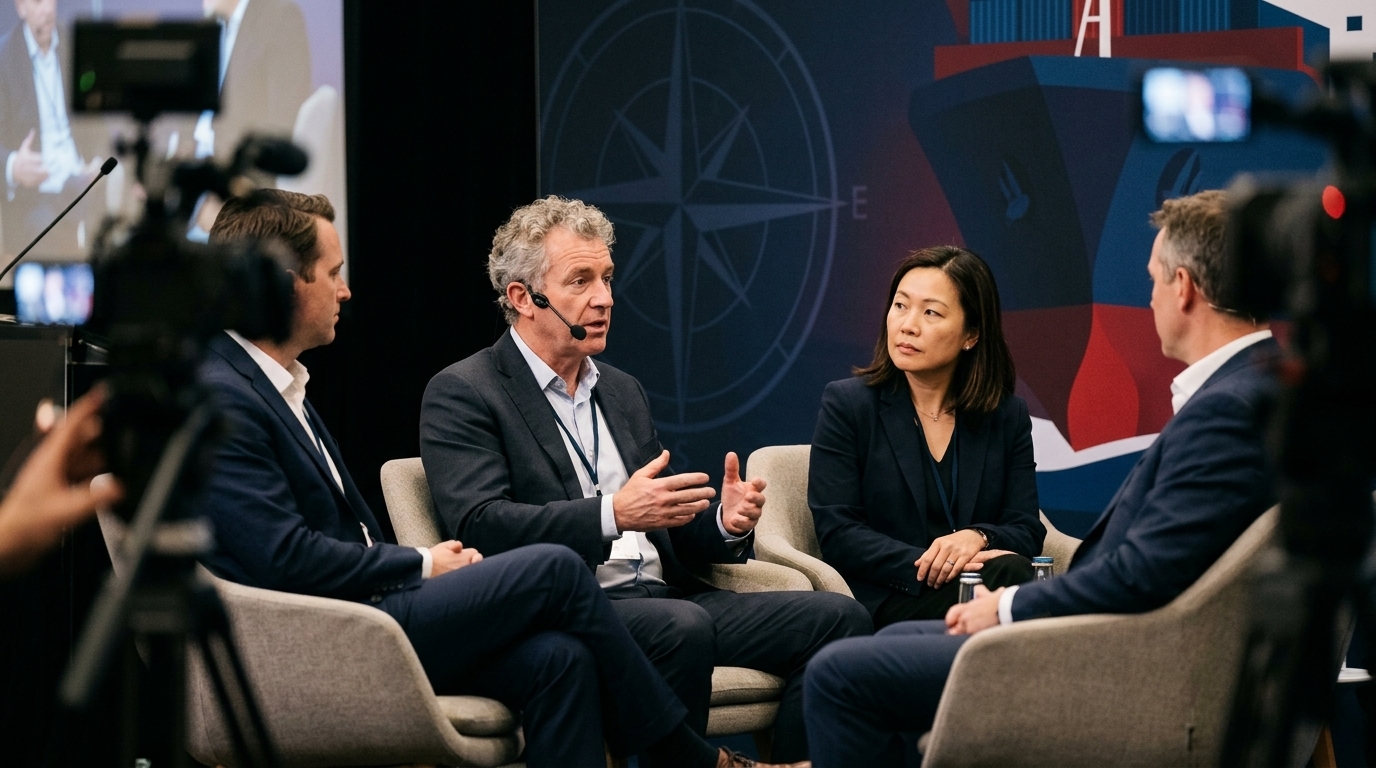
At the 10th Naftemporiki Shipping Conference, the Greek maritime community once again found itself at the heart of global developments. At a time when sea transport is caught in the vortex of geopolitical conflicts and radical environmental shifts, the speech by Christos Kechris, CEO of Aegean Shipping Management, served as a realistic X-ray of the challenges facing the tanker sector. The central conclusion? Shipping is not just facing a crisis, but a complex "trilemma" that requires strategic composure and massive capital.
The Investment Trilemma: Fuels, Technology, and Regulations
According to Mr. Kechris, the modern shipowner is called upon to balance three conflicting forces. The first concerns the uncertainty surrounding the fuels of the future. With the need for decarbonization pressing hard, choices between methanol, ammonia, liquefied natural gas (LNG), or even hydrogen remain open, yet no clear dominant solution has emerged. Investing in a ship that will cost tens of millions of dollars and have a lifespan of 20-25 years carries the risk of "technological obsolescence" before its construction is even completed.
The second aspect of the trilemma is the strict regulatory framework. The implementation of the EU Emissions Trading System (EU ETS) and the International Maritime Organization (IMO) targets create an environment where compliance is no longer optional but a condition for survival. Finally, the third aspect involves high shipbuilding costs and limited yard availability, as shipyards are already packed with orders for container ships and LNG carriers, leaving little room for tanker fleet renewal.
Geopolitical Instability and the 'New Normal'
Mr. Kechris's analysis was not limited to technical issues. Geopolitical instability, with conflicts in Ukraine and the Red Sea, has completely altered traditional trade routes. The need to bypass the Suez Canal and use the Cape of Good Hope has sharply increased ton-miles, creating an artificial shortage of capacity that keeps freight rates high. However, this "prosperity" of rates is fragile, as it is based on crises rather than healthy economic growth.
- The increase in ton-miles due to geopolitical realignments.
- The risk of "stranded assets" due to incorrect technological choices.
- The aging of the global tanker fleet and the urgent need for renewal.
- The impact of inflation on operating and shipbuilding costs.
"Shipping today is not just about carrying cargo; it is a race to predict the future in an environment that changes every week," Mr. Kechris emphasized during the panel.
The Risk of Stranded Assets
One of the most concerning points of the speech was the reference to the risk of "stranded assets." These are ships that, although new, may become economically unviable or legally unacceptable due to rapidly evolving environmental standards. Banks and financial institutions now scrutinize new project financing with strict ESG (Environmental, Social, Governance) criteria, making access to capital harder for those not following the green trajectory. Aegean Shipping Management, as its CEO explained, chooses a cautious approach, investing in technologies that allow for future retrofitting, thereby reducing the risk of obsolescence.
In conclusion, the 10th Naftemporiki Shipping Conference highlighted that Greek shipping, despite its dominance, is at a critical crossroads. The ability of Greek shipowners to read the markets and take risks is being tested now more than ever, as the stake is not just profitability, but the very sustainability of the industry in a zero-emissions world.





