

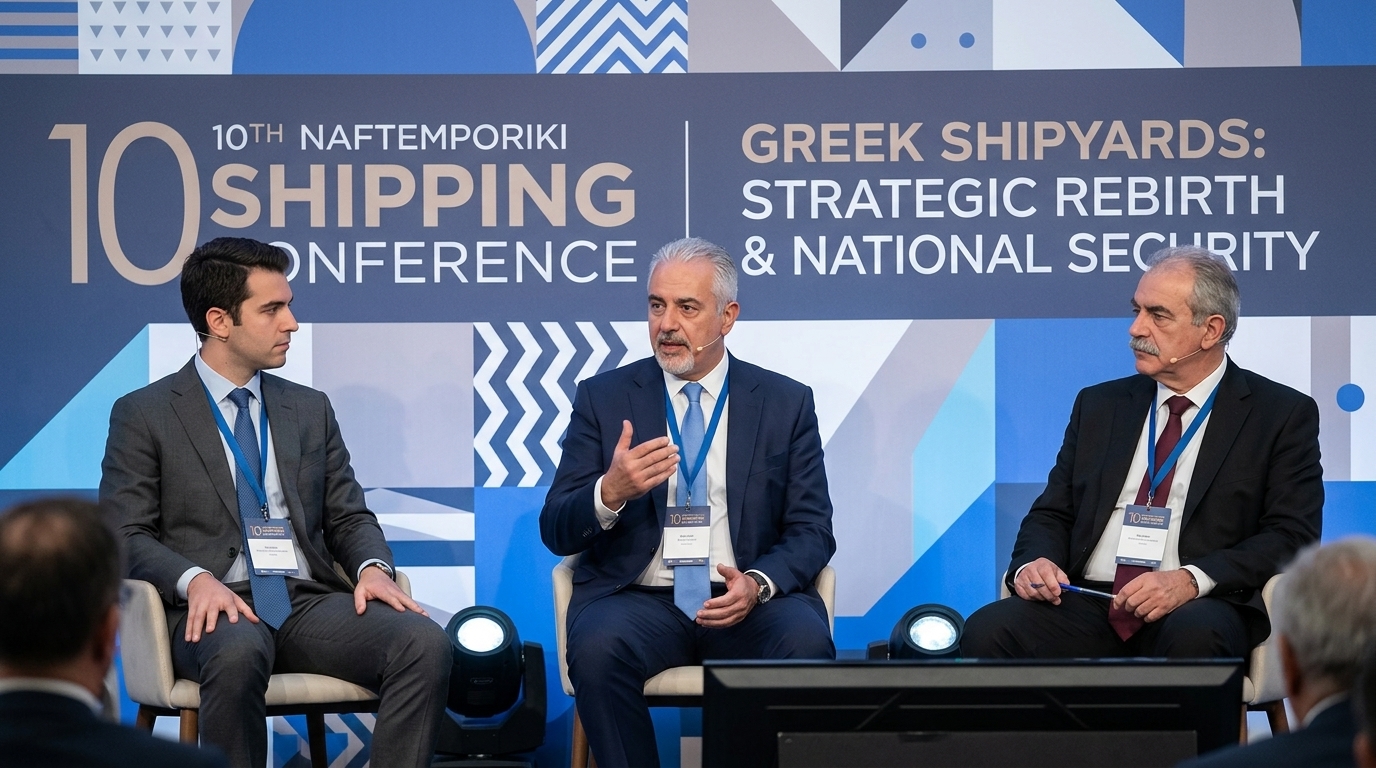
At the 10th Naftemporiki Shipping Conference, one of the most resonant interventions came from Panos Xenokostas, Chairman and CEO of ONEX Shipyards & Technologies Group. The discussion, moderated by Naftemporiki's digital director Michalis Psilos, moved beyond mere figures and investment portfolios to address the deep existential importance of the shipbuilding industry for the Greek state. For Mr. Xenokostas, shipyards are not just industrial production units; they are critical pillars of national sovereignty and geopolitical power in an era of global uncertainty.
The Return to Autonomy: Beyond the Economic Dimension
The Greek shipbuilding industry spent decades in a state of decline, with the country's major yards remaining dormant or underutilized, leaving the Greek-owned fleet—the world's most powerful—dependent on foreign hubs, primarily in Asia and Turkey. Mr. Xenokostas emphasized that this dependence constituted a strategic vulnerability. With the rebirth of the Syros and Elefsina shipyards under ONEX, Greece is reclaiming the ability to maintain and build ships within its borders, ensuring that the supply chain and naval power remain under national control.
"We cannot talk about national sovereignty if we lack the capacity to support our fleet," he noted pointedly. The ability to provide high-tech services to both commercial and defense vessels places Greece at the heart of the energy and transit map of the Eastern Mediterranean. The country's geostrategy, combined with recovered technical expertise, transforms the shipyards into an "unsinkable aircraft carrier" of industrial and defense support for NATO and the European Union.
Economic Footprint and Social Cohesion
The revival of the shipyards has a direct impact on the Greek economy, contributing to the reduction of unemployment and the reversal of the brain drain. Mr. Xenokostas stated that ONEX's investments have created thousands of jobs, while the multiplier effect for the local economy is immense. Every shipyard job supports multiple positions in secondary industries, from raw material supply to logistics services.
- Creation of over 2,000 direct jobs at the Elefsina and Syros shipyards.
- GDP enhancement through domestic added value and reduced service imports.
- Training a new generation of technicians and engineers through specialized programs.
Furthermore, the social dimension is undeniable. The reopening of the shipyards has breathed life into entire regions that had suffered economic stagnation. The trust of the workers and local communities forms the foundation upon which the country's new production model is built—one that moves away from a one-dimensional focus on tourism and pivots back toward heavy industry.
Green Transition and Innovation
One of the greatest challenges for modern shipping is decarbonization and compliance with the new environmental regulations of the International Maritime Organization (IMO). Mr. Xenokostas stressed that Greek shipyards are protagonists in this "green transition." ONEX is investing in cutting-edge technologies, such as the installation of scrubbers, ship conversions for alternative fuels, and the construction of autonomous, energy-efficient vessels.
"The green transition is not just an obligation; it is the greatest opportunity for Greek shipyards to lead the global market," stated the ONEX Chairman.
Collaboration with international giants and support from American financial institutions, such as the DFC, highlight the international recognition of the work being performed. Greece is no longer a passive recipient of technology but an innovation hub capable of offering solutions tailored to the needs of the global fleet. The digitalization of production processes (Shipyard 4.0) is the next goal, ensuring that Greek yards remain competitive against the lower labor costs of the East through quality and speed.
Conclusions and Outlook
Panos Xenokostas's message at the 10th Naftemporiki Conference was clear: The shipbuilding industry is the key to a strong, independent, and prosperous Greece. Investing in shipyards is an investment in the security of the country itself. With the continued support of the state and the trust of Greek shipowners, the sector can become the spearhead of economic reconstruction, proving that Greece can produce, innovate, and lead again at sea—not just as ship managers, but as builders.





