

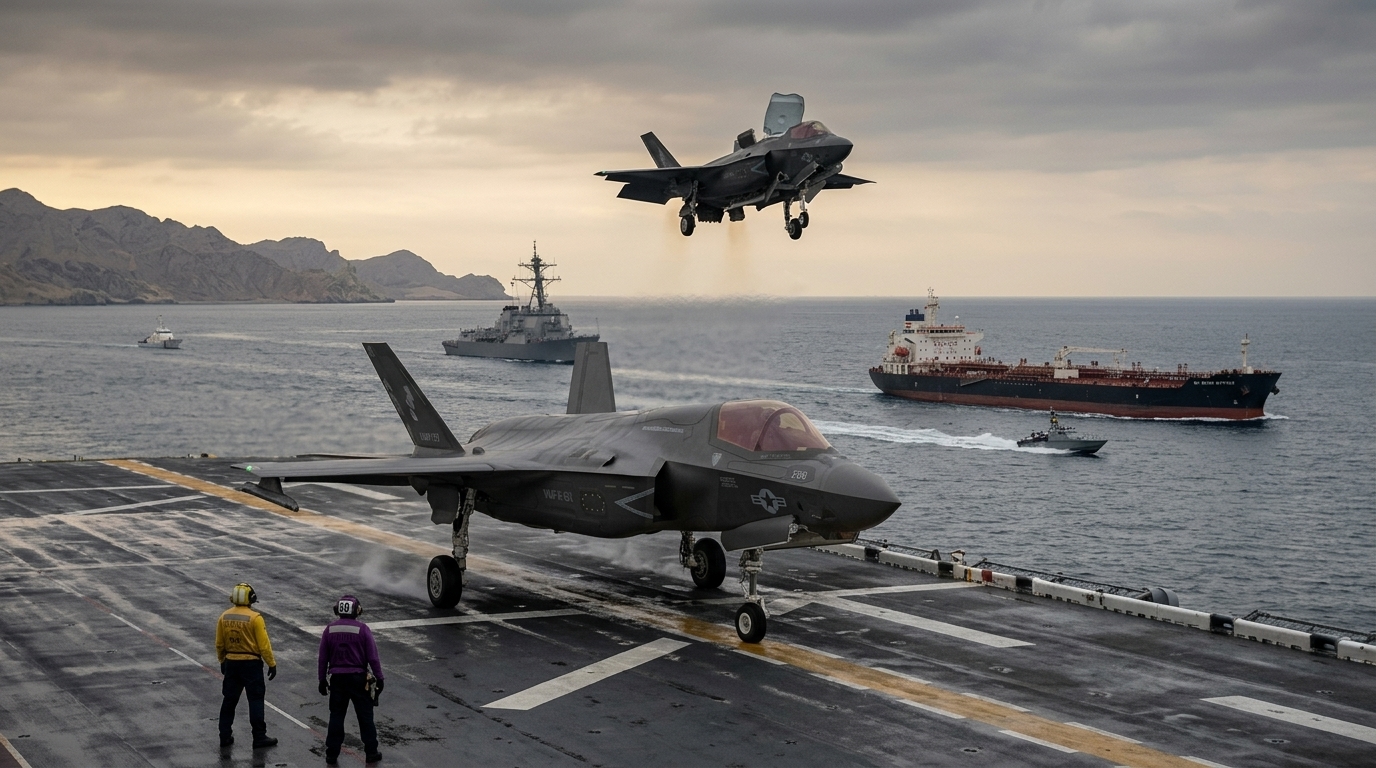
The geopolitical chessboard of the Middle East knows no respite, even when headlines herald diplomatic overtures. In the heart of June 2026, tensions between the United States and Iran have shifted from negotiation rooms to the turbulent waters of the Arabian Sea. The stakes are no longer just about controlling the Strait of Hormuz, but the survival of an ambitious new alternative route that promises to neutralize Tehran’s most potent geopolitical weapon.
The Strategic Bypass: The 'Oman Route'
For decades, Iran has held the global economy hostage by threatening to close the narrow Strait of Hormuz, through which 20% of the world’s oil consumption passes. However, Washington, in close cooperation with Muscat, recently completed the expansion of an alternative maritime path running along Oman’s eastern coast. Reports as of Saturday confirm that this route now has the capacity to accommodate two-way traffic for tankers and cargo ships, bypassing the most hazardous sections of the Strait controlled by the Islamic Revolutionary Guard Corps (IRGC).
This move represents an "architectural shift" in energy security. As retired Admiral James Stavridis notes, "This isn't just a new line on a map; it's the dismantling of the strategic chokehold Iran has exercised for half a century." The ability for vessels to remain in international waters or Omani territorial seas, far from Iranian coastal missile batteries, radically alters the risk equation for insurance underwriters and ship owners.
Drone Warfare and Technological Escalation
Tehran is not standing idly by. In recent weeks, there has been a vertical spike in attacks involving loitering munitions (suicide drones) and semi-autonomous fast boats targeting vessels utilizing the new bypass. The integration of Artificial Intelligence into drone swarms allows Iran to conduct harassment operations with low costs and high deniability.
- Deployment of AI-coordinated drone swarms for simultaneous strikes.
- Utilization of Unmanned Underwater Vehicles (UUVs) to mine the new route.
- Intensified electronic warfare and GPS jamming to disorient commercial shipping.
In response, the U.S. has deployed "Task Force 59," a unit relying almost exclusively on unmanned surveillance vessels and AI to detect threats long before they reach commercial fleets. "It is an invisible war of algorithms," says an analyst from the International Institute for Strategic Studies (IISS). "Iran is trying to prove that no route is safe, while the U.S. is trying to prove that technology can render geography secondary."
Tehran’s Politics of Survival
For the Iranian regime, the success of the Oman route is an existential threat. If Hormuz becomes redundant, Tehran loses its primary leverage in negotiations over sanctions relief. Internal economic pressure is already immense, and losing the ability to trigger a global economic shock would signify a catastrophic decline in its regional influence.
"Iran isn't just fighting for a waterway; it's fighting to maintain its status as a regional power broker," states Dr. Sanam Vakil of Chatham House.
The situation is further complicated by China's stance. While Beijing remains the primary buyer of Iranian crude, it also demands price stability. China's support for Tehran appears to be reaching its limits as delivery delays caused by the Oman conflicts begin to hamper Chinese industrial output.
Conclusion: A Fragile Equilibrium
The future of global shipping is currently being decided off the coast of the Arabian Peninsula. The success of the "Oman Bypass" could usher in a new era of energy independence from the whims of autocratic regimes. However, as long as Iran feels cornered, the probability of an "accidental" escalation sparking a wider conflict remains perilously high. The ceasefire may exist on paper, but on the waves, the war continues with unabated intensity.





