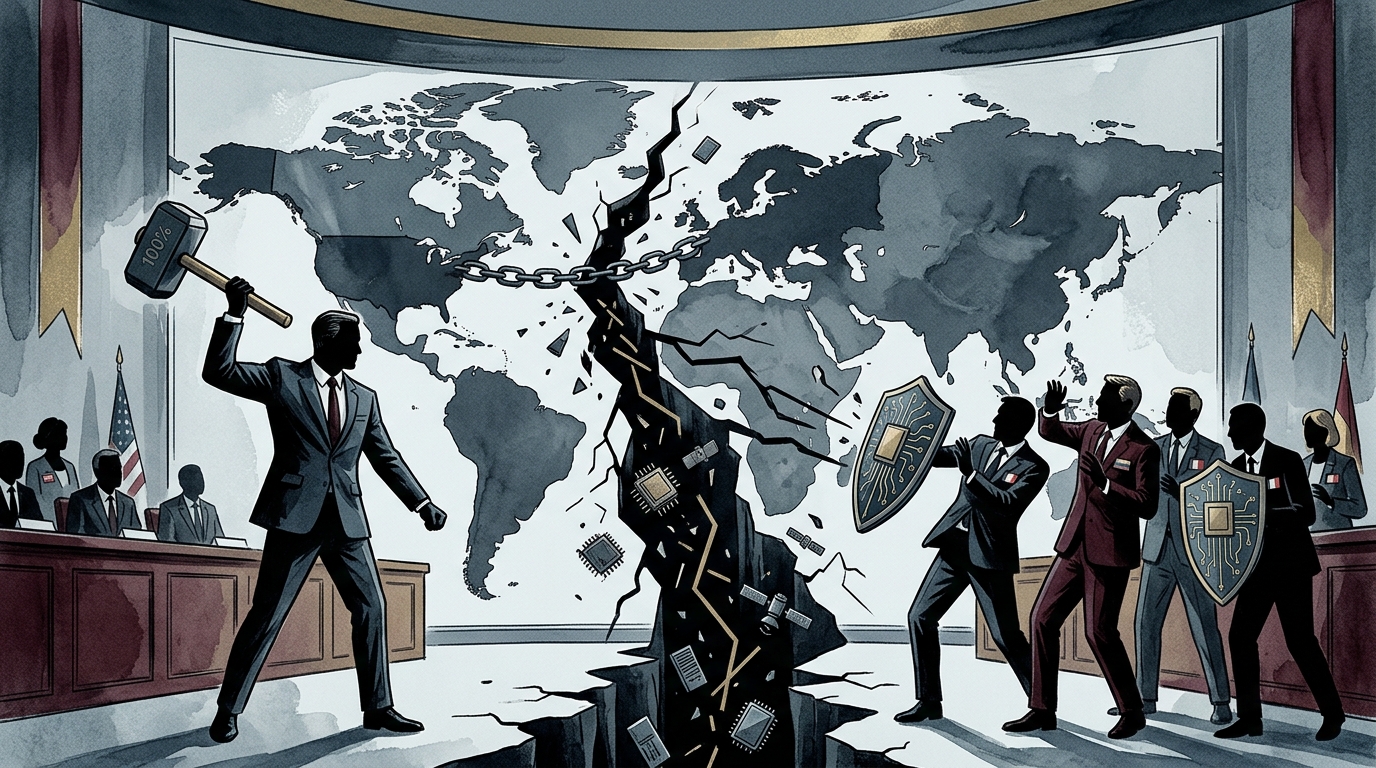
The global economic landscape of 2026 is trembling following the latest proclamations from U.S. President Donald Trump, who has reactivated his "maximum pressure" strategy toward European allies. The threat to impose 100% tariffs on iconic European goods, in retaliation for the European Union’s plans to implement a digital services tax on American tech giants, marks a volatile new chapter in transatlantic relations.
Digital Sovereignty vs. Corporate Protectionism
For the European Union, the Digital Services Tax (DST) is not merely a fiscal measure; it is a matter of tax justice and "digital sovereignty." For years, Brussels has argued that behemoths like Google, Amazon, Meta, and Apple generate astronomical profits from the European market while paying negligible taxes due to complex corporate structures. Efforts for a unified EU-wide approach have faced internal hurdles, prompting nations like France, Italy, and Spain to move forward with national levies.
Conversely, the White House views these taxes as a "discriminatory targeting" of American innovation. Trump, adhering to his "America First" doctrine, perceives the EU’s move as an attempt to erode U.S. economic dominance. The threat of 100% tariffs doesn't just target tech; it aims at the heart of European exports. French wines, German automobiles, Italian luxury leather, and Greek olive oil are all potentially in the line of fire.
Trade War or Negotiation Tactic?
Analysts are divided on whether this is a genuine intent or an extreme negotiating tactic. Trump has historically used tariffs as a blunt instrument to extract concessions. However, the context of 2026 is markedly different. Europe, strained by the costs of the green transition and the necessity of bolstering its defense capabilities, is desperate for new revenue streams.
- Consumer Impact: A trade war of this magnitude would trigger an inflationary spike on both sides of the Atlantic.
- Supply Chain Disruption: Persistent uncertainty would force corporations to overhaul their logistics, causing global production tremors.
- The AI Gap: Europe risks falling further behind in the Artificial Intelligence race if its relationship with Silicon Valley is permanently severed.
"We will not allow foreign powers to rob our greatest companies through unfair taxes," Trump stated, setting a combative tone for the months ahead.
Brussels' Response and Geopolitical Fallout
The European Commission, led by Ursula von der Leyen, finds itself in a precarious position. Backing down would be perceived as a surrender to American protectionism, while retaliating with counter-tariffs could plunge the Eurozone into a recession. The geopolitical dimension is equally fraught. At a time when the West should present a united front against China's rise, an internal conflict between the U.S. and the EU is a strategic gift to global competitors.
Mediterranean nations, including Greece, are watching with bated breath. Greek exports of food and agricultural products to the U.S. have grown significantly. A 100% tariff would effectively price these goods out of the American market, dealing a devastating blow to the primary sector. The diplomatic chessboard is now laden with mines, and the next move will likely dictate the economic trajectory of the entire decade.