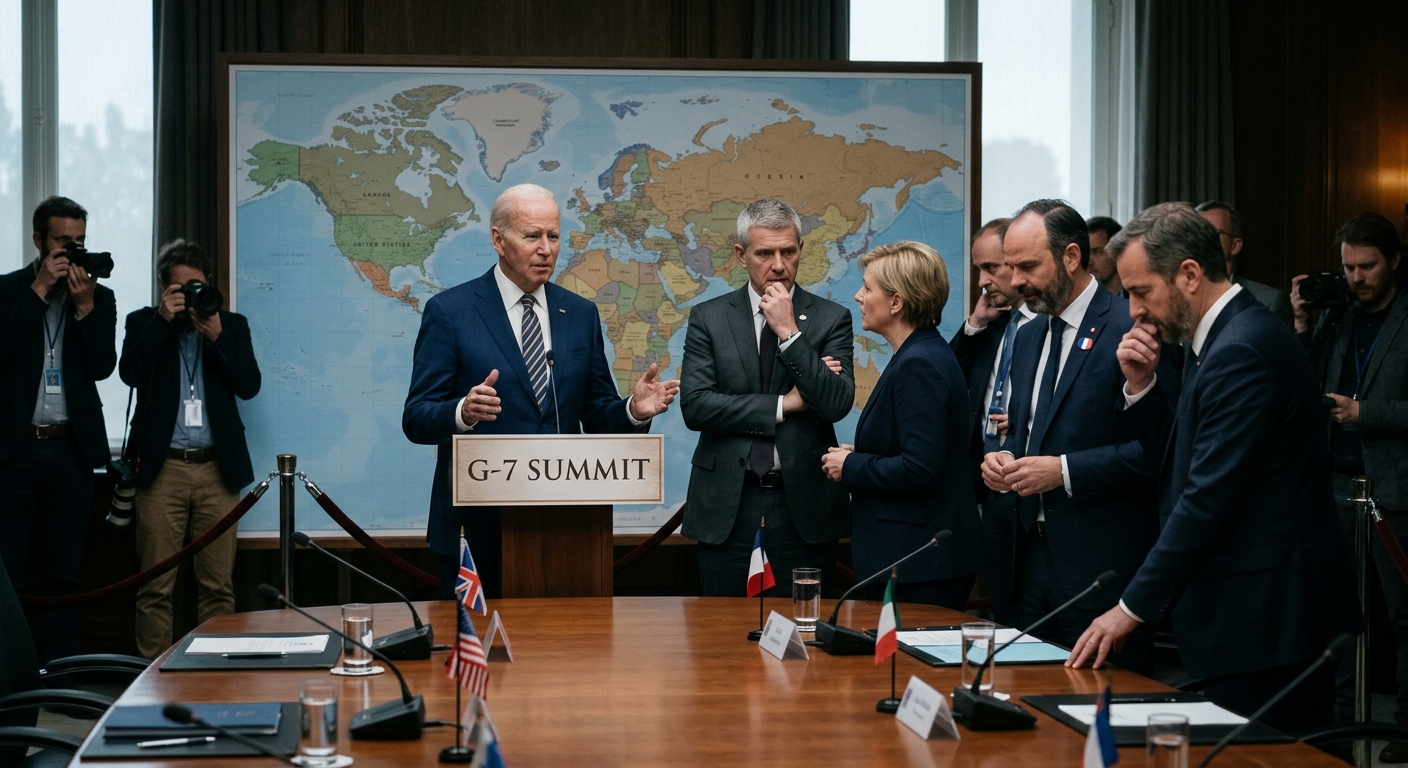
The atmosphere within the opulent halls of the June 2026 G-7 summit has never been as frigid as it is today. As the leaders of the world's most powerful economies gathered to discuss the future of global security, a new form of protectionism dominated the agenda: "digital nationalism." The Trump administration's recent decision to impose stringent restrictions on the export and use of Anthropic’s advanced AI models, citing national security concerns, has not only struck at U.S. adversaries but has also rattled its closest allies.
The Strategy of "Technological Sovereignty"
This move by Washington marks a radical departure from the era of open AI collaboration. According to sources close to the White House, the new regulations require special licensing for access to models at the level of Claude 4 and above by foreign governments, even within the framework of NATO. The logic is simple yet harsh: artificial intelligence is now viewed as the ultimate strategic asset, on par with nuclear capabilities, and the U.S. is unwilling to share its "crown jewels" without significant concessions.
The restrictions on Anthropic are particularly painful for Europe and Japan. Unlike other AI giants, Anthropic had built a reputation for "safe and constitutional" AI, which many allies had integrated into their own national infrastructures. The sudden threat of service disruption or capability capping leaves European governments exposed, highlighting their dangerous dependence on American software providers.
Allied Reaction and the Rise of the Third Way
In Paris and Berlin, the outrage is palpable. During a heated session at the summit, the French President spoke of "technological blackmail" that undermines transatlantic unity. Europe, which has been slow to develop its own AI champions, is now in a frantic race to bolster companies like Mistral and Aleph Alpha. However, the gap in raw compute power remains a formidable barrier to true independence.
The paradox is that these restrictions may yield the opposite of their intended effect. Instead of securing American hegemony, they might push allies toward creating a "non-aligned" technological alliance, seeking alternatives that are not subject to the whims of the current U.S. administration. Reports are already circulating of secret talks between the EU and Japan to establish a joint AI development fund, aiming for total decoupling from U.S. platforms by 2028.
Anthropic at the Crossroads
For Anthropic itself, the situation is a strategic nightmare. The company, which has always advocated for ethical development and international cooperation, now finds itself weaponized by Washington’s geopolitical goals. Shareholders are concerned about the loss of billions in international contracts, while the company’s top researchers fear that isolationism will stifle scientific progress. AI does not evolve in a vacuum; it relies on the global exchange of data, talent, and feedback loops.
Furthermore, this move sets a dangerous precedent. If the U.S. restricts Anthropic today, what stops China or other powers from imposing even more severe blockades on their own technologies? The world appears to be sliding toward an "AI Splinternet," where each geopolitical bloc possesses its own version of truth, trained on different values, biases, and regulatory constraints.
Conclusions and Future Outlook
The 2026 G-7 summit will be remembered as the moment AI ceased to be viewed primarily as a tool for human progress and officially became a weapon of state power. The Trump administration's decision to instrumentalize Anthropic may offer a temporary advantage in domestic U.S. politics, but the international cost will be steep. Trust, which took decades to build among Western allies, is eroding within weeks of executive orders and export controls.
- The need for European "digital sovereignty" is now a matter of survival.
- The risk of a global technological bipolarity is increasing dramatically.
- Anthropic and other Big Tech firms are becoming de facto arms of state diplomacy.
As the leaders depart the summit, the question remains: can humanity manage its most transformative technology in an environment of profound suspicion? Washington's answer appears to be a resounding "no," laying the groundwork for a new, uncertain era of digital borders.