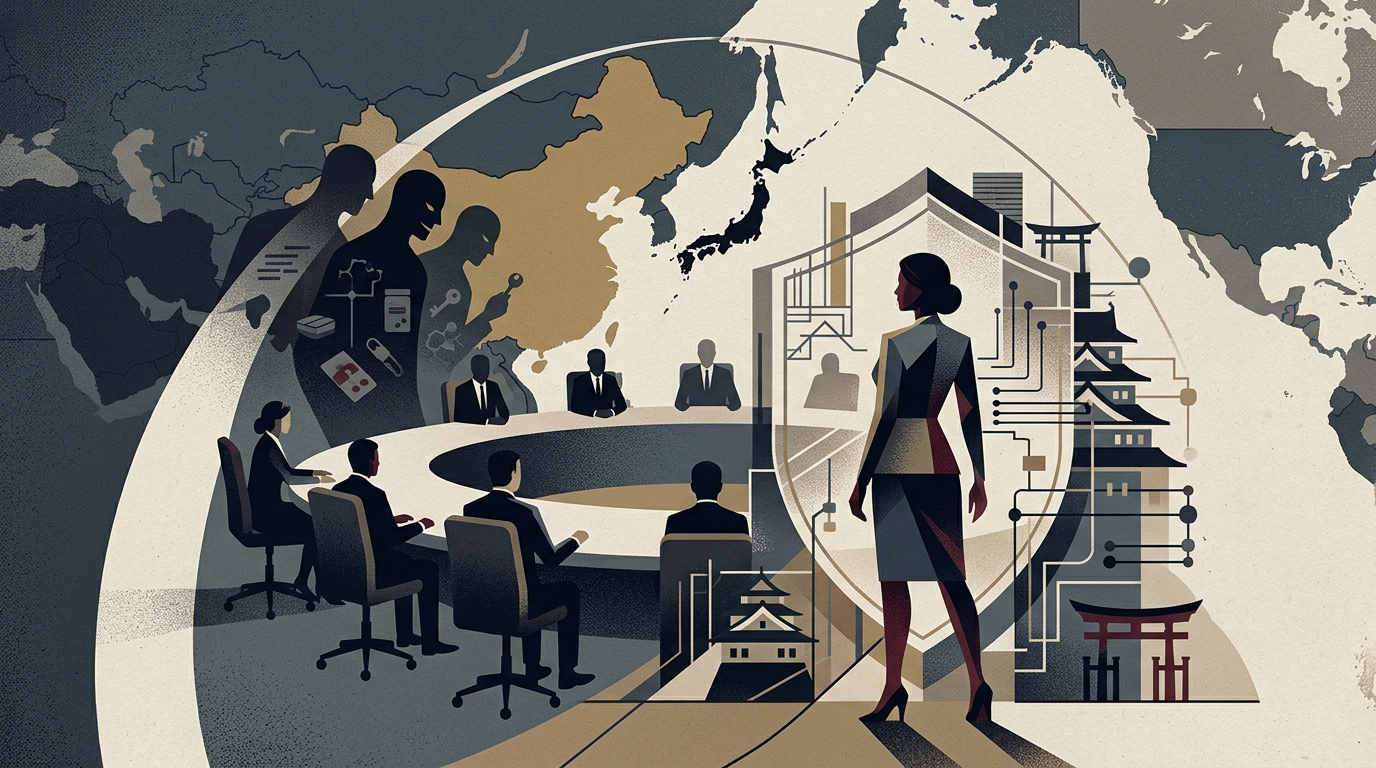
In an era where the lines between economic prosperity and national survival are increasingly blurred, Japan finds itself at a critical crossroads. Sanae Takaichi, the dynamic and often controversial Minister for Economic Security, is leading a rigorous effort to fortify the nation against a complex web of threats. These challenges range from corporate boardrooms targeted by industrial spies to clandestine networks smuggling high-end AI semiconductors and illicit drugs. Recent reports circulating in Tokyo reveal a stark reality: Chinese operatives are systematically siphoning industrial secrets, while smugglers ferry Nvidia’s prized AI chips to Beijing, and drug syndicates utilize Japan as a transit point for fentanyl destined for the United States.
The Erosion of Industrial Sovereignty
For decades, Japan viewed its technological prowess as an impregnable fortress. However, China’s meteoric rise as a technological superpower has fundamentally shifted the strategic landscape. Takaichi argues that the "naivety" of the past must end. According to Japanese intelligence assessments, Chinese state-linked entities have infiltrated sectors such as robotics and power electronics, not only via sophisticated cyberattacks but also through strategic investments and the poaching of key talent. This theft of intellectual property is no longer just about current market share; it targets the very future of the Japanese economy, focusing on quantum computing and green energy technologies that are vital for the next century.
The Chip Wars: Japan as a Smuggling Conduit
A central pillar of Takaichi’s new security doctrine involves the strict regulation of semiconductors. As the United States intensifies export restrictions on high-end AI hardware to China, Japan has inadvertently become a primary conduit for the illicit trade of Nvidia’s H100 and Blackwell chips. Despite official bans, sophisticated smuggling rings utilize shell companies based in Tokyo and Osaka to bypass sanctions and funnel these critical components to the Chinese military-industrial complex. Takaichi is pushing for legislation that would enforce unprecedented transparency in supply chains, allowing authorities to track the lifecycle of critical technologies—a move that has sparked significant debate within the business community regarding regulatory overreach.
The Fentanyl Nexus and Geopolitical Leverage
Japan’s security concerns are not limited to the digital or industrial realms. The nexus between Chinese chemical suppliers and Mexican drug cartels for fentanyl production now has a distinct Japanese footprint. Takaichi highlights that Japan is increasingly being used for money laundering and the transshipment of precursor chemicals, a development that threatens to strain Tokyo’s relationship with Washington. Her rhetoric directly links domestic security to foreign policy, asserting that a "porous" Japan is a liability to the broader alliance of democratic nations in the Indo-Pacific. Her proposal for a comprehensive "Security Clearance" system for private-sector employees marks one of the most significant shifts toward a security-first national posture.
Takaichi’s High-Stakes Political Gambit
Takaichi’s hardline approach is not without its detractors. Critics within the Liberal Democratic Party (LDP) and the broader business community accuse her of "fear-mongering" that could irreparably damage economic ties with China, Japan’s largest trading partner. Nevertheless, she remains undeterred. "Economic security is national security," she frequently asserts. Her success will determine whether Japan remains a passive observer of geopolitical shifts or emerges as a decisive pillar of stability in Asia. The stakes are immense: from the survival of Japanese industrial giants to the prevention of a regional escalation that could lead to open conflict. As the shadow of the "New Cold War" looms, Takaichi’s push represents a fundamental redefinition of what it means for Japan to be a sovereign power in the 21st century.