

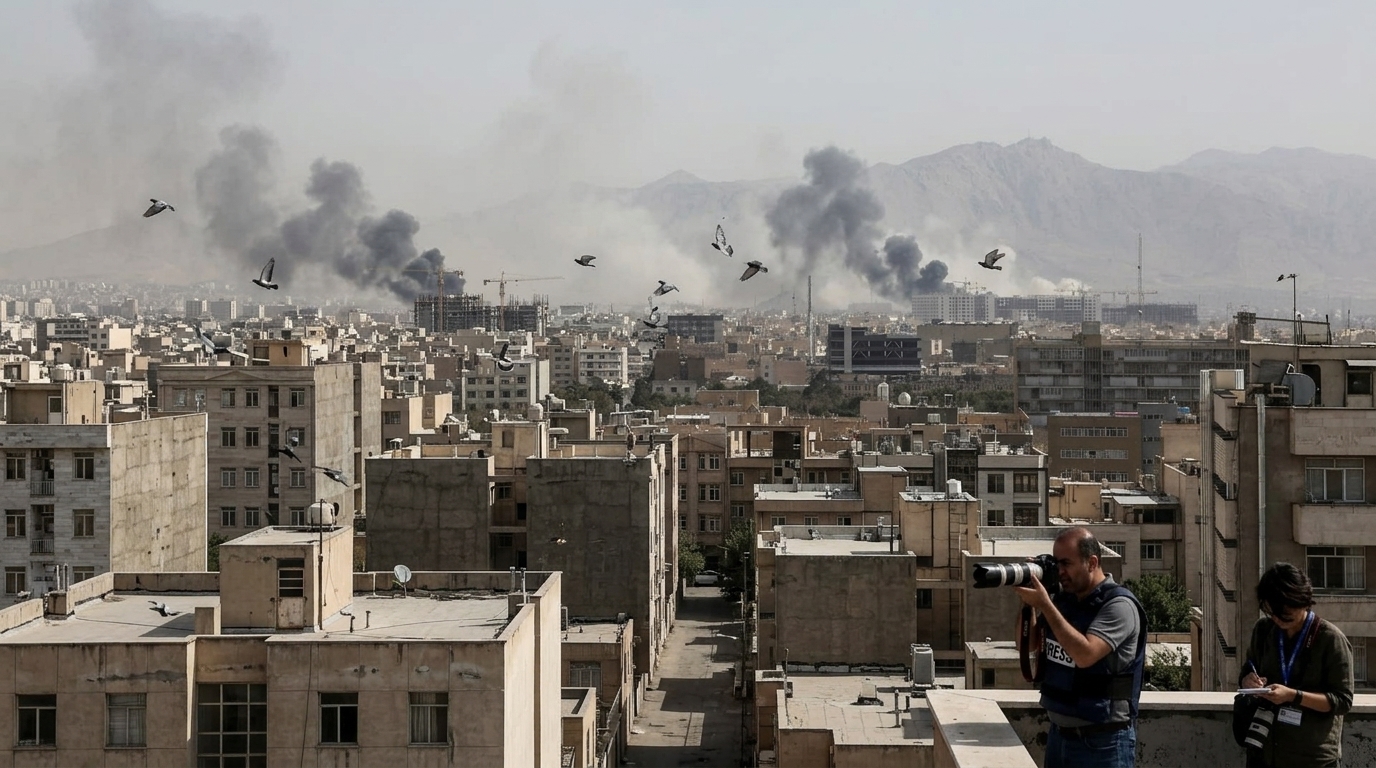
The geopolitical chessboard of the Middle East is vibrating with the latest developments, as the international community watches with bated breath the movements between Jerusalem and Washington. According to information leaking following the recent telephone conversation between Israeli Prime Minister Benjamin Netanyahu and President Donald Trump, Israel appears to be on standby for the "green light" that would allow a new, potentially decisive, attack against Iranian targets. Trump's return to the White House has radically changed the balance, shifting the center of gravity from the Biden administration's "managed containment" to "absolute deterrence" through strength.
The Digital Dimension of the Conflict
Unlike previous decades, a modern war between Israel and Iran is not just fought with fighter jets and missiles. Artificial Intelligence (AI) has become the invisible general. Israel, a pioneer in integrating algorithms into its weapons systems, uses sophisticated predictive models to analyze Iranian air defenses. The "Gospel" platform and other similar systems process vast volumes of data from satellites and intercepts, creating a dynamic map of targets in real-time.
The use of AI allows Israel to plan strikes with surgical precision, minimizing the loss of its own assets while maximizing the psychological and material cost for Tehran. However, this "algorithmic superiority" carries risks. The automation of decision-making at a strategic level can lead to rapid escalation that no human diplomat will have time to intercept. The question is no longer whether Israel has the capability to strike Iran, but whether AI will point to a "golden opportunity" that the political leadership will feel compelled to exploit.
Donald Trump's Political Risk
For Donald Trump, support for Israel is a cornerstone of his foreign policy, but his approach remains transactional. While his rhetoric is clearly more aggressive toward Iran than his predecessor's, Trump is also known for his aversion to "forever wars." The "green light" Netanyahu is waiting for may not be a blank check, but a carefully weighed exchange.
- Full access to US aerial refueling systems.
- Diplomatic cover in the UN Security Council.
- An agreement on the next day's oil prices.
Tehran, for its part, is not sitting idle. It is also investing in electronic warfare technologies, trying to "blind" Israel's algorithms. The conflict has moved to the information level, where AI-driven disinformation (deepfakes, bot networks) is used to influence public opinion in both countries, creating an atmosphere of inevitable clash.
Geopolitical Implications and Europe's Stance
The European Union remains in a difficult position. While condemning Iranian provocations, it dreads the idea of a full-scale conflagration that would lead to new refugee waves and an energy crisis. Athens, as a pillar of stability in the Eastern Mediterranean, is closely monitoring developments, as any generalization of the war would directly affect the security of shipping routes and economic activity in the region.
"We are not just facing a military operation, but the first total war of the Artificial Intelligence era, where the speed of decision exceeds the speed of thought," says a senior security analyst.
In conclusion, waiting for Trump's "green light" is a test of nerves. Technology has given Israel the tools for a decisive strike, but political will in Washington remains the ultimate regulator. If the attack takes place, it will be proof that 20th-century diplomacy has been definitively replaced by the power of arms and the cold logic of algorithms.




