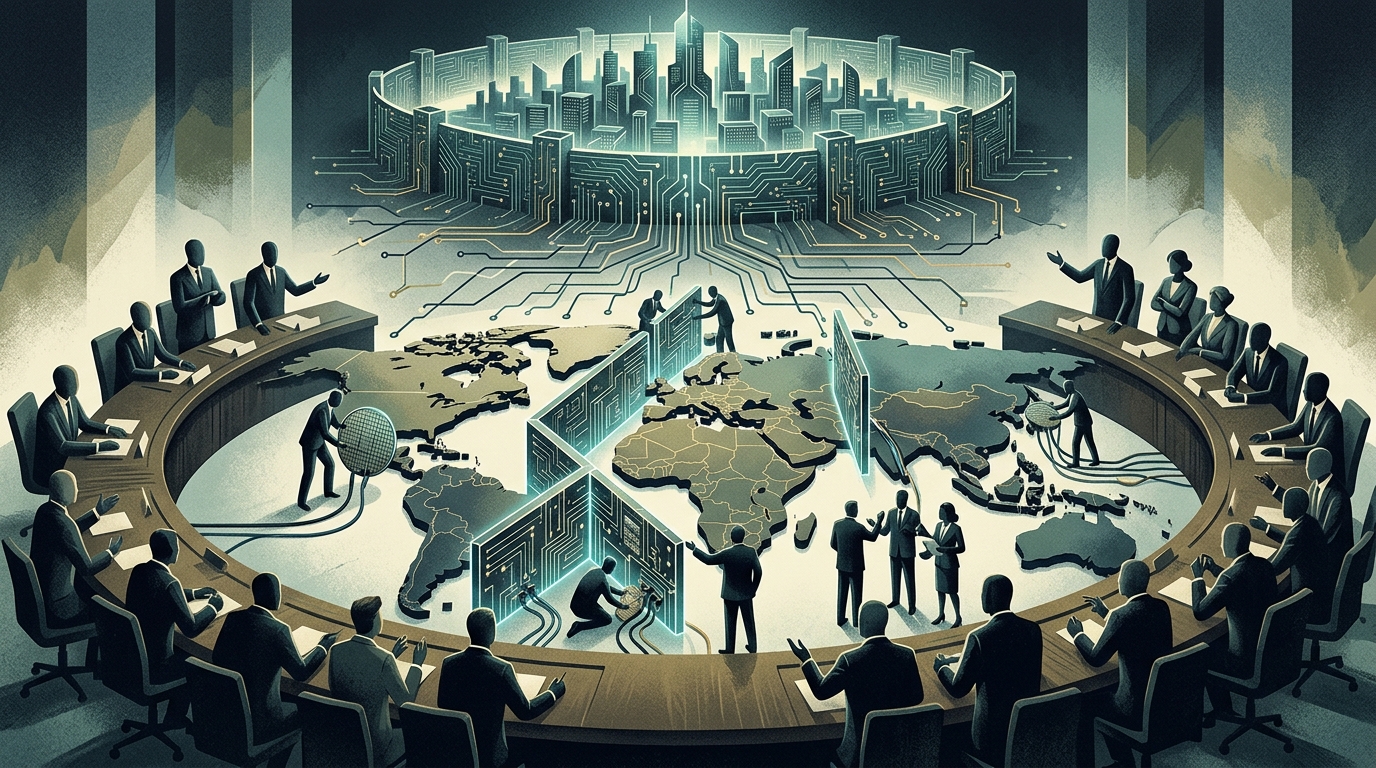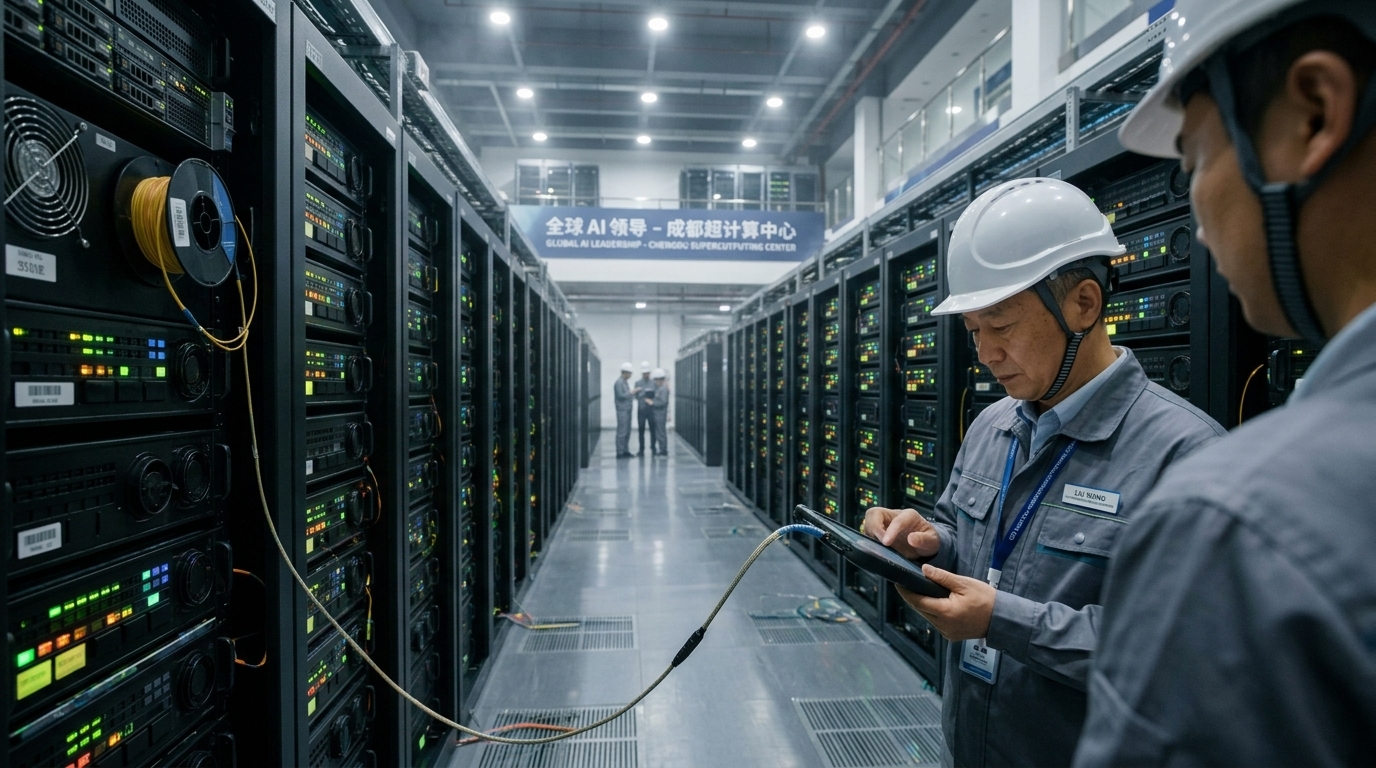
The global AI chessboard is witnessing one of its most critical turning points. According to recent reports from Chosun Ilbo, two of the most significant players in the Chinese AI scene, DeepSeek and Zhipu AI, are making a strategic move that could permanently alter the industry's balance of power: the development of their own, domestic AI chips. This move is not merely a business expansion, but an act of survival and autonomy in the face of escalating U.S. sanctions aimed at cutting China off from advanced semiconductor technology.
The Strategy of Vertical Integration
For years, NVIDIA's dominance in the graphics processing unit (GPU) market was taken for granted. However, export restrictions on H100 chips and their successors to China have forced Chinese companies to rethink their operating models. DeepSeek, known for the extreme efficiency of its models (such as the recent DeepSeek-V3), and Zhipu AI, which began as a spinoff from Tsinghua University, are now following the 'Apple model.' They are designing software and hardware simultaneously to achieve maximum performance with the fewest possible resources.
DeepSeek has already proven it can compete with models from OpenAI and Google at a fraction of the training cost. Moving into chip design (ASICs - Application-Specific Integrated Circuits) is the next logical step. If a chip is designed exclusively to run DeepSeek's algorithms, the need for the raw power of NVIDIA's general-purpose GPUs decreases drastically. This 'algorithmic efficiency' is China's secret weapon in the ongoing tech war.
The Silicon Wall and Manufacturing Challenges
Despite the ambition, the road to autonomy is fraught with obstacles. Designing a chip is one half of the equation; manufacturing it is the other. With TSMC restricted by U.S. regulations regarding cooperation with Chinese entities, DeepSeek and Zhipu will have to rely on the domestic SMIC (Semiconductor Manufacturing International Corporation). SMIC, while having made leaps, still lags behind the cutting-edge 3nm or 2nm technology available in Taiwan and South Korea.
Furthermore, there is the issue of High Bandwidth Memory (HBM). AI chips require immense data transfer speeds, and the HBM market is almost entirely controlled by SK Hynix, Samsung, and Micron. The effort by Chinese companies to develop their own HBM or find alternative solutions is perhaps the greatest technical challenge they have ever faced. However, funding from the Chinese state and the rallying of domestic talent create a critical mass that cannot be ignored.
Geopolitical Implications: A Bifurcated Tech World
This move signals the beginning of a permanent decoupling between Western and Eastern AI technology stacks. If DeepSeek and Zhipu manage to produce chips that are 'good enough' for their needs, the dependence on the American supply chain will break. This could lead to a world where two parallel AI ecosystems exist: one based on NVIDIA and CUDA standards, and another, Chinese, based on specialized semiconductors and domestic software libraries.
Washington is closely monitoring these developments. Every Chinese attempt to bypass sanctions through domestic innovation is usually met with stricter restrictions. But there is a tipping point where sanctions stop acting as a brake and start acting as a catalyst for self-reliance. The case of DeepSeek and Zhipu suggests that this point may have already been passed. The battle for AI supremacy is no longer fought only in the code of neural networks, but in semiconductor fabrication plants and chip design offices.
Conclusion
The pivot of Chinese AI giants toward hardware is a bold response to an existential threat. While manufacturing challenges remain immense, the ability of these companies to innovate under pressure is remarkable. The outcome of this effort will determine not only the future of Chinese technology but also the shape of the global digital economy for decades to come. The era when AI was just software is over; now, silicon is the new battlefield.