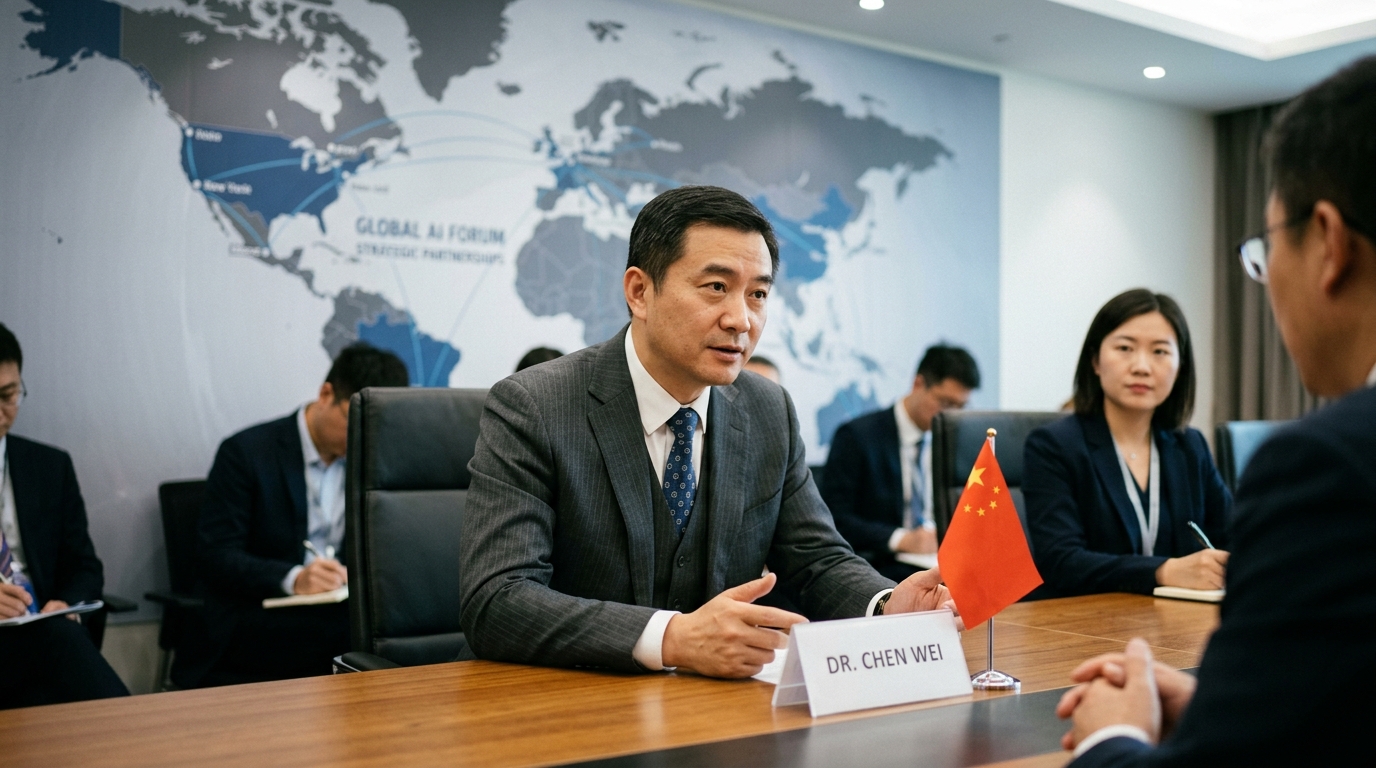
In the modern technological landscape, the dominance of Artificial Intelligence (AI) is no longer an exclusively Silicon Valley affair. While the spotlight frequently shines on OpenAI and NVIDIA, a quiet but formidable revolution is unfolding on the other side of the Pacific. China, through its technological champions—Alibaba, Tencent, and Baidu—is constructing an AI ecosystem that not only rivals the West but, in sectors like facial recognition and logistics, arguably surpasses it. For investors, particularly those in emerging economies like India, the dilemma is acute: geopolitical rivalry clashing with economic opportunity.
The Triad of Chinese Innovation: Baidu, Alibaba, Tencent
Baidu, often referred to as the 'Google of China,' has pivoted from a pure search engine to an AI-first corporation. Its Ernie Bot is a direct response to ChatGPT, already integrated into a vast array of services ranging from cloud computing to autonomous driving through Project Apollo. Baidu’s strategy is clear: to make AI the backbone of the Chinese digital economy, ensuring that every search and every autonomous mile driven is powered by its proprietary algorithms.
On the other hand, Alibaba is leveraging AI to revolutionize e-commerce and cloud services. Its Tongyi Qianwen model aims to automate business processes, allowing enterprises to build custom AI applications on top of the Alibaba Cloud infrastructure. For Alibaba, AI is not merely a tool but the means to maintain dominance in a market of 1.4 billion consumers, optimizing everything from supply chains to personalized marketing in real-time.
Tencent, the social media and gaming behemoth, follows a more subtle yet equally effective path. With its Hunyuan model, Tencent utilizes the massive data volumes from WeChat to train algorithms that understand human behavior and social interaction better than perhaps any other entity. Integrating AI into gaming and payments creates a 'walled garden' ecosystem that is exceptionally difficult for foreign competitors to penetrate, ensuring long-term user retention.
The Geopolitical Chessboard and Investment Vehicles
Accessing these giants is not always straightforward. For Indian investors, the situation is further complicated by strained diplomatic relations between New Delhi and Beijing. Despite bans on Chinese apps like TikTok, economic interdependence remains a hard reality. Exchange Traded Funds (ETFs) serve as the primary gateway. Funds such as the Edelweiss Greater China Equity Off-shore Fund or the Axis Greater China Equity Fund of Fund provide indirect but effective exposure to Chinese tech giants, mitigating some of the direct risks associated with individual stocks.
However, investing in China comes with the 'Party Risk.' The 2021 regulatory crackdown, which wiped billions off the market capitalization of companies like Ant Group, remains fresh in investors' minds. China is not a free market in the Western sense; it is a state-supervised market where the doctrine of 'Common Prosperity' can pivot business models overnight. Investors must weigh the high growth potential against the unpredictability of Beijing's policy shifts.
The Semiconductor Challenge and the Path Ahead
The most significant hurdle for Chinese AI today is not a lack of talent or data, but the stringent US restrictions on high-end semiconductor imports. Without NVIDIA’s H100 chips, Chinese firms are forced to innovate at the software level to compensate for hardware deficiencies. This pressure may act as a catalyst for domestic chip production, potentially birthing a self-sufficient industry that could eventually disrupt global supply chains.
In conclusion, China's AI giants offer a unique growth trajectory but require a high tolerance for risk. Geopolitical instability and regulatory interventions are the premiums one must pay for a stake in Asia's technological future. For the discerning investor, diversification via ETFs appears to be the most prudent path, allowing exposure to innovation while insulating the portfolio from the volatility of individual corporate fates in a complex political environment.