

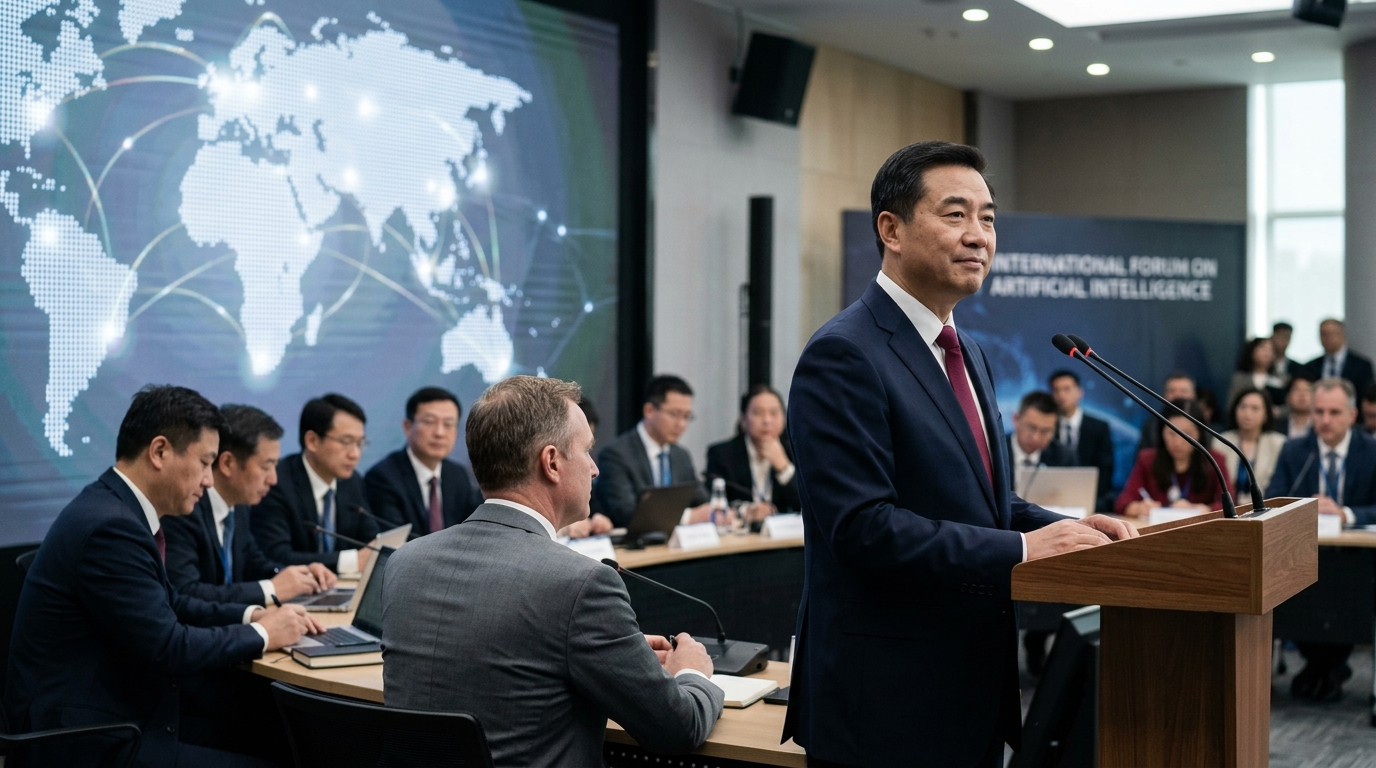
The global balance of power is no longer measured solely by nuclear warheads or the size of aircraft carrier groups, but by processing power and algorithmic complexity. As we move through the summer of 2026, the warning from leading cybersecurity experts is clear: China's rapid progress in Artificial Intelligence (AI) is not merely an economic achievement, but a strategic maneuver that could upend the global status quo. A recent report via KABB highlights how the integration of AI into Beijing’s cyber operations is creating a new high-stakes environment.
The Strategy of 'Total Technological Dominance'
Beijing does not view AI as an isolated tool, but as the connective tissue of a new form of national power. With the 'Made in China 2025' initiative having already laid the groundwork, China has moved into a phase of aggressive implementation. The use of AI in cybersecurity enables automated vulnerability identification in foreign networks at speeds that outpace any human intervention. Experts point out that we are facing an 'algorithmic arms race,' where a nation's ability to protect its infrastructure depends on whether its own AI can outmaneuver the attacker's AI.
China has invested billions in developing domestic semiconductors, attempting to bypass Western restrictions. Despite US sanctions, Chinese firms like Huawei and Baidu have developed models that directly compete with GPT-5 and Claude 4, albeit tailored to the needs of the Chinese state: information control, internal stability, and external influence.
Cybersecurity and Hybrid Warfare
The primary concern for the West is not just economic espionage, but the use of AI to erode social cohesion. Sophisticated deepfakes and automated disinformation campaigns, powered by Large Language Models, can manufacture narratives that appear entirely organic. As analysts warn, China has the capacity to use these tools to influence electoral processes or trigger economic panic in rival nations without a single shot being fired.
- Automated, real-time cyber espionage.
- Use of AI to bypass traditional intrusion detection systems.
- Development of 'smart' malware that learns from the target environment.
Furthermore, the integration of AI into China's military doctrine suggests a shift toward 'intelligentized warfare.' This includes drone swarms and autonomous underwater vehicles guided by AI systems, making traditional US naval superiority in the Pacific increasingly vulnerable.
The Western Response and the Decoupling Dilemma
Washington and Brussels face a critical dilemma. Further decoupling from the Chinese technological supply chain might slow Beijing's progress, but it also risks isolating the West from a market that generates a massive volume of data—the 'fuel' of AI. Experts emphasize that the response must not be purely defensive. It requires a new approach to cybersecurity that integrates 'Ethical AI' as a competitive advantage, creating systems that are more resilient and transparent than their authoritarian counterparts.
"Artificial Intelligence is the new high ground. Whoever holds it, controls the flow of history in the 21st century," states a senior Pentagon advisor.
In conclusion, the warning from KABB is not a cry of alarm for the future, but a description of current reality. The global technological confrontation has entered a new, more dangerous phase, where the line between civilian and military use of technology has effectively vanished.





